

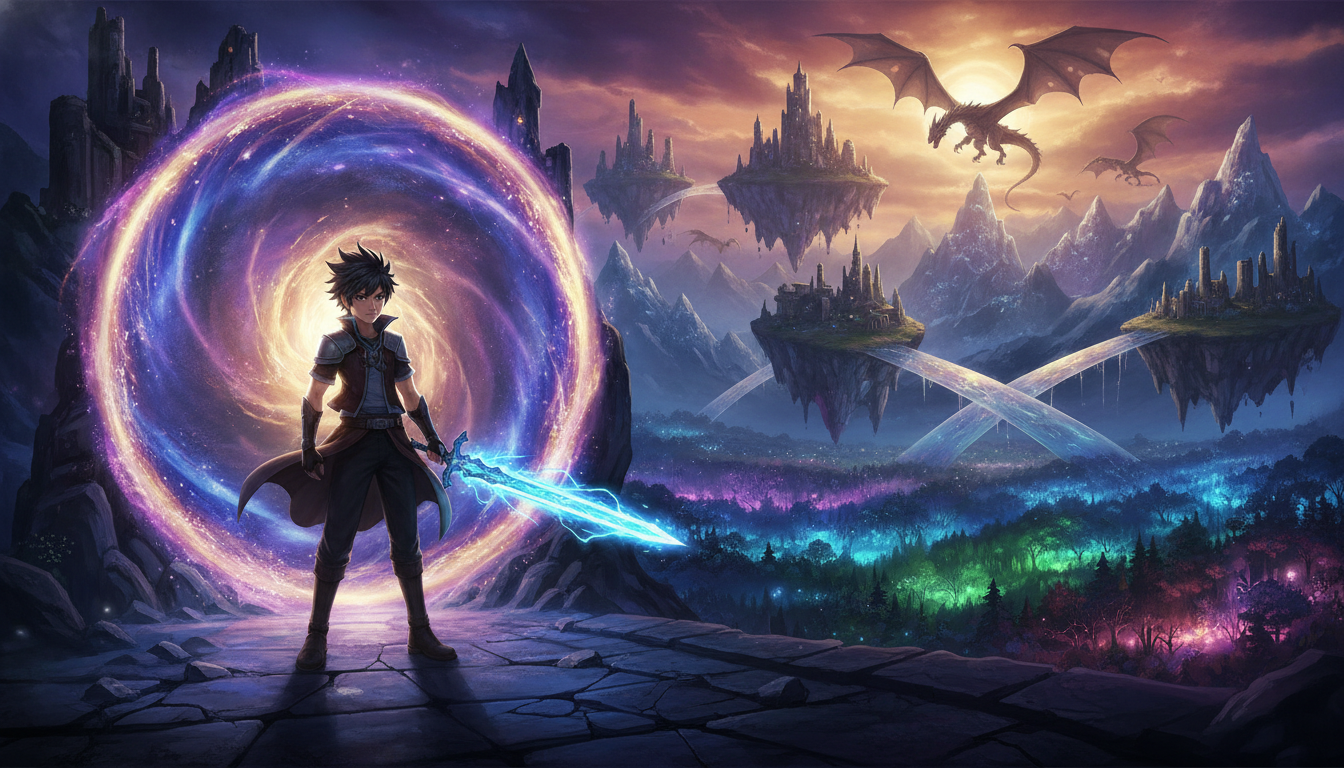
Imagine waking up tomorrow and discovering you’ve been transported to a magical kingdom where you’re the chosen hero, or reincarnated as a slime with world-bending powers, or sucked into a video game where death means actual death. Sounds terrifying? Sure. But also impossibly exciting — and that’s exactly the fantasy that has made isekai anime one of the most dominant and beloved genres in the anime world today. If you’ve spent any time on anime forums, streaming platforms, or social media in the past decade, you’ve almost certainly stumbled across the word “isekai,” even if you weren’t entirely sure what it meant.
The genre has exploded from a niche subcategory into a full-blown cultural juggernaut. Every anime season brings a fresh wave of new isekai titles, fans debate endlessly over which ones are must-watches versus tropey filler, and the biggest isekai franchises pull in merchandise sales, manga readers, and light novel fans by the millions. Whether you’re a seasoned otaku (that’s the Japanese word for a dedicated fan of anime and manga culture) or someone who just started their anime journey, understanding isekai means unlocking one of the most fascinating corners of Japanese pop culture.
What Does “Isekai” Actually Mean?
The word isekai (異世界) is Japanese and translates directly to “different world” or “another world.” As a genre, it refers to stories where a character — usually a regular, relatable person from the real world — is transported, reincarnated, or summoned into a completely different world. That other world is almost always fantastical: think sprawling kingdoms, dragon-filled landscapes, magic systems, and video-game-like mechanics where characters have visible stat sheets and level-up abilities.
The transported protagonist might be a bored office worker, a high school student, a gamer, or even someone who just died in a freak accident (truck-related deaths are so common in the genre that fans have invented the legendary “Truck-kun” meme — the idea that getting hit by a truck is the isekai genre’s favorite plot device). Once in the new world, the main character typically discovers they have special powers, a grand destiny, or a unique advantage that makes them exceptionally suited to thrive in this new reality.
The Roots of Isekai: Where Did It All Begin?
While isekai feels like a modern internet-age phenomenon, the concept of being whisked away to another world is ancient. Western literature has explored it for centuries — think Lewis Carroll’s Alice’s Adventures in Wonderland (1865) or L. Frank Baum’s The Wonderful Wizard of Oz (1900). In Japan, the storytelling tradition of characters traveling between worlds has deep roots in folklore and classic literature as well.
In anime and manga, the seeds of modern isekai were planted long before the genre had a formal name. Inuyasha, which began serialization in 1996 and received its anime adaptation in 2000, follows Kagome, a modern-day Japanese schoolgirl who falls through a well and lands in a feudal Japan populated by demons. Magic Knight Rayearth, which aired in 1994, features three middle school girls summoned to a magical world called Cephiro. These early examples established the core isekai DNA: ordinary person, extraordinary world, high stakes.
The genre truly found its modern identity in the 2010s, fueled by the explosive popularity of light novels (short, illustrated Japanese novels aimed at young adult readers) and the rise of online publishing platforms where amateur authors could share their stories. This democratization of storytelling gave rise to iconic titles that would define isekai for a generation.
The Series That Changed Everything
A handful of landmark titles turned isekai from a genre into a global obsession:
- Sword Art Online (2012) — Perhaps the most culturally significant early modern isekai, SAO follows Kirito, a gamer trapped inside a virtual reality MMO where dying in the game means dying in real life. It became a worldwide phenomenon and introduced millions of Western fans to the concept.
- No Game No Life (2014) — Two genius sibling gamers are transported to a world where all conflicts are resolved through games. Beloved for its clever writing and vibrant art style.
- Re:Zero − Starting Life in Another World (2016) — A psychological, emotionally brutal isekai where protagonist Subaru is transported to a fantasy world and discovers he can return from death — but at a terrible cost. It redefined what the genre could do emotionally.
- That Time I Got Reincarnated as a Slime (2018) — A salaryman is reincarnated as a slime monster and builds a nation. One of the genre’s biggest hits, beloved for its warm tone and creative world-building.
- Overlord (2015) — A player finds himself trapped in a game as his max-level villain character. A fan favorite for its dark, morally complex protagonist.
- KonoSuba: God’s Blessing on This Wonderful World! (2016) — A comedy isekai that lovingly parodies the genre’s biggest tropes. Proof that isekai can be self-aware and hilarious.
- Mushoku Tensei: Jobless Reincarnation (2021) — Widely praised for its rich world-building and character depth, often cited as one of the genre’s finest examples.
If you want a deeper dive into the best the genre has to offer, check out our guide to the best isekai anime that will genuinely transport you.
Why Is Everyone So Obsessed? The Psychology of Isekai
The isekai genre taps into something deeply human: the fantasy of escape and reinvention. Life can be monotonous, stressful, and frustrating. The idea of leaving it all behind — your dead-end job, your social anxieties, your mundane routine — and starting fresh in a world of magic and adventure is incredibly appealing.
But there’s more to it than simple escapism. Isekai protagonists often represent a wish-fulfillment power fantasy. The main character, frequently depicted as ordinary or even a loser in their original world, arrives in the new world and becomes exceptional. Their knowledge of modern technology, gaming strategies, or simply their real-world common sense gives them a massive edge. It’s deeply satisfying to watch someone overlooked become extraordinary — and audiences connect with that arc on a personal level. This connects isekai closely to another enduringly popular anime concept, which we break down in our piece on why overpowered MC anime never gets old.
Additionally, the video-game mechanics embedded in many isekai stories (stat screens, levels, skill trees, party systems) resonate strongly with a generation of fans raised on RPGs and online gaming. It makes the fantasy feel structured and logical, even while it’s fantastical.
The “Isekai Fatigue” Debate and What It Means
With hundreds of isekai titles releasing every year by the mid-2020s, a backlash was inevitable. Fans and critics began talking about isekai fatigue — the sense that the genre had become formulaic, oversaturated, and creatively repetitive. The same beats kept appearing: average guy gets truck-kun’d, gains overpowered abilities, accumulates a harem of adoring companions, saves the world.
This criticism is fair, but it also misses an important point. Every popular genre produces filler alongside masterpieces. Romance, shonen action, horror — they all have their derivative entries. The isekai titles that rise above the noise tend to subvert expectations, bring genuine emotional depth, or commit to a creative vision with real ambition. Re:Zero, Mushoku Tensei, and Made in Abyss (which has isekai-adjacent elements) are proof that the genre can produce genuinely great storytelling.
The conversation around isekai quality is itself part of what makes the fandom vibrant. Debating which series are gems and which are disposable is practically a sport.
Isekai Beyond Anime: Manga, Light Novels, and Global Reach
It’s worth noting that isekai isn’t just an anime phenomenon. The genre’s roots lie in light novels and manga, and many of the best isekai anime are adaptations of enormously popular source material. Understanding the anime studios actually behind your favorite shows can give you a deeper appreciation for how these adaptations come to life visually.
Global streaming platforms like Crunchyroll and Netflix have made isekai accessible to international audiences in real time, accelerating the genre’s worldwide reach dramatically throughout the early 2020s. Fan communities on Reddit, Discord, and YouTube discuss, rank, and theorize about isekai constantly, creating a global conversation that keeps the genre feeling alive and relevant.
Isekai in 2026: Where Is the Genre Heading?
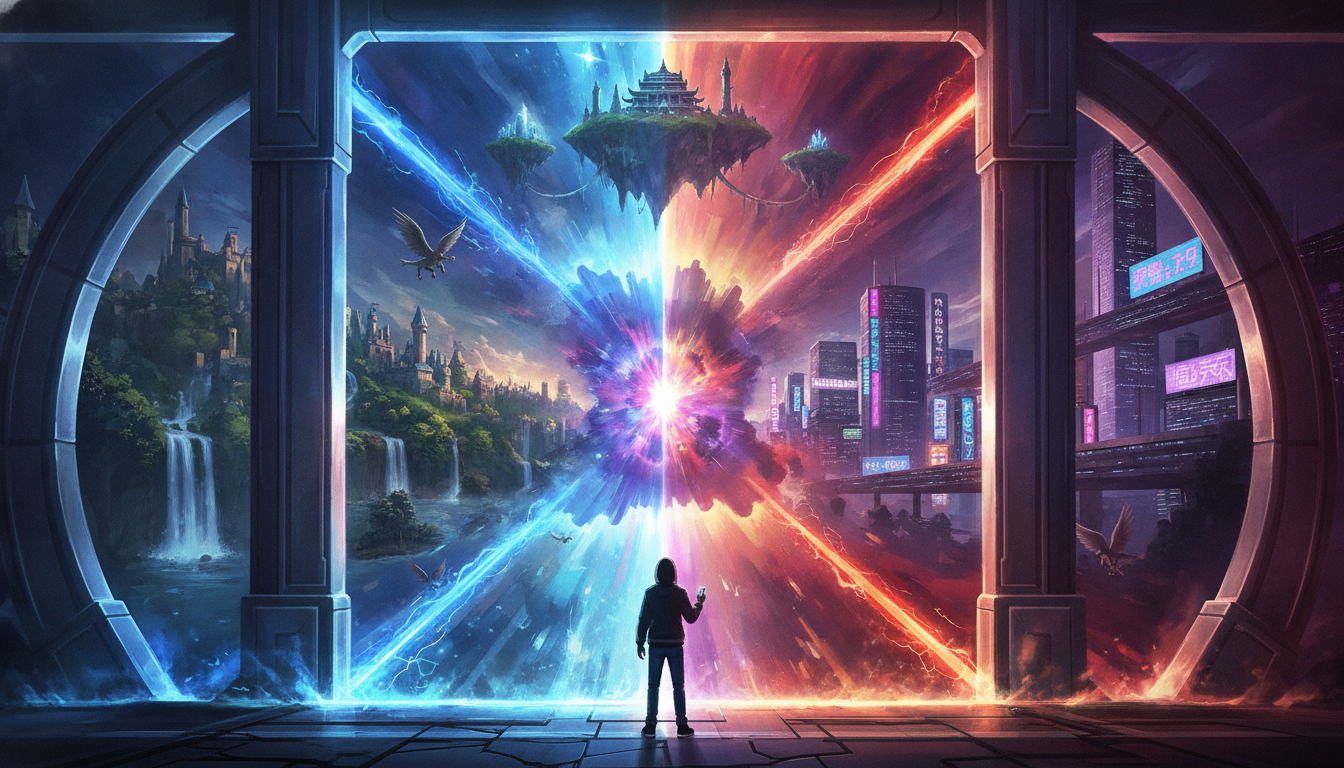
By 2026, isekai shows no signs of slowing down. If anything, studios and publishers have gotten smarter about differentiation — leaning into subgenres like villainess isekai (where protagonists are reincarnated as the story’s villain and try to change their fate), slow-life isekai (trading epic battles for cozy crafting and community-building), and isekai with horror or dark fantasy elements that push the genre into genuinely unexpected territory.
The obsession with isekai ultimately comes down to something timeless: the thrill of “what if?” What if your ordinary life was just the beginning? What if the real adventure was waiting on the other side of a mysterious portal, a truck collision, or a game screen you never shut off? Isekai anime answers that question with creativity, spectacle, and heart — and as long as humans love the idea of a second chance at something extraordinary, the genre will keep finding new worlds to explore.
