

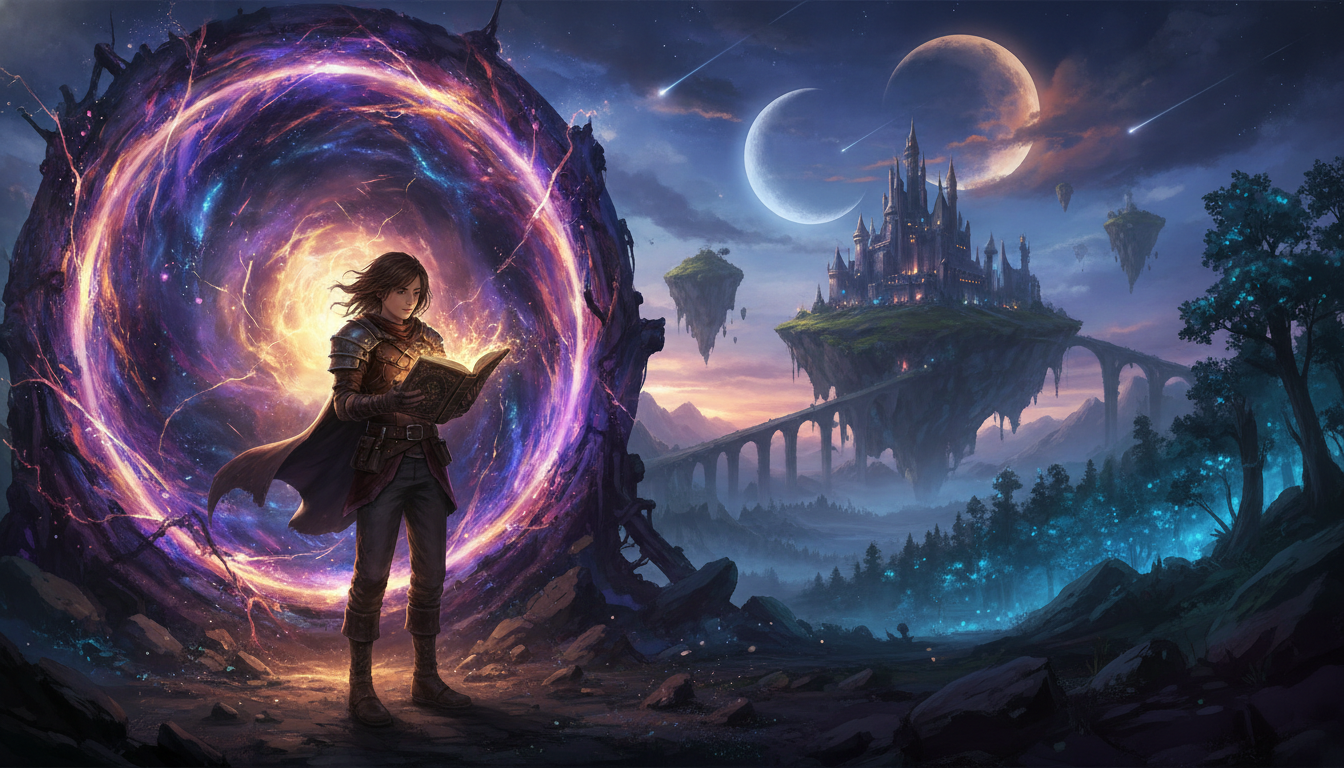
Have you ever sat through a mind-numbing Monday, stared at the ceiling, and thought, “I wish I could just wake up in another world”? You are not alone — and anime has been feeding that exact fantasy for decades. The isekai genre, whose name literally translates from Japanese as “another world,” is built on one glorious premise: an ordinary person gets yanked out of their boring life and dropped into a realm of magic, monsters, dragons, and destiny. Whether the hero dies and gets reincarnated, falls into a video game, or gets hit by the most narratively convenient truck in fiction history, the result is the same — adventure on an epic scale.
What makes isekai so irresistibly bingeable is its dual promise. On one hand, it delivers pure escapism — lush fantasy worlds, intricate magic systems, and the thrill of starting fresh with a clean slate. On the other hand, the best entries in the genre ask surprisingly deep questions about identity, purpose, and what it actually means to belong somewhere. When a character who felt invisible in the real world suddenly becomes a hero, a demon lord, or the most overpowered spellcaster in recorded history, audiences feel that power fantasy viscerally. It is wish fulfillment elevated to an art form — and it is absolutely okay to love it.
The isekai wave has only grown stronger heading into 2026, with new titles premiering every season and older classics still pulling in new fans. Whether you are a longtime anime veteran or someone who just discovered the genre, this guide will walk you through the absolute best isekai anime that deserve a spot on your watchlist. Buckle up — reality is optional from here on out.
The Grandfather of Modern Isekai: Sword Art Online
No conversation about isekai starts without mentioning Sword Art Online, the series that arguably turbocharged the genre’s mainstream popularity when it premiered in 2012. Produced by A-1 Pictures and based on Reki Kawahara’s light novel series, SAO follows Kirito, a teenage gamer who logs into a fully immersive virtual reality MMORPG — only to discover that logging out is impossible, and dying in the game means dying in real life.
The first arc, Aincrad, remains some of the most gripping anime television of the 2010s. Kirito’s journey through 100 floors of a floating steel castle, the relationships he builds, and the moral weight of a world where the stakes are literally life and death still hold up remarkably well. SAO launched the “trapped in a game” isekai sub-genre and inspired countless successors. Love it or critique it, its cultural impact is undeniable.
The Gold Standard of Fantasy Isekai: Re:ZERO − Starting Life in Another World
If SAO was the spark, Re:ZERO was the genre’s coming-of-age moment. Written by Tappei Nagatsuki and animated by White Fox, Re:ZERO premiered in 2016 and immediately subverted every expectation. Protagonist Subaru Natsuki is summoned to a fantasy world but receives no cheat powers, no legendary sword, and no instant respect. His only ability — Return by Death — resets time every time he dies, forcing him to relive trauma over and over.
Re:ZERO is genuinely dark. It explores depression, obsession, and the psychological toll of helplessness in ways that most fantasy anime avoid entirely. Subaru is not a power fantasy — he is deeply flawed, sometimes frustrating, and achingly human. The result is one of the most emotionally complex isekai ever produced. Season 2, which aired in 2020–2021, expanded the world and its lore to breathtaking effect, and the series continues to be a touchstone for the genre.
The Demon Lord Who Did It Differently: That Time I Got Reincarnated as a Slime
That Time I Got Reincarnated as a Slime — or Tensura, as fans affectionately call it — is the rare isekai that manages to be both cozy and genuinely epic. Based on Fuse’s light novel series and animated by Eight Bit, it follows Satoru Mikami, a 37-year-old office worker who dies and is reborn as a slime creature in a fantasy world. He quickly acquires the ability to absorb and mimic other beings’ powers, earns the name Rimuru Tempest, and proceeds to build a peaceful nation for monsters.
Tensura is special because its core drive is not combat or conquest — it is community. Rimuru is a natural leader and diplomat who genuinely cares about the beings around him. The series rewards patience, with its world-building becoming richer and more intricate with every arc. The anime adaptation has been running since 2018 and remains one of the most consistently high-quality isekai productions in the industry.
The Dark Horse Hits: Isekai Hidden Gems Worth Your Time
The genre’s popularity means it produces both blockbusters and brilliant outliers. Here are some isekai titles that deserve far more attention than they typically receive:
- The Rising of the Shield Hero (2019) — Naofumi Iwatani is summoned as a hero but immediately betrayed and ostracized, creating one of the most emotionally compelling underdog arcs in isekai history.
- Mushoku Tensei: Jobless Reincarnation (2021) — Widely regarded by fans as the gold standard of “reincarnation done right,” it features stunning animation from Studio Bind and an unusually mature exploration of its protagonist’s second chance at life.
- KonoSuba: God’s Blessing on This Wonderful World! (2016) — A full-on comedy that parodies every isekai trope with sharp wit. Kazuma Sato and his chaotically incompetent party are among the funniest ensembles in anime.
- Overlord (2015) — Momonga, a powerful undead sorcerer, gets stranded in a game world and decides to lean fully into his villain aesthetic. Dark, strategic, and deeply satisfying.
- The Eminence in Shadow (2022) — A meta-comedy where the protagonist is convinced he is playing the role of a secret shadow mastermind — and accidentally turns out to be exactly that.
Why Overpowered Heroes Keep Us Hooked
One of isekai’s most beloved tropes is the overpowered protagonist — the hero who is so dramatically stronger than everyone else that watching them operate feels like cheating in the best possible way. There is a reason this never gets old, and it connects to something deeply satisfying in the viewer’s brain. As explored in our piece on why overpowered MC anime never gets old, the appeal lies in wish fulfillment combined with the joy of watching a character who earns their power through the narrative logic of the world they inhabit.
Isekai amplifies this formula because the hero arrives as an outsider. Every display of overwhelming power carries the subtext of validation — I may have been nothing in my old world, but here, I matter. That emotional undercurrent is what separates great isekai from mere power-trip fantasies.
What Makes an Isekai Truly Unforgettable
| Series | Year | Core Appeal |
|---|---|---|
| Sword Art Online | 2012 | High-stakes virtual reality survival |
| Re:ZERO | 2016 | Psychological depth, emotional realism |
| KonoSuba | 2016 | Genre-savvy comedy and chaos |
| Tensura (Slime) | 2018 | World-building, diplomacy, community |
| Mushoku Tensei | 2021 | Mature reincarnation narrative, stunning animation |
| The Eminence in Shadow | 2022 | Meta-humor, action, wish-fulfillment satire |
The entries that stand the test of time share a common thread: they use the “transported to another world” premise as a lens, not a crutch. The best isekai are ultimately about people — how they change, what they build, and what they discover about themselves when the rules of reality no longer apply.
The Genre Is Not Slowing Down
Heading into 2026, isekai remains one of anime’s most commercially and creatively vital genres. New adaptations of beloved light novels continue to arrive each season, and the audience — both in Japan and globally — keeps growing. Streaming platforms have made it easier than ever for international fans to access new episodes within hours of their Japanese broadcast, turning isekai into a genuinely global phenomenon.
The genre has also matured considerably. Early isekai could be criticized for relying heavily on wish-fulfillment shortcuts. But modern entries are increasingly willing to interrogate their own tropes, deliver complex characters, and explore the emotional cost of leaving one world behind for another.
Isekai, at its heart, is about the universal hunger for a second chance — a fresh start somewhere extraordinary. Whether you want edge-of-your-seat tension like Re:ZERO, heartwarming nation-building like Tensura, or laugh-out-loud chaos like KonoSuba, the genre has something extraordinary waiting for you. Pick one, press play, and let reality take a backseat. You have got another world to explore.
