

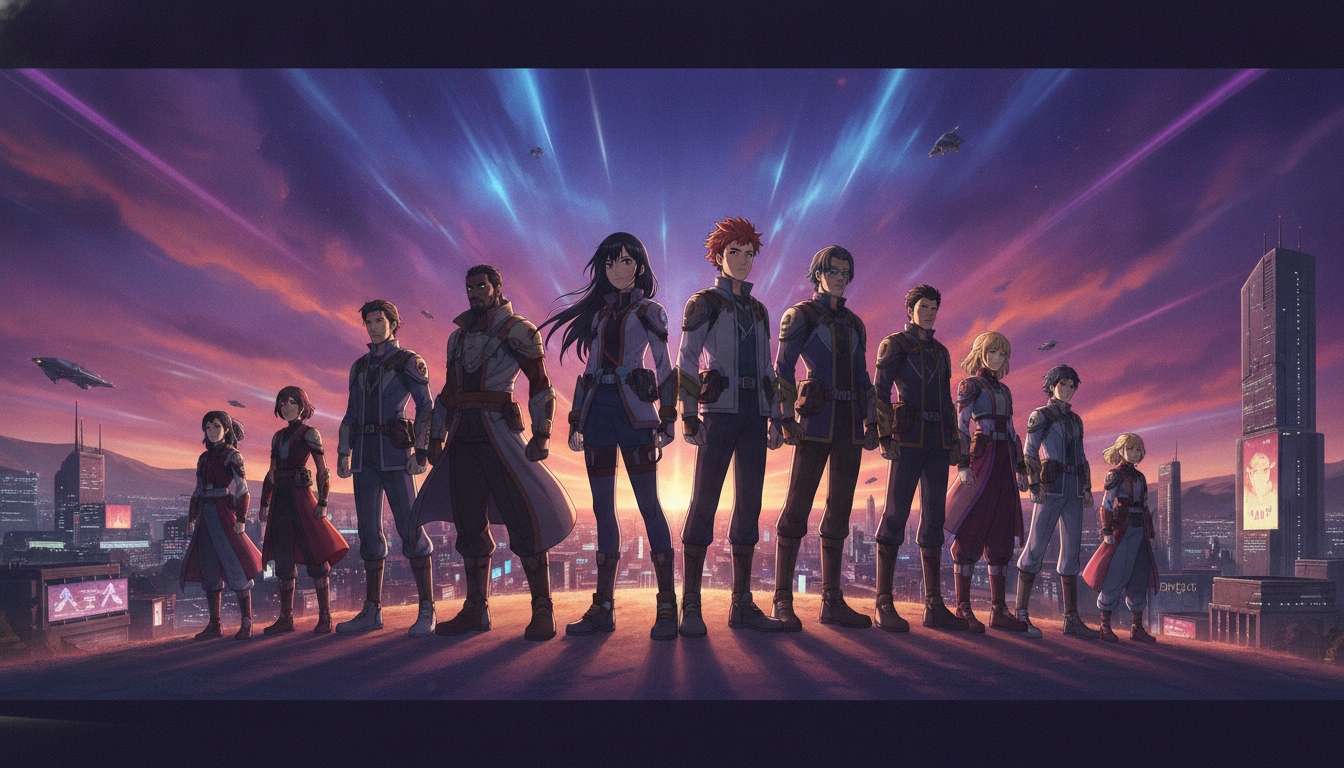
Somewhere between a teenager screaming at the sky about his dead friends in Attack on Titan and a rubber-limbed boy declaring he’ll become King of the Pirates in One Piece, anime quietly stopped being a niche hobby and became the dominant storytelling force of the 21st century. It didn’t ask for permission. It didn’t water itself down for Western audiences. It just kept being exactly what it was — bold, emotional, visually spectacular, and deeply, unapologetically weird — until the rest of the world had no choice but to fall in love with it.
What we’re witnessing isn’t a trend or a fad. It’s a full-scale cultural conquest, decades in the making, finally cresting into something that even Hollywood boardrooms can no longer ignore. Netflix, Crunchyroll, Disney+, and Amazon Prime are pouring hundreds of millions of dollars into anime licensing and production. Merchandise lines stretch from Tokyo to São Paulo to Lagos. And the fanbase? It’s no longer a crowd of teenagers trading DVDs at conventions. It’s doctors, lawyers, parents, teachers, and grandparents — people across every demographic on earth — staying up too late to watch one more episode.
So how did this happen? How did a Japanese art form rooted in hand-drawn frames, samurai mythology, and shonen (young hero) adventure stories transform into the most globally consumed animated entertainment on the planet? Pull up a chair. This is going to take a minute.
The Deep Roots: Anime Was Always Built to Travel
The seeds of anime’s world domination were planted long before streaming algorithms and social media fandoms. Astro Boy, created by Osamu Tezuka and first broadcast in Japan in 1963, is widely considered the grandfather of modern anime. Tezuka drew heavy inspiration from American animation styles — particularly early Disney — and fused them with manga (Japanese comics) storytelling traditions. The result was something genuinely new: expressive, large-eyed characters carrying emotionally complex stories.
By the 1970s and 1980s, shows like Mobile Suit Gundam (1979) were already exploring themes of war, trauma, and moral ambiguity that Western cartoons of the same era simply weren’t touching. Dragon Ball (1986) brought kinetic action and tournament-style power escalation to a generation of kids who couldn’t get enough. These weren’t throwaway shows. They were mythologies being built in real time.
When Akira (1988) and Ghost in the Shell (1995) reached international audiences, they fundamentally changed what Western viewers believed animation could do. These weren’t children’s films. They were dense, philosophical, visually stunning works that made filmmakers like the Wachowski sisters openly admit the influence on The Matrix. Anime had already proven it could compete at the highest levels of storytelling — the world just needed time to catch up.
The Streaming Revolution and the Crunchyroll Effect
For a long time, accessing anime outside Japan meant either waiting for slow localization deals, buying expensive import DVDs, or — let’s be honest — finding creative solutions online. The early internet fan-subtitle (fansub) community, while legally grey, was instrumental in spreading anime to global audiences who simply had no other way to watch it.
Then came legal streaming, and everything accelerated. Crunchyroll, founded in 2006, built itself specifically around bringing anime to Western audiences quickly and legally. By the early 2020s, it had grown into the world’s largest dedicated anime streaming platform, with tens of millions of subscribers. When Sony completed its acquisition of Crunchyroll in 2021 and merged it with Funimation’s library, the result was an anime streaming giant with a catalog that’s genuinely hard to exhaust.
Netflix threw enormous resources at the space too, producing original anime series and aggressively licensing high-profile titles. The platform’s global reach meant that a show like Demon Slayer: Kimetsu no Yaiba or Jujutsu Kaisen could explode simultaneously in dozens of countries on the same day — something physically impossible in the VHS era. Simultaneity created shared cultural moments. Shared cultural moments created fandoms. And fandoms, in 2026, are the most powerful marketing engine on earth.
Why Anime Storytelling Hits Different
Ask any converted fan why they got hooked, and they’ll usually say something like: “It actually takes the story seriously.” That’s the key. Anime, particularly in the shonen and seinen (adult-oriented) genres, operates on a level of narrative ambition that mainstream Western animation rarely matches.
Consider what Fullmetal Alchemist: Brotherhood (2009) does in its 64 episodes: it explores grief, state-sponsored genocide, the ethics of sacrifice, and the limits of human knowledge — all while delivering some of the most satisfying action sequences ever animated. Or look at how Neon Genesis Evangelion (1995–1996) used giant robot battles as a vehicle to dissect depression, identity crisis, and the terror of genuine human connection. These aren’t subjects most Saturday-morning cartoons were willing to touch.
The emotional stakes in anime are also calibrated differently. Characters die. Villains have comprehensible motivations. Heroes fail, sometimes catastrophically. If you’ve ever found yourself unexpectedly devastated by a fictional character’s death — or stayed up debating whether Gojo or Sukuna would win in a fight — you already understand what makes anime storytelling so addictive.
The Visual Language That No One Else Does
Anime has developed a visual vocabulary entirely its own. The exaggerated sweat drops, the comedic chibi (super-deformed) character moments, the impossibly detailed sakuga (high-quality animation sequences used for key action scenes) — these aren’t arbitrary stylistic choices. They’re a shorthand that communicates emotional and tonal information instantly.
Studios like Ufotable, MAPPA, and Kyoto Animation have pushed the craft of hand-drawn and digitally enhanced animation to extraordinary heights. Ufotable’s work on the Demon Slayer film Mugen Train (2020) made it the highest-grossing film in Japanese box office history at the time of its release. MAPPA’s production of Attack on Titan: The Final Season and Jujutsu Kaisen set new benchmarks for kinetic, emotionally charged action animation.
Kyoto Animation, which survived a devastating arson attack on its studio in 2019 that claimed 36 lives, continued producing some of the most beautiful work in the industry — a testament to the resilience of anime’s creative community. Their work on series like A Silent Voice (the theatrical film from 2016) demonstrates that anime can deliver quiet, intimate emotional storytelling just as powerfully as its most explosive battle sequences.
The Global Fandom Machine: Cosplay, Social Media, and Community
You cannot separate anime’s global growth from the communities it builds. Anime fandoms are among the most passionate, creative, and organized in all of entertainment. The evidence is everywhere:
- Major conventions like Anime Expo in Los Angeles and Japan Expo in Paris consistently draw hundreds of thousands of attendees annually.
- Cosplay (costume play, where fans dress as their favorite characters) has become a global art form and competitive sport in its own right.
- Fan art, fan fiction, and fan analysis channels on YouTube and TikTok generate billions of views.
- Merchandise from major series — Naruto, One Piece, Dragon Ball, Pokémon — generates staggering revenue figures year after year.
- Anime music, from iconic openings to orchestral score releases, fills concert halls on world tours.
What makes anime fandoms particularly powerful is their investment. These aren’t passive audiences. They debate, theorize, create, translate, and evangelize. A single great episode of Jujutsu Kaisen or a shocking plot twist in a seasonal series can dominate global social media trends for days. If you want to understand how storytelling and community shape identity, anime fandoms are one of the most fascinating case studies available.
What 2026 Looks Like and Why It’s Only Getting Bigger
As of 2026, the anime industry shows no signs of slowing. Major ongoing series continue to command massive global audiences. New adaptations of beloved manga titles are announced constantly. Korean, Chinese, and other Asian animation industries are increasingly influenced by anime aesthetics, creating a broader wave of animation production across the continent.
Hollywood’s relationship with anime has matured from clumsy live-action remakes — often best forgotten — to genuine co-production partnerships and original animated works inspired by the form. The cultural exchange is running in both directions now, enriching both sides.
The genre’s range has never been wider. From brutal dark fantasy epics to gentle slice-of-life stories about bakeries and friendships, there is an anime for literally every human being on earth. The only question is which one unlocks your obsession first.
Anime Isn’t Going Anywhere — It’s Going Everywhere
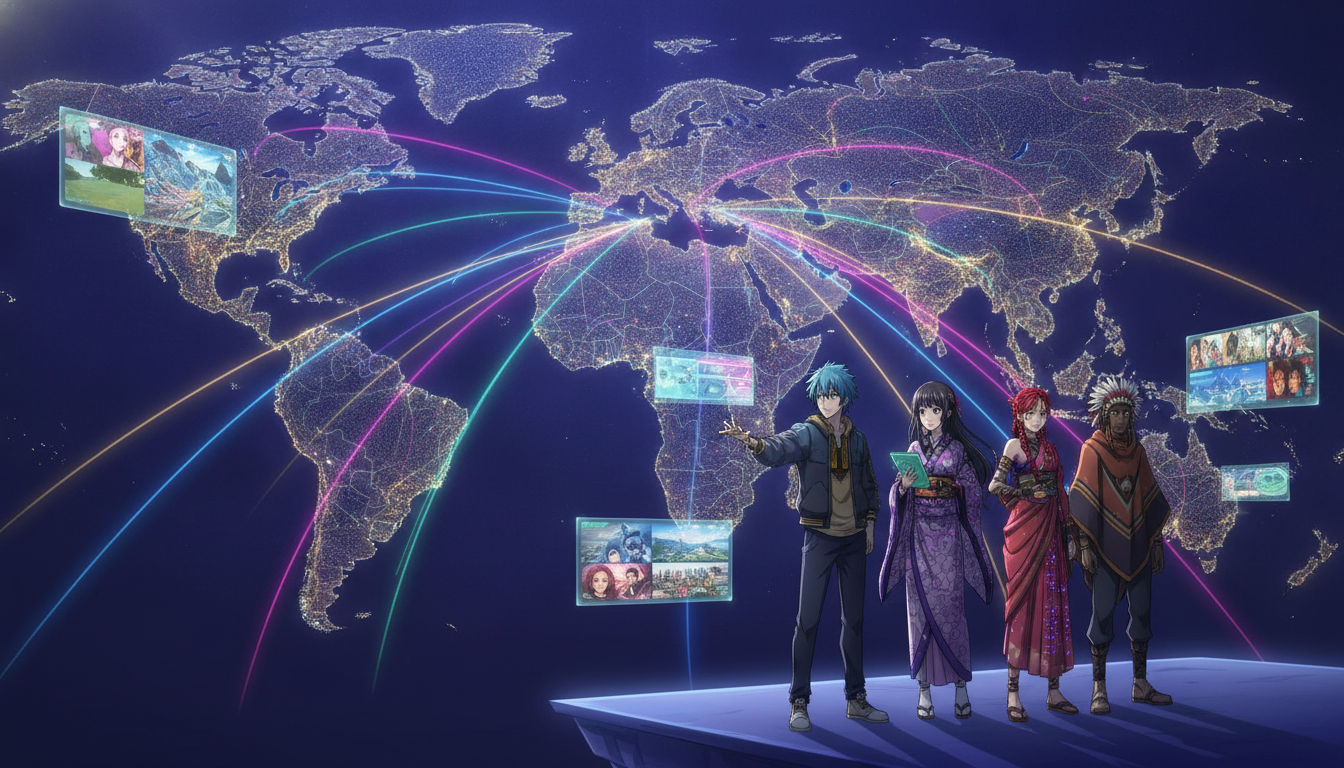
Anime conquered the world by refusing to compromise. It told the stories it wanted to tell, in the style it chose, on its own terms — and eventually the world realized it had been missing out. That authenticity, that refusal to dumb things down or sand off the strange edges, is exactly what makes anime irreplaceable.
The question was never if anime would go global. Looking back now, it was always inevitable. The only surprise is how long the rest of the world made it wait.

2 Comments
Pingback: These Video Game Easter Eggs Were Hiding in Plain Sight - ICL Geek Curiosities
Pingback: Still Illegal in 2026: The Weirdest Laws on Earth - ICL Geek Curiosities