

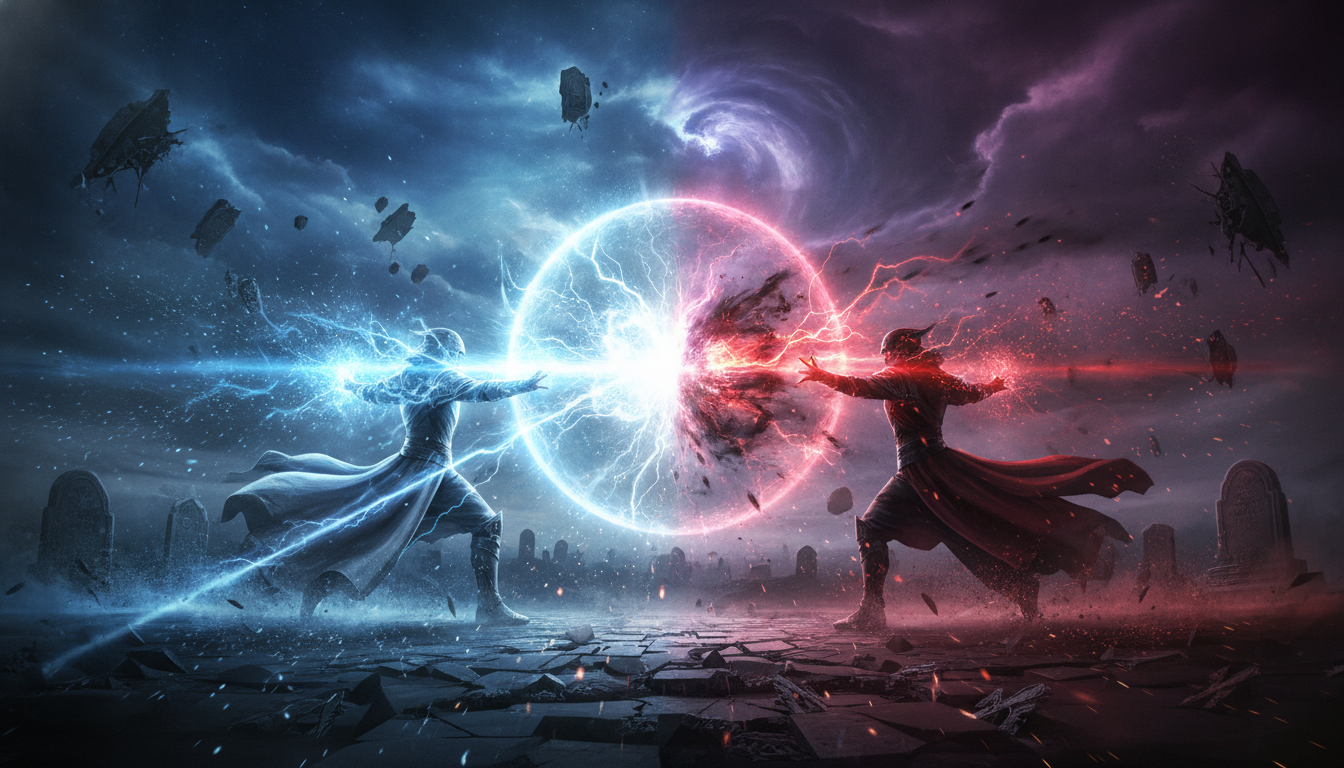
Few rivalries in modern anime have captured the collective imagination of the fandom quite like the clash between Satoru Gojo and Ryomen Sukuna in Jujutsu Kaisen. From the moment these two titans were placed in the same fictional universe, fans worldwide began debating, theorizing, and passionately arguing about who would win in an all-out confrontation. Creator Gege Akutami spent years building toward this moment, layering both characters with mythological depth, terrifying abilities, and philosophical weight that elevated what could have been a simple “strongest vs. strongest” showdown into something far more meaningful.
When the Gojo vs. Sukuna fight finally materialized in the manga — and later became one of the most anticipated arcs in anime adaptation history — it didn’t just answer the “who wins” question. It fundamentally reframed what power means in the Jujutsu Kaisen world. This wasn’t just a battle of techniques; it was a collision of eras, ideologies, and destiny itself. If you’re still trying to wrap your head around why the gap between these two worked out the way it did, you’re in the right place. Let’s break it all down.
Who Is Satoru Gojo? The Strongest of the Modern Era
Satoru Gojo is introduced early in Jujutsu Kaisen as the most powerful jujutsu sorcerer alive — a character so overpowered that the story essentially has to remove him from the board just to create dramatic tension. That alone tells you something about how dominant he is written to be.
His power centers on the Six Eyes, a rare ocular ability that grants him an extraordinary perception of cursed energy, allowing him to use techniques with near-zero consumption. Paired with his Infinity — a passive ability derived from the Limitless technique that creates an ever-present barrier between him and any attack — Gojo is essentially untouchable under normal circumstances. His Domain Expansion, Unlimited Void, floods the target’s consciousness with infinite information, rendering them unable to think or act.
- His Limitless technique manipulates space at the atomic level, bending the concept of distance itself
- The Six Eyes are said to appear only once in a generation, making his combination of abilities essentially unrepeatable
- Gojo’s confident, almost reckless personality isn’t arrogance without basis — it’s backed by a lifetime of never meeting a true equal
Gojo represents the pinnacle of what modern jujutsu sorcery can achieve. He’s the product of centuries of refinement in the Gojo clan’s techniques, amplified by a generational gift that no training alone could replicate.
Who Is Ryomen Sukuna? The King of Curses Explained
Sukuna is not just strong — he is ancient. Over a thousand years ago, during the golden age of jujutsu, Sukuna was a human sorcerer so monstrous and powerful that even after his death, his cursed energy refused to dissipate. Instead, it lingered in his twenty fingers, each one a special-grade cursed object capable of corrupting whoever ingests it.
His techniques include Dismantle and Cleave, slashing-based cursed energy attacks that he can apply with surgical or catastrophic precision depending on context. His Domain Expansion, Malevolent Shrine, is unique because it doesn’t create an enclosed barrier — it manifests in the real world, a distinction that makes it extraordinarily dangerous and flexible. It can cover an area of roughly 200 meters, automatically hitting everything inside with his slashing attacks.
What makes Sukuna genuinely terrifying is that he operated in an era when cursed spirits were reportedly far more powerful than they are today, meaning he sharpened his abilities against threats that no modern sorcerer has ever faced. He didn’t just survive that world — he conquered it.
The Limitless vs. Malevolent Shrine: A Technical Breakdown
Understanding why the fight plays out the way it does requires understanding how their abilities interact technically. Gojo’s Infinity is passive and automatic, making physical attacks effectively useless against him. To hurt Gojo, you need either a technique that bypasses space itself or something that overwhelms the filtering capacity of his Infinity.
Sukuna’s approach is methodical. His slashing techniques don’t rely on brute force in the conventional sense — they operate through the manipulation of cursed energy ratios applied to a target, which means they interact with Infinity differently than a simple punch would. His Domain Expansion’s guaranteed-hit effect within its area of effect is particularly significant because Domain Expansions in Jujutsu Kaisen are known to neutralize the barrier techniques of opposing domains.
This is the crux of the power gap debate: Malevolent Shrine’s open-air nature gives it a range and adaptability that closed-barrier domains simply can’t replicate, while also being difficult to fully counter with domain clash mechanics.
The Role of Mahoraga and the Fight’s Turning Point
One of the most jaw-dropping moments in the Gojo vs. Sukuna confrontation involves the shikigami Mahoraga, the most powerful of the Ten Shadows Technique’s shikigami and one that no Zenin clan member had ever successfully exorcised. Sukuna, during his time possessing Megumi Fushiguro’s body, gains access to this technique.
Mahoraga possesses a wheel on its back called the Wheel of Adaption, which allows it to adapt to any phenomenon it encounters — including techniques that should theoretically be impossible to bypass. The implication for Gojo’s Infinity is devastating: Mahoraga can adapt to Limitless itself, effectively learning to cut through what was once an impenetrable defense. Sukuna then absorbs and applies this adaptation, allowing him to strike Gojo in ways that circumvent Infinity.
This is where the power gap crystallizes. Gojo’s Infinity, his ultimate defense, is not invincible against someone who has access to adaptive evolution at a conceptual level. It’s a beautifully constructed narrative and mechanical checkmate.
Why Sukuna Is Built to Beat the Modern Era
There’s a thematic argument here that goes beyond technique matchups. Sukuna is framed as a relic of a more brutal, more powerful age of jujutsu. The world in Jujutsu Kaisen has been gradually weakening — the cursed spirits of the modern era, while dangerous, are not what they used to be. Sukuna is an anachronism, a creature forged in conditions that simply no longer exist.
Gojo, for all his extraordinary gifts, is the strongest product of a weakened age. He was never tested by the apocalyptic threats of Sukuna’s era. This isn’t a knock on Gojo — his achievements are staggering — but it does explain why Akutami designed Sukuna to sit just slightly above him in the cosmology of power.
If you enjoy this kind of layered power-system storytelling, you might also love these anime fights that hit different and you know why — a deep dive into the craft behind anime’s most memorable combat sequences.
What the Fight Means for Jujutsu Kaisen’s Story
Gojo’s defeat — and we’re not going to dance around it — is one of the most narratively consequential moments in recent shonen manga history. For years, Gojo functioned as a safety net for the reader. As long as he was around, the situation couldn’t truly be hopeless. His removal changes the entire emotional register of the story.
It also reflects broader themes in Jujutsu Kaisen about the cycle of power and the inevitability of being surpassed. No generation remains supreme forever. Even the strongest sorcerer alive is, in the end, mortal — and cursed. For fans interested in how dark fantasy uses power and mortality thematically, dark fantasy anime like Berserk operate in a very similar emotional space.
Key Facts Every Fan Should Know
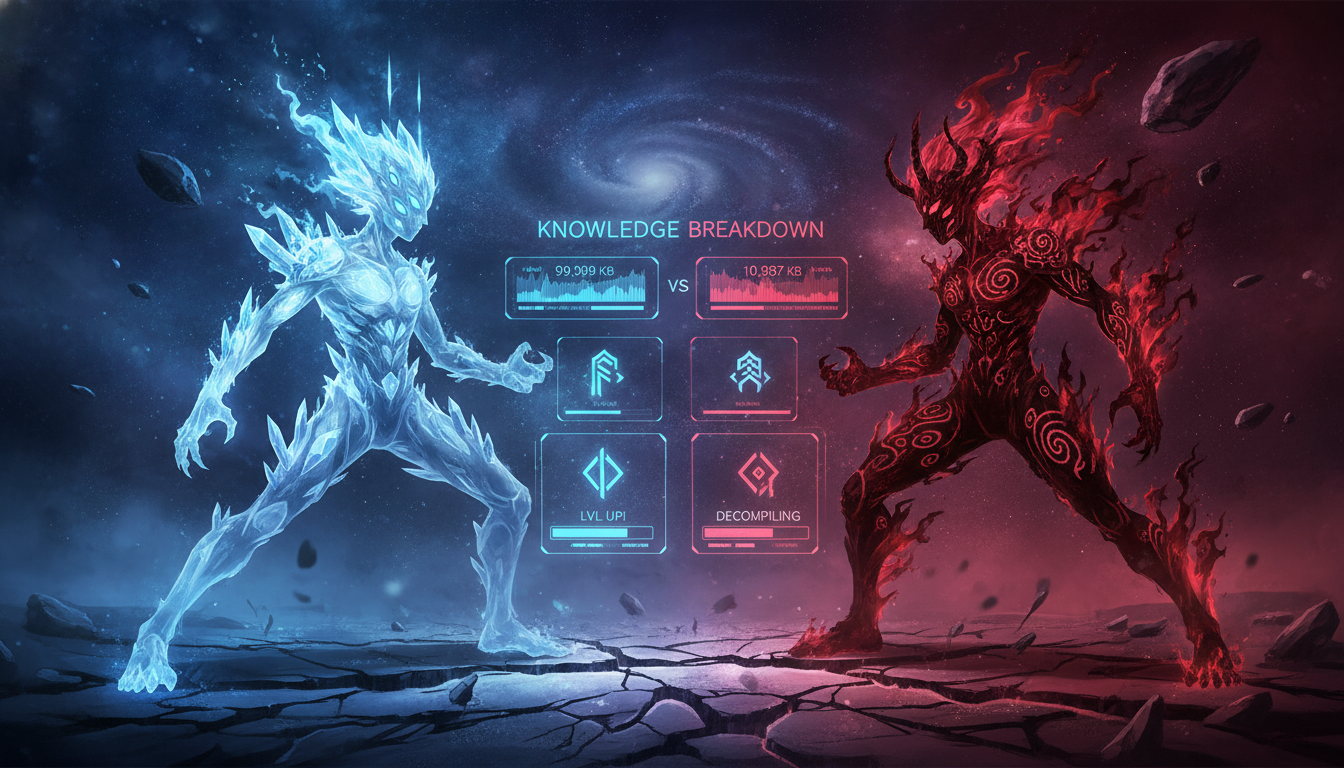
- Sukuna’s full power is tied to all twenty fingers being consumed — Yuji Itadori’s journey involves ingesting them progressively throughout the story
- Gojo’s Six Eyes allow him to see cursed energy in near-infinite detail, making him virtually immune to energy-based feints
- Malevolent Shrine is the only known Domain Expansion that doesn’t require a barrier, making it functionally impossible to destroy from the outside
- The fight between Gojo and Sukuna spans multiple chapters and is widely considered one of the longest and most technically detailed fights in the manga’s run
- Gojo’s technique Red (the reversal of Infinity, which creates repulsion rather than attraction) is so destructive it’s rarely used near allies
The Gojo vs. Sukuna debate will never fully die — that’s the nature of great fictional rivalries. But understanding the mechanical, thematic, and historical layers that Akutami built into these characters makes the outcome feel less like a narrative gut-punch and more like an inevitable, elegantly designed conclusion. Gojo was the strongest of his world. Sukuna was stronger than that world ever prepared anyone to face. In Jujutsu Kaisen, that distinction is everything.

1 Comment
Pingback: Why Anime Conquered the World and Won't Stop - ICL Geek Curiosities