

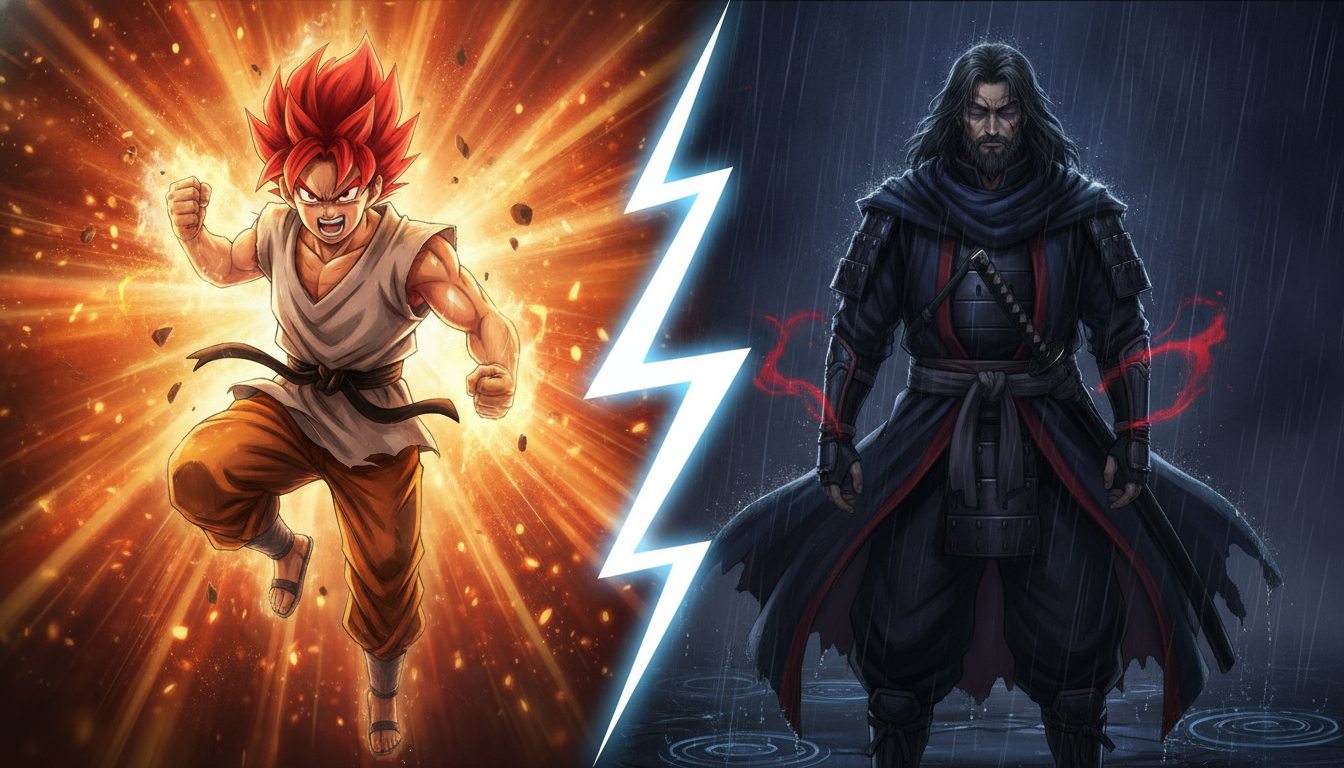
Imagine two anime fans sitting down to watch together. One pulls up Demon Slayer and starts hyping the explosive sword fights and the underdog hero’s emotional journey. The other reaches for Berserk and quietly warns their friend that things are about to get very, very dark. Both are watching anime — but they might as well be in different universes. That gap has a name, and it comes down to a single, deceptively simple concept: the demographic label stamped on a manga or anime before it ever reaches your screen.
Shonen and seinen are two of the most important demographic categories in Japanese manga and anime publishing. “Shonen” (少年) literally means “young boy,” while “seinen” (青年) means “young man” or “adult male.” These labels originally described the target readership of the print magazines where most manga is serialized — Weekly Shonen Jump for shonen, Young Animal or Monthly Big Comic Spirits for seinen, for example. But over decades, these tags have evolved into something bigger: they signal tone, theme, visual style, and emotional depth in ways that now define entire fan communities worldwide. Whether you’re a longtime anime veteran or someone who just finished their first season of something and wants more, understanding the difference between these two categories could genuinely transform how you explore the medium.
What Actually Defines Shonen Anime
Shonen anime is built around a core emotional engine: growth. The protagonist — almost always young, often male, frequently clueless about their own potential — starts from the bottom and fights, trains, fails, and pushes forward. The stories are designed to be energetic, accessible, and morally clear. Good and evil exist. Friendship matters. Hard work, at least in the story’s logic, pays off.
The “Big Three” of the 2000s — Naruto, Bleach, and One Piece — became cultural monuments precisely because they mastered this formula. One Piece, still running as of 2026 after beginning serialization in 1997, is the best-selling manga of all time and a textbook shonen epic about chasing dreams and never giving up. More recently, series like My Hero Academia, Demon Slayer: Kimetsu no Yaiba, and Jujutsu Kaisen have carried the torch into a new generation, each delivering jaw-dropping animation, emotionally resonant arcs, and battle sequences that land with the force of a freight train. If you want to know why those fights hit so hard emotionally, these anime fights hit different and you know why.
Key hallmarks of shonen anime include:
- Power-scaling battles where characters grow stronger through training and determination
- Found-family dynamics — the crew or team is everything
- Clear moral stakes — protecting others is usually the ultimate motivator
- Flashback trauma used to justify a character’s fighting spirit
- Optimistic endings (or at least hopeful ones) even after devastating losses
- Broad accessibility — you can usually jump in without a philosophy degree
Shonen doesn’t mean shallow, though. Fullmetal Alchemist: Brotherhood — widely considered one of the greatest anime ever made — is a shonen series that tackles themes of grief, state violence, genocide, and the cost of playing god. The demographic label sets the stage, not the ceiling.
What Actually Defines Seinen Anime
Seinen anime is, at its core, designed for an older audience — typically adults 18 and up — and it shows. The tonal range here is staggering. Seinen can be brutally violent (Berserk, Vinland Saga), psychologically suffocating (Monster, Perfect Blue), slice-of-life and meditative (Mushishi, Bartender), or darkly comedic (Prison School, Grand Blue Dreaming). What unites these wildly different series is a willingness to sit inside moral ambiguity, complexity, and the messy realities of adult life.
Berserk, created by the late Kentaro Miura and serialized beginning in 1989, is perhaps the defining seinen epic. Its protagonist, Guts, is one of the most psychologically rich characters in all of fiction — a man defined by trauma, rage, and a stubbornly human desire to survive in a world of demons and betrayal. Miura’s death in 2021 was mourned across the global anime and manga community as a profound loss. Vinland Saga, adapted from Makoto Yukimura’s manga and animated by Wit Studio for its first season, similarly uses Viking-age warfare not for spectacle but to interrogate the very concept of violence — whether there is ever a truly just reason to kill. These are the kinds of questions seinen is built to hold.
Comparing the Two: A Quick Reference
| Feature | Shonen | Seinen |
|---|---|---|
| Target audience | Teens / younger readers | Adults (18+) |
| Protagonist arc | Rising underdog | Complex, often morally grey |
| Tone | Hopeful, energetic | Varied; often darker or introspective |
| Violence | Action-focused, stylized | Can be graphic, consequence-driven |
| Themes | Friendship, growth, perseverance | Mortality, identity, society, ethics |
| Example series | One Piece, Jujutsu Kaisen | Berserk, Mushishi, Monster |
The Overlap Zone: When Lines Blur
Here’s where things get genuinely interesting. The demographic label and the actual content don’t always line up the way you’d expect. Attack on Titan (Shingeki no Kyojin), Hajime Isayama’s massive hit, was serialized in Bessatsu Shonen Magazine — making it technically shonen. Yet its themes of war, genocide, cycles of hatred, and political manipulation read as deeply seinen in spirit. Millions of adult fans were shaken by its final arc in ways that have more in common with reading a dystopian novel than watching a cartoon.
Conversely, some seinen series — like Yotsuba&! by Kiyohiko Azuma — are gentle, child-friendly slice-of-life stories about a cheerful little girl exploring the world. The demographic label reflects the intended publication venue and readership, not always the content rating. This is why savvy anime fans learn to look beyond the tag and read actual descriptions, episode reviews, or viewer ratings before diving in.
The Culture Behind Each Category
Understanding shonen and seinen also means understanding something about Japanese superstitions, values, and cultural identity — the worldviews baked into the storytelling. Shonen series often reflect concepts like ganbaru (persevering, giving your best no matter what) and the social value of group loyalty and mutual sacrifice. These aren’t just plot devices — they’re cultural touchstones that resonate deeply with Japanese audiences and have since spread globally.
Seinen, meanwhile, frequently interrogates those same values. Where shonen says “believe in your friends,” seinen might ask “what happens when the system you fight for is rotten?” Monster, written by Naoki Urasawa and serialized throughout the 1990s into the early 2000s, follows a surgeon who saves a boy’s life only to discover that boy grows up to become a serial killer. It’s a slow-burn psychological thriller that asks whether a life can ever be measured in terms of worth — and it offers no easy answers.
So Which Style Actually Fits You?
This is the question, and honestly, it’s less about age than it is about what you’re hungry for right now.
Go shonen if you:
- Want to feel fired up, emotional, and inspired by the time an episode ends
- Love tournament arcs, power-ups, and watching characters evolve over long stretches
- Are new to anime and want something accessible with a large fan community
- Need a story that reminds you why effort and connection matter
Go seinen if you:
- Crave moral complexity and don’t mind sitting with unanswered questions
- Want animation or storytelling that treats you as a fully formed adult
- Are curious about psychological depth, historical settings, or philosophical themes
- Have already burned through the major shonen titles and want something that hits differently
And honestly? You don’t have to choose. The most well-rounded anime fans usually have one foot in each camp — rewatching Haikyuu!! for the emotional catharsis while queuing up Planetes for the quiet existential weight of a space debris collector wondering what his life is for.
The Bigger Picture: Why the Distinction Matters in 2026
As anime continues its global expansion — with streaming platforms like Crunchyroll and Netflix investing heavily in simulcasts, original productions, and dubs — more viewers than ever are encountering the medium without any context for how it’s organized or why certain series feel so radically different. Knowing the shonen/seinen distinction is a genuine compass. It doesn’t tell you everything, but it tells you enough to stop being surprised when the “cool sword anime” you picked at random turns out to be a decades-long philosophical meditation on the nature of evil.
The demographic labels aren’t cages — they’re maps. And in a medium this vast and varied, even a rough map is worth having.
Whether you’re a shonen loyalist, a seinen devotee, or someone just beginning to explore what anime can actually be, one thing is certain: there has never been a better time to dive in. The library is enormous, the communities are passionate, and somewhere out there is a series that will absolutely wreck you in the best possible way. Start with what excites you. Let the other category find you when you’re ready.

1 Comment
Pingback: Dark Fantasy Anime Like Berserk That Will Haunt You - ICL Geek Curiosities