

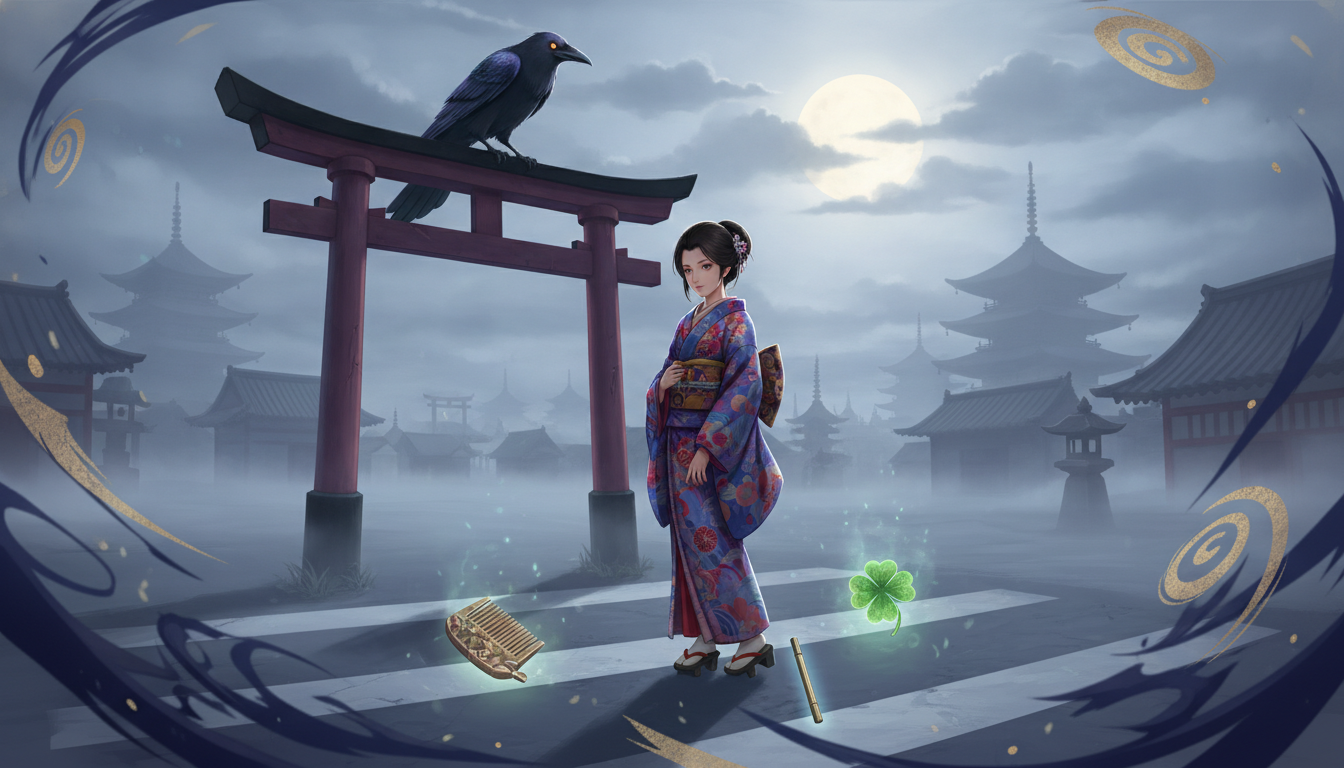
Have you ever sneezed twice in a row and wondered if someone was talking about you? In Japan, that’s not just a passing thought — it’s a time-honored superstition with centuries of cultural weight behind it. Japanese folklore is packed with beliefs that govern everything from how you sleep to which direction you should never point your chopsticks. And here’s the wild part: anime, manga, and pop culture have been quietly teaching Western fans these superstitions for decades without most of us even realizing it. The moment you see a character freak out about sleeping with their pillow facing north, or a villain appear on a stormy night with a crow cawing in the background, you’re watching living folklore play out on screen.
Japan’s relationship with superstition is uniquely layered, blending Shinto spirituality, Buddhist tradition, and centuries of folk wisdom into a belief system that still influences daily life in 2026. Unlike Western superstitions that often get dismissed as pure old wives’ tales, many Japanese superstitions remain embedded in architecture, hospital room numbering, wedding planning, and even business practices. For anime fans, understanding these beliefs transforms the viewing experience entirely — suddenly those background details and throwaway lines your favorite characters drop start carrying enormous narrative and cultural weight. Whether you’re a longtime otaku or just beginning your journey into Japanese pop culture, this is the rabbit hole you didn’t know you needed.
The Numbers That Could Ruin Your Life: Tetraphobia and the Fear of Four
If you’ve ever noticed that hospitals in Japan sometimes skip the room number four, you’ve already stumbled into one of Japan’s most pervasive superstitions. The number 4 is considered deeply unlucky because in Japanese, it can be pronounced shi — which is also the word for death. Similarly, the number 9 sounds like ku, meaning suffering or agony. This fear of certain numbers is called tetraphobia (specifically for four), and it runs deep enough to influence real estate pricing, hospital wing layouts, and even product packaging.
In anime, this shows up constantly if you know what to look for. The cultural weight of these numbers affects how characters name things, how buildings are designed in fictional settings, and sometimes how villains or cursed items are numbered. Fans of Fullmetal Alchemist: Brotherhood will recognize how alchemy’s rules around equivalent exchange tap into a broader Japanese anxiety about cosmic balance and punishment — the idea that the universe keeps score isn’t far removed from superstition at all.
Crows, Cats, and Other Ominous Animal Omens
Animals carry enormous symbolic weight in Japanese superstition, and anime has arguably made some of these creatures iconic worldwide. Crows (karasu) are considered omens of bad luck or death in many Japanese folk beliefs, though the mythical three-legged crow, the Yatagarasu, is actually a divine messenger in Shinto tradition. The tension between crow-as-omen and crow-as-divine is a rich contradiction that storytellers have leaned into for generations.
Black cats, interestingly, carry more nuanced symbolism in Japan than in Western traditions. While a black cat crossing your path is bad luck in many Western countries, in Japan, cats in general — especially the iconic Maneki-neko (beckoning cat) — are symbols of good fortune. Sailor Moon, one of the most beloved magical girl series ever created, features Luna, a black talking cat who serves as a guardian and guide — a portrayal that leans heavily into the divine protective symbolism of cats in Japanese culture.
Other notable animal superstitions include:
- Crows cawing at night — considered a sign of impending misfortune or death
- Spiders in the morning — thought to bring good luck, while spiders at night are bad omens
- Foxes (kitsune) — magical shapeshifters associated with Inari, the Shinto deity of agriculture, portrayed in countless anime as tricksters or powerful allies
- Snakes shedding skin — considered a symbol of renewal and good fortune, often connected to wealth
- A white snake — seen as a particularly powerful omen of financial prosperity
Sleeping North and Other Daily Life Taboos
One of the most famous Japanese superstitions involves the direction you sleep. Sleeping with your head pointing north (kitamakura) is considered extremely bad luck because in Japanese funeral tradition, the deceased are laid out with their heads facing north. This belief is so culturally ingrained that even modern Japanese apartment listings sometimes mention which direction the bed placement allows.
Other everyday superstitions that bleed into anime and daily Japanese life include:
- Never stick chopsticks vertically into rice — this mimics the incense offering made at funerals and is deeply taboo
- Never pass food chopstick to chopstick — this mirrors the ritual handling of cremated bones at Japanese funerals
- Whistling at night is believed to summon snakes or spirits
- Cutting your nails at night is thought to bring bad luck or shorten your life
- Sneezing once means someone is saying good things about you; sneezing twice means they’re saying bad things; three times means you’re catching a cold
These aren’t just quaint old traditions. Many of them appear organically in anime when characters eat together, which is why a character scolding another for chopstick etiquette often carries real cultural gravity rather than being mere table manners.
Omens of Death and the Supernatural: When Folklore Becomes Horror
Japanese horror — both in film and anime — is practically built on a foundation of traditional superstition. The concept of onryō, vengeful spirits born from intense emotions like jealousy or regret, is central to classics like Ringu and has influenced countless anime. The superstition that the dead can return to haunt the living if their emotions are left unresolved is one of the most enduring beliefs in Japanese folk tradition.
The anime Mob Psycho 100, created by ONE, features a protagonist who can see and exorcise spirits — a premise that draws directly from beliefs about restless souls and spiritual pollution known as kegare in Shinto tradition. Meanwhile, Toilet-Bound Hanako-kun turns school urban legends and ghost folklore into a full narrative universe, blending modern superstition with ancient Shinto and Buddhist concepts in a way that feels both fresh and deeply traditional.
For fans who enjoy the darker edge of anime storytelling, these supernatural elements hit different when you understand the real folklore powering them. Check out these anime fights hit different and you know why — because many of the most iconic battle scenes in supernatural anime are driven by characters confronting these very real folkloric forces.
Lucky Charms, Shrines, and the Business of Good Fortune
Not all Japanese superstitions are about avoiding doom — many are actively about attracting good luck. Omamori are small cloth amulets purchased at Shinto shrines and Buddhist temples, each one designated for a specific purpose: safe travel, academic success, love, health, or business prosperity. These aren’t just tourist souvenirs — millions of Japanese people genuinely carry them, replace them annually, and treat them with real reverence.
Daruma dolls are another powerful good-luck symbol. These round, red figures based on the Bodhidharma are given one eye painted in when you set a goal, and the second eye is filled in only when the goal is achieved. Anime characters setting goals and overcoming obstacles is a genre staple, and the Daruma tradition is the cultural root of that entire narrative pattern of perseverance.
Ema are wooden wishing plaques left at shrines, and if you’ve ever seen an anime character writing a wish and hanging it somewhere sacred, that’s exactly what’s being referenced. The practice is centuries old and very much alive today.
Do the Superstitions Actually Work?
Here’s where it gets philosophically interesting. Whether or not a sneeze literally means someone is gossiping about you is almost beside the point. What superstitions do — in Japan and everywhere else — is provide a framework for paying attention to the world, for marking moments as significant, and for connecting personal experience to something larger than yourself. In a culture as communally oriented as Japan’s, superstitions also serve as shared language, a way of belonging to a tradition that stretches back generations.
Psychologists have noted that superstitious behavior can actually improve performance in some cases by reducing anxiety and increasing confidence — a lucky charm working not through magic, but through the believer’s own psychology. So in a very real sense, if your omamori makes you feel protected enough to take the exam without panic, it did its job.
The anime Natsume’s Book of Friends explores this territory with remarkable emotional depth, following a boy who can see spirits and must navigate the space between human and supernatural worlds — a metaphor for how superstition itself asks us to live with one foot in the visible world and one foot somewhere older and stranger.
Japanese superstitions don’t predict your fate with scientific certainty — but they do something arguably more powerful. They make you notice your life. And for a culture that has given the world some of the most emotionally resonant storytelling in anime history, that attentiveness to invisible forces feels less like superstition and more like a superpower. If you’re looking to go deeper into the cultural treasures hiding in plain sight, hidden anime gems you’ve been sleeping on too long might just be your next obsession — because the best stories, like the best superstitions, always reward the people paying attention.
