

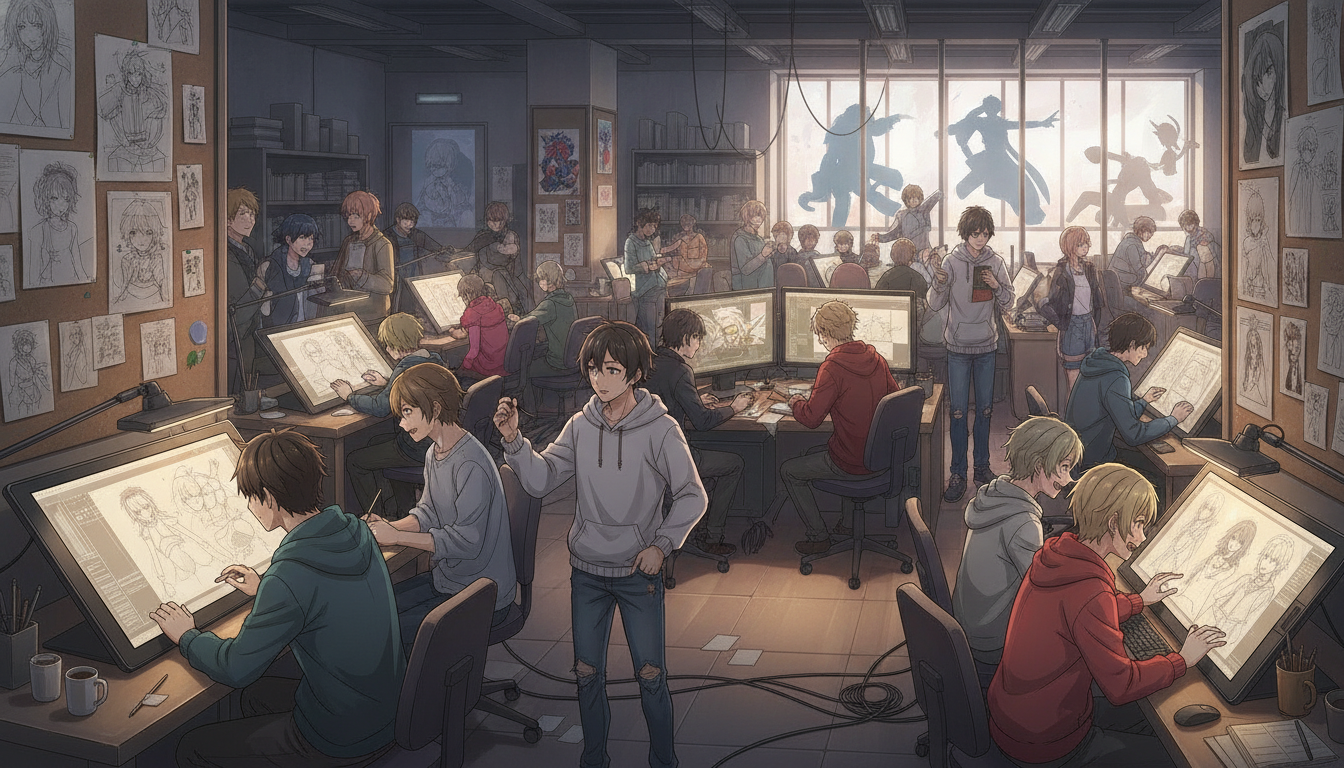
Every time you finish a jaw-dropping episode of your favorite anime and sit through the credits, there’s a good chance you scroll right past the name of the studio that made the whole thing possible. That’s a shame, because the animation studio behind a show is arguably one of the most important factors shaping everything you love about it — the visual style, the action choreography, the emotional weight of a tearjerker scene. Studios are the beating heart of the anime industry, each one carrying its own artistic DNA, its own signature moves, and its own legendary reputation built over decades of hard work.
Think of it this way: just like how you can tell a Pixar movie from a DreamWorks film before a single character speaks, veteran anime fans can often identify a studio’s fingerprints within the first few minutes of a new show. The fluid, almost liquid-smooth fight sequences of one studio are completely different from the cinematic, painterly approach of another. Learning which studio made what doesn’t just make you a more knowledgeable fan — it completely changes how you watch anime. You start noticing patterns, appreciating craft, and understanding why certain shows feel the way they do.
Whether you’re a newcomer who just binged your first series or a long-time fan who’s been at this for years, this guide breaks down the major players in anime production, what makes each of them special, and which beloved titles carry their signature stamp. Buckle up — the world behind the animation cel is just as fascinating as the worlds depicted on screen.
Toei Animation: The Grand Old Giant of Anime History
If anime were a family, Toei Animation would be the grandparent who basically built the house everyone else lives in. Founded in 1948 and producing animation since the late 1950s, Toei is one of the oldest and most prolific studios in the world. Its catalogue reads like a greatest-hits album of global pop culture.
Toei is responsible for some of the most iconic franchises ever made:
- Dragon Ball and Dragon Ball Z — the series that introduced an entire generation of Western fans to anime
- Sailor Moon — the defining magical girl series that still influences the genre today
- One Piece — which has been airing continuously since 1999 and remains one of the highest-grossing media franchises in history
- Digimon Adventure — beloved by ’90s kids worldwide
- Pretty Cure — a long-running magical girl franchise popular in Japan
Toei’s style tends to favor bold character designs and long-form storytelling, which is perfect for the epic, multi-year shonen adventures (action-oriented stories aimed at younger male audiences) it specializes in. The studio has faced some criticism over the years for pacing — One Piece and classic Dragon Ball Z are famous for filler arcs and slower adaptation speeds — but its cultural footprint is simply undeniable.
Madhouse: The Studio That Swings for the Fences
If Toei is the grandfather, Madhouse is the brilliant, slightly unpredictable uncle who has made some of the most critically acclaimed films and series in anime history. Founded in 1972, Madhouse built its reputation on bold creative choices and a willingness to take on complex, mature source material.
Madhouse’s legendary catalogue includes:
- Death Note — the psychological thriller about a genius student who gains the power to kill anyone whose name he writes in a supernatural notebook
- Hunter x Hunter (2011) — widely considered one of the greatest shonen anime ever made
- Trigun — the beloved 1990s sci-fi western
- Cardcaptor Sakura — a foundational magical girl series
- One Punch Man Season 1 — which became a global phenomenon for its stunningly fluid animation
Madhouse’s greatest strength is its ability to match animation style to tone. Death Note feels cold and theatrical. Hunter x Hunter feels grounded yet mythic. That adaptability is rare and impressive. The studio has been somewhat less prolific with major originals in recent years, but its back catalogue alone guarantees its legendary status.
MAPPA: The New King of High-Stakes Animation
If you’ve been watching anime any time from 2020 onward, MAPPA has almost certainly been on your screen. Founded in 2011 by industry veteran Masao Maruyama, MAPPA rose to genuine superstardom by landing some of the most high-profile projects in recent memory.
MAPPA’s major credits include:
- Jujutsu Kaisen and Jujutsu Kaisen 0 — the supernatural action phenomenon that became one of the fastest-selling manga franchises ever
- Attack on Titan: The Final Season — completing one of anime’s most beloved series with intense, controversial, and visually distinct animation
- Chainsaw Man — the wildly creative and gory horror-action series adapted from Tatsuki Fujimoto’s manga
- Yuri!!! on Ice — the groundbreaking ice skating drama from 2016
MAPPA is known for pushing animation quality to the extreme, often under significant pressure and tight deadlines. The studio has faced public discussion about its working conditions, which is a real and serious concern in the anime industry broadly. Regardless, the output has been consistently stunning, and MAPPA has become the studio name that anime fans immediately associate with prestige and spectacle.
Kyoto Animation: The Studio That Makes You Feel Everything
No studio on earth does emotional storytelling quite like Kyoto Animation, affectionately known as KyoAni by fans. Founded in 1981, KyoAni became famous for its extraordinary attention to detail, its warm color palettes, and its ability to make mundane, everyday moments feel profoundly moving.
KyoAni series include some of anime’s most emotionally powerful works:
- Clannad and Clannad: After Story — regularly cited as the saddest anime ever made
- A Silent Voice — a 2016 film about bullying and redemption that became a theatrical and critical landmark
- Violet Evergarden — a gorgeous post-war drama about an ex-soldier learning to understand human emotion
- K-On! — a beloved slice-of-life series about a high school girls’ band
- The Melancholy of Haruhi Suzumiya — a genre-defying series that was a massive cultural phenomenon in the mid-2000s
In July 2019, KyoAni suffered a devastating arson attack that killed 36 people and injured dozens more — a tragedy that shook the entire global anime community. The studio’s resilience and recovery since then has been both heartbreaking and inspiring. KyoAni’s commitment to treating its animators as full-time employees with benefits, rather than freelancers, has long been praised as a model for the industry.
Ufotable: The Visual Effects Wizards
When fans talk about the most visually spectacular anime in recent history, Ufotable’s name comes up almost immediately. This studio, founded in 2000, has become synonymous with breathtaking special effects, particularly its signature glowing, layered CGI-blended action sequences.
Ufotable is best known for:
- Demon Slayer: Kimetsu no Yaiba — whose 2019 premiere and subsequent film Mugen Train broke box office records across Japan and internationally
- Fate/Zero and Fate/stay night: Unlimited Blade Works — beloved adaptations of the complex Fate franchise
- **Tales of* series game animated sequences** — Ufotable has produced animation for multiple entries in the Tales of JRPG franchise
The Demon Slayer episode “Hinokami” from Season 1 is frequently cited as one of the most visually impressive single episodes of television anime ever produced — the kind of sequence that makes non-fans stop and stare. Ufotable’s effects work set a new benchmark that the industry is still chasing.
Did You Know? Quick Facts About the Anime Industry
- Japan produces thousands of anime episodes per year across dozens of studios
- Many anime studios operate on tight budgets and notoriously demanding schedules
- A single episode of anime can take hundreds of animators and staff members months to complete
- Production I.G — the studio behind Ghost in the Shell, Haikyuu!!, and Attack on Titan Season 1 — is also a key player in prestige animation
- Bones (Fullmetal Alchemist: Brotherhood, My Hero Academia) is celebrated for consistently clean, expressive character animation
- The isekai genre — stories about characters transported to another world — has exploded in popularity, with multiple studios competing to adapt the best light novels each season
Why Knowing Your Studios Makes You a Better Fan
Understanding who made what completely transforms the way you engage with anime. When you recognize that overpowered protagonists feel different in a Madhouse production versus a MAPPA one, you start to appreciate the craft beneath the cool moments. You stop watching passively and start watching like a curious, engaged fan who actually sees the art being made in real time.
The anime studios behind your favorite shows aren’t just production companies — they’re creative institutions with philosophies, histories, and human beings who pour everything they have into frames that last fractions of a second. Next time you hit play, stay for the credits. The name at the top of them earned its place there.
