

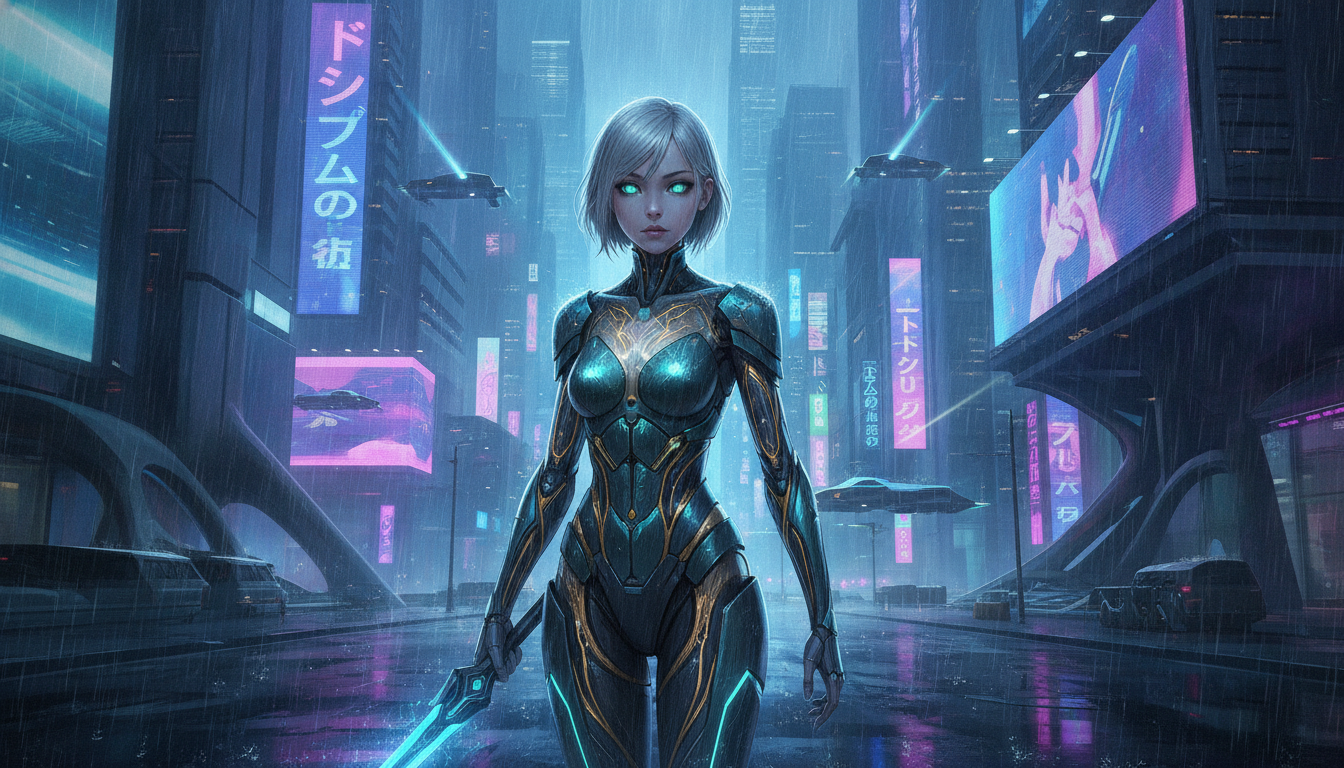
After decades of being one of anime’s most sacred texts, Ghost in the Shell is getting the full remake treatment — and fans finally have a date to circle on their calendars. The announcement has sent shockwaves through the global anime community, reigniting debates about identity, consciousness, and what it even means to be human in an age where AI walks among us and the line between person and machine grows blurrier by the day. Whether you’ve been obsessing over Major Motoko Kusanagi since Mamoru Oshii’s landmark 1995 film or you only know the franchise through whispers in geek circles, this is the moment that matters.
The original Ghost in the Shell, based on Masamune Shirow’s manga serialized in Young Magazine beginning in 1989, has long been considered one of the most philosophically dense and visually revolutionary works in animation history. Oshii’s film influenced filmmakers from the Wachowskis (The Matrix) to James Cameron, and its fingerprints are on virtually every piece of cyberpunk media produced since. The franchise expanded through the acclaimed Ghost in the Shell: Stand Alone Complex TV series, the Innocence sequel film, and several other entries. Now, in 2026, it is set to be reborn — and the expectations could not be higher.
What We Actually Know About the 2026 Ghost in the Shell Remake
Before diving into the hype, let’s anchor ourselves in what has been officially confirmed. The Ghost in the Shell remake has been generating rumor-mill chatter for years, but 2026 marks the year the project moved from speculation to scheduled reality. The remake is positioned as an animated feature aiming to reimagine the story of Section 9, the elite counter-cyberterrorism unit, and its iconic cyborg leader, Major Motoko Kusanagi, for a new generation of viewers — without abandoning the philosophical core that made the original timeless.
The original 1995 film clocked in at approximately 83 minutes and managed to pack an entire universe of existential dread and neon-soaked beauty into that runtime. Any remake will be measured ruthlessly against that benchmark, as well as against Stand Alone Complex, which many fans actually consider the high point of the franchise due to its layered storytelling across two full seasons.
Why Ghost in the Shell Still Matters in 2026
If anything, the timing of this remake feels almost cosmically appropriate. The central questions of Ghost in the Shell — What separates a human consciousness from an artificial one? Does a being with a manufactured mind deserve rights? Where does your identity live if your body is replaceable? — have migrated from science fiction philosophy class into daily headlines.
In 2026, debates around artificial general intelligence, digital consciousness, and human augmentation are no longer theoretical. Governments, ethicists, and tech companies are actively wrestling with questions that Masamune Shirow was putting into manga panels decades ago. The franchise’s concept of a “ghost” — the ineffable spark of selfhood that persists even in a fully cybernetic body — resonates differently now than it did even five years ago. As anime continues its global dominance (something we explored in depth in Why Anime Conquered the World and Won’t Stop), Ghost in the Shell sits at the intersection of pop culture and genuine intellectual urgency.
The Legacy of Mamoru Oshii’s Original Film
To understand why this remake carries so much weight, you need to appreciate what the 1995 film actually accomplished. Directed by Mamoru Oshii and produced by Production I.G, the original was a technical marvel for its time, blending traditional hand-drawn animation with early digital compositing techniques to create cityscapes that felt oppressively real. The opening sequence alone — a wordless depiction of the Major’s construction and deployment — remains one of the most striking pieces of animation ever committed to film.
Key things to know about the original Ghost in the Shell (1995):
- The film was partially inspired by the works of philosopher Descartes and questions of mind-body dualism
- Kenji Kawai’s haunting score, featuring Bulgarian-style choral arrangements sung in an archaic form of Japanese, became iconic in its own right
- The film performed modestly in Japan on release but became a massive cult hit internationally, particularly after its U.S. theatrical run
- It is widely credited as one of the primary visual and thematic inspirations for The Matrix (1999)
- The iconic “Major diving off a building” sequence helped define the visual language of cyberpunk animation
- Production I.G, which produced the film, went on to produce Stand Alone Complex and remains one of anime’s most respected studios
Stand Alone Complex and the Expanded Universe
For many fans, the real peak of the franchise is Ghost in the Shell: Stand Alone Complex, the TV series that aired from 2002 to 2003, followed by Ghost in the Shell: Stand Alone Complex 2nd GIG from 2004 to 2005. Directed by Kenji Kamiyama and produced by Production I.G, Stand Alone Complex took the world of Section 9 and built something novelistic and politically sophisticated around it.
Where Oshii’s film was introspective and almost meditative, Stand Alone Complex was procedural and socially engaged, tackling themes of refugee crises, political manipulation, and the nature of collective memory through its “Laughing Man” and “Individual Eleven” story arcs. The series also gave fans a richer understanding of supporting characters like Batou, Togusa, Saito, and the enigmatic Aramaki. Any remake that wants to satisfy long-term fans will need to honor this expanded characterization.
What About Ghost in the Shell: SAC_2045?
The franchise’s most recent animated entry, Ghost in the Shell: SAC_2045, arrived on Netflix in 2020 and 2021. Produced using 3D CGI animation, it proved divisive among fans, with many feeling that the visual style clashed with the franchise’s traditionally atmospheric aesthetic. The 2026 remake appears to be a separate project aimed at course-correcting the franchise’s visual identity and returning to a more traditional approach — though specific production details should be watched for in official announcements as they develop.
What Fans Are Hoping For
The geek community has predictably erupted with wishlists. Across forums and social media, a few recurring hopes dominate the conversation:
- A return to hand-drawn or hybrid animation: After SAC_2045‘s polarizing CGI, fans want the painterly, atmospheric visuals the franchise is associated with
- Faithfulness to the philosophical core: The remake should wrestle with identity and consciousness — not just deliver action sequences
- A fresh perspective on Motoko Kusanagi: There is genuine appetite for a version of the Major that builds on her mythology without simply retreading the 1995 film beat for beat
- Kenji Kawai’s involvement: The composer’s original score is so embedded in fan memory that his participation (or lack thereof) will be scrutinized intensely
- Respect for Masamune Shirow’s source material: The manga contains enormous amounts of material that adaptations have only partially explored
These conversations echo the kind of passionate, detail-obsessed fandom discourse you see whenever beloved properties get rebooted — the same energy that surrounds a franchise like Dorohedoro, where fans track every detail religiously (as we covered in Everything You Missed in Dorohedoro Season 2 Recap).
The Broader Cultural Moment for Cyberpunk Anime
Ghost in the Shell does not exist in a vacuum. It arrives in a moment when cyberpunk as a genre is experiencing a significant cultural renaissance. From video games to streaming series to fashion aesthetics, the neon-and-chrome visual grammar that Shirow helped popularize has never been more mainstream. A high-quality Ghost in the Shell remake in 2026 has the potential to do what the 1995 original did — arrive at exactly the right cultural moment and define it.
The franchise also carries the responsibility of representing what cerebral, adult-oriented anime can be at its best. Not every story needs to be about tournament arcs or isekai adventures. Ghost in the Shell has always been about sitting in discomfort with huge questions, and that is exactly the kind of storytelling the medium needs more of right now.
Final Thoughts: A Ghost Worth Summoning Again
The Ghost in the Shell remake finally having a release date is not just good news for nostalgic fans — it is a genuine cultural event. Done right, this remake could introduce one of anime’s greatest philosophical works to an entire generation that grew up in a world already halfway toward the one Shirow imagined. The Major’s question — “What defines me if everything about me can be replaced?” — lands harder in 2026 than ever before.
The ghost is back. Let’s hope it still has something urgent to say.
