

Few anime endings have sparked as much debate, heartbreak, and philosophical reflection as the conclusion of Attack on Titan. When Hajime Isayama’s magnum opus finally wrapped up its manga run in April 2021 and its anime adaptation concluded in November 2023, fans around the world were left stunned — not just by the sheer scale of the finale, but by the deeply uncomfortable questions it forced them to sit with. Was Eren a villain? A hero? A tragic figure trapped by fate? The answer, frustratingly and brilliantly, is all of the above.
Attack on Titan (known in Japanese as Shingeki no Kyojin) began as what appeared to be a straightforward survival story: humanity lives inside massive walls, giant humanoid creatures called Titans roam outside eating people, and a passionate young boy named Eren Yeager vows to destroy every last Titan after watching his mother get devoured. Simple enough, right? Wrong. Over the course of 139 manga chapters and four anime seasons, Isayama methodically peeled back layer after layer of his world, revealing a story about cycles of hatred, inherited trauma, determinism, and the impossible cost of freedom. By the end, almost nothing was what it first appeared to be.
The Rumbling: Eren’s Most Devastating Decision
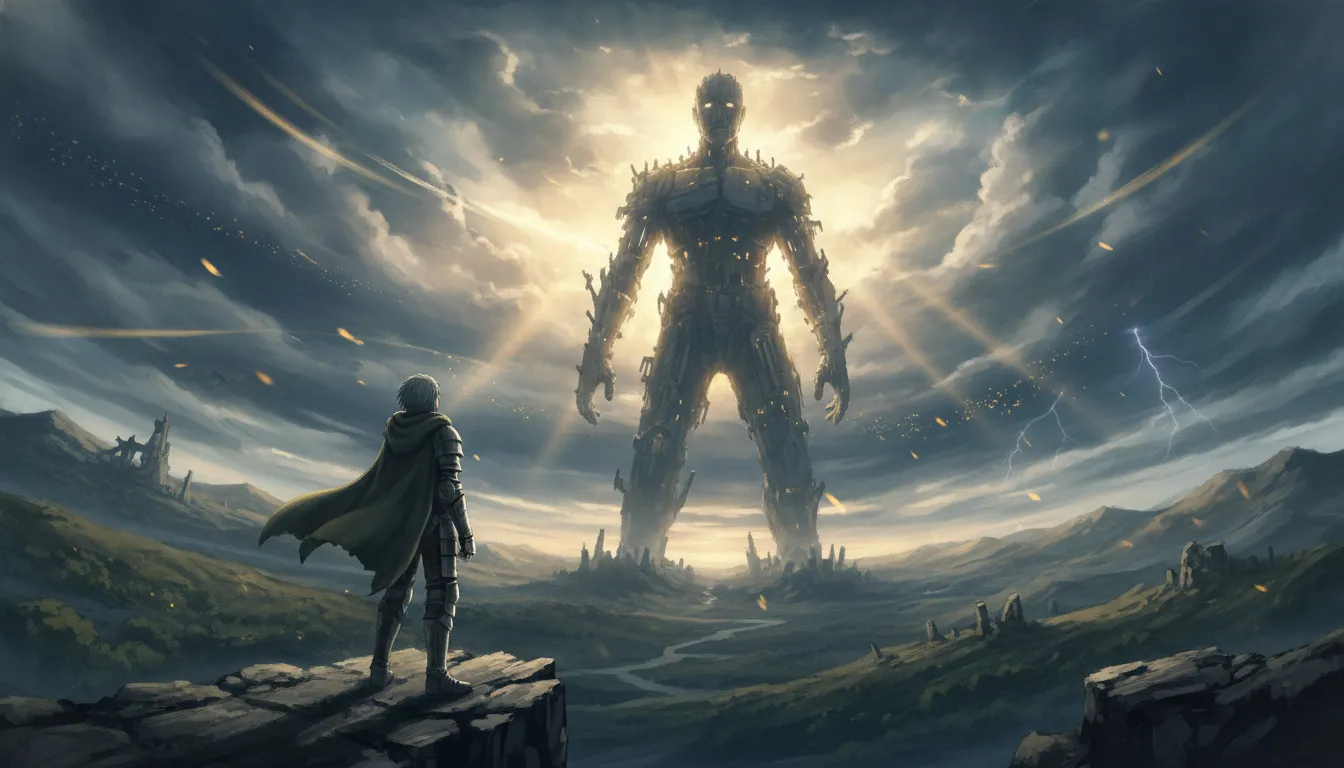
At the heart of the Attack on Titan ending is The Rumbling — Eren’s activation of the Wall Titans, colossal creatures that had been dormant inside the three massive walls protecting Paradis Island for over a century. By using the power of the Founding Titan, Eren commands millions of these giants to march across the entire world and flatten the civilizations beyond Paradis, with the explicit goal of killing roughly 80% of humanity outside the walls.
This is not a surprise attack or a miscalculation. Eren chooses this. He does it consciously, methodically, and with full knowledge of the death toll it will produce. The sight of uncountable Colossal Titans marching across continents, crushing cities and people underfoot, is one of the most visually overwhelming sequences in anime history — and one of the most morally horrifying.
For longtime fans, this moment recontextualizes everything. The passionate boy who once cried over his mother’s death becomes the architect of genocide on a global scale. And yet Isayama doesn’t let you simply write Eren off as a monster.
Why Eren Did It: Freedom, Fate, and the Euthanasia Plan
Eren’s motivations are genuinely complex, and the final chapters work overtime to unpack them. Through a series of memory sequences revealed near the end, we learn several crucial things:
- Eren had access to the memories of future Titan shifters (a power called the Attack Titan’s ability to see future memories), meaning he knew roughly how events would unfold.
- He believed that by carrying out the Rumbling himself, he could position his former friends — the Survey Corps — as heroes who stop him, thus earning the world’s sympathy for Paradis Island after his death.
- He genuinely wanted Mikasa, Armin, and his comrades to survive and live free, even at the cost of becoming the world’s greatest villain.
- Part of him simply could not accept any path that didn’t lead to the complete freedom he’d obsessed over since childhood.
There was an alternative on the table called the Euthanasia Plan, proposed by Zeke (Eren’s half-brother), which would have used the Founding Titan’s power to sterilize all Subjects of Ymir — preventing future Eldians from being born and eventually ending the Titan curse peacefully. Eren rejected this entirely. To him, choosing extinction over freedom wasn’t a solution; it was surrender.
The Truth About Ymir Fritz and the Origin of Titans
One of the most emotionally resonant reveals of the ending involves Ymir Fritz, the original Titan. Over a thousand years before the main story, Ymir was a slave girl who somehow gained the power of the Titans after falling into a mysterious pit containing a strange creature (referred to as “the source of all living matter”). She used her power to serve her master, King Fritz, bore his children, and even died protecting him — after which he fed her body to their daughters to preserve the Titan power.
The final arc reveals that Ymir’s spirit has existed in a realm called the Paths ever since, endlessly building Titan bodies for 2,000 years — essentially enslaved even in death by her devotion to King Fritz, a man who treated her as property. She could only be freed when someone in a similar position chose differently.
That someone turns out to be Mikasa Ackerman. When Mikasa kills Eren — the person she loves most — rather than letting him continue the Rumbling, her act of choosing her own will over devotion to another person mirrors what Ymir needed to see. In that moment, Ymir is finally freed, the Titan power disappears from the world, and the curse of the Titans ends.
It’s a beautifully devastating parallel. Two women, centuries apart, both defined by their love for someone who brought destruction — but making opposite choices.
Armin, Mikasa, and the Cost of Stopping a Friend
While Eren orchestrates everything from a macro level, the emotional core of the ending rests on the Survey Corps — specifically Armin Arlert and Mikasa Ackerman — being forced to kill their best friend to save the world.
Armin, who had inherited the Colossus Titan, leads the final charge against Eren’s Titan form. The battle is brutal, and in the end it is Mikasa who deals the killing blow, severing Eren’s head from the spine of his Titan body. She holds his severed head and kisses him — a heartbreaking final moment for a relationship that defined her entire life.
These fights prove exactly why these anime fights prove this medium has no limits — the emotional and visual weight of the final confrontation in Attack on Titan is almost unmatched in the genre.
Did Eren Actually Succeed? The Aftermath Unpacked
After Eren’s death and the end of the Titan curse, the world is left in a complicated, deeply imperfect state:
- Paradis Island is temporarily safe, but the nations of the world are furious and begin preparing for war.
- Armin survives and becomes a diplomat, traveling with former enemies to try to negotiate peace.
- Mikasa returns to Hizuru (her ancestral homeland), eventually settles in a small village, and lives out her life, dying of old age — with a bird (implied to be Eren’s presence, or at least a symbol of his spirit) visiting her grave.
- A time skip montage at the very end of the manga shows Paradis eventually being destroyed by war, suggesting the cycle of hatred simply continued — just without Titans.
This final gut punch is entirely intentional. Eren’s sacrifice — both his life and his morality — bought Paradis a few generations of peace at most. The cycle didn’t end. It evolved.
Why the Ending Is So Divisive (And Why That’s the Point)
The Attack on Titan ending genuinely divides fans, and has since the manga’s conclusion in 2021. Some feel Eren’s characterization in the final arc was inconsistent. Others found the tonal shift too bleak. Some believe Isayama handled the moral complexity masterfully; others think it raised questions it couldn’t fully answer.
What’s undeniable is that the ending refuses to be comfortable. It doesn’t reward the audience with a clean resolution. It dares to suggest that even the most justified revolution can become atrocity, that the line between freedom fighter and monster is terrifyingly thin, and that cycles of hatred don’t end just because one person suffers heroically.
Much like the bizarre things people have believed throughout history — ideas that seemed logical in context but horrifying in hindsight — the story forces us to examine how ideology, fear, and love can be weaponized even by people who genuinely believe they’re doing right.
The Legacy of Attack on Titan’s Conclusion
Attack on Titan is now firmly cemented as one of the defining anime and manga of its generation. The anime adaptation, produced by Wit Studio (Seasons 1–3) and MAPPA (Season 4), elevated Isayama’s vision with stunning animation and a legendary score. Speaking of which, if you haven’t revisited the Attack on Titan soundtrack, check out what makes these anime soundtracks among the most epic ever made — Hiroyuki Sawano and Kohta Yamamoto’s compositions are a massive part of why certain scenes hit so hard.
The ending of Attack on Titan isn’t satisfying in the traditional sense. It isn’t supposed to be. It’s a story that asked you to cheer for a protagonist who became a monster, to mourn a world that was broken before the first Titan ever fell, and to sit with the uncomfortable truth that freedom and peace may be fundamentally incompatible at scale. That’s not a flaw. That’s the whole point — and it’s why people are still talking about it years later.
