

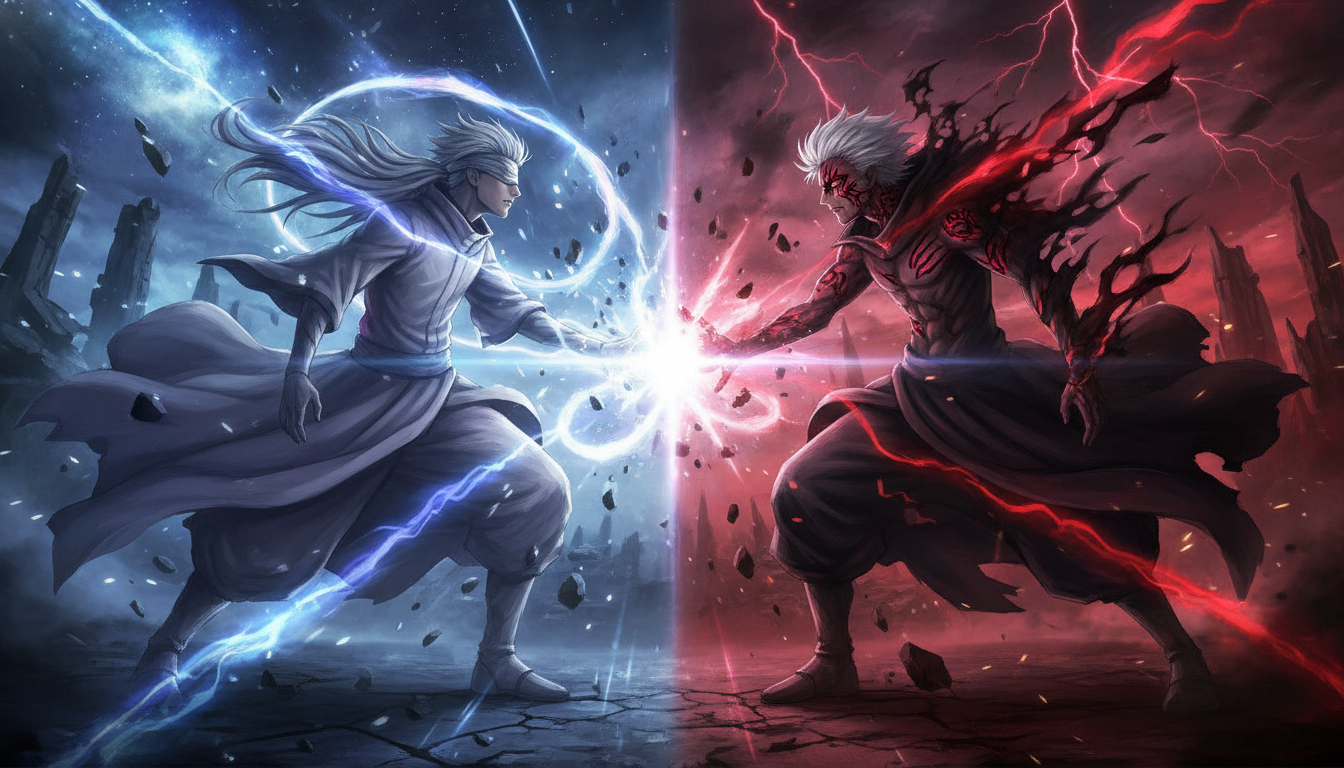
Two sorcerers. One title. Zero room for compromise. When Satoru Gojo and Ryomen Sukuna finally clashed in Jujutsu Kaisen, it wasn’t just the biggest fight in the series — it was the kind of showdown that shakes an entire fandom to its core. Fans had been theorizing, debating, and practically begging for this moment since the manga’s early chapters, and when it finally arrived, author Gege Akutami did not hold back. The result was a battle so massive, so relentless, and so emotionally devastating that it fundamentally changed what Jujutsu Kaisen even is as a story.
What makes this rivalry so electric isn’t just the raw power on display — it’s the philosophical weight behind it. Gojo Satoru, the blindfolded prodigy who laughs in the face of danger and genuinely believes he can fix the broken world of jujutsu sorcery, stands in direct opposition to Sukuna, the King of Curses who views humanity as little more than prey worthy of his amusement. One is the hope of a new generation; the other is the embodiment of an ancient, merciless order where only the strong survive. When these two ideologies collide, the question isn’t just who’s stronger — it’s what “strongest” even means.
Whether you’re a longtime reader of the manga or someone who discovered Jujutsu Kaisen through MAPPA’s acclaimed anime adaptation, this breakdown is for you. We’re diving deep into both characters, dissecting what makes their confrontation legendary, and asking the question the entire community is still arguing about: who truly deserves the title of the Strongest?
Satoru Gojo: The Man Who Rewrote the Rules of Sorcery
Satoru Gojo is, by any measure, an unprecedented figure in the world of Jujutsu Kaisen. Born on December 7, 1989, he was the first person in four hundred years to inherit both the Limitless cursed technique and the Six Eyes simultaneously — a combination so powerful it essentially made him untouchable in conventional combat. The Limitless technique allows Gojo to manipulate space at an atomic level, keeping anything and everything from ever truly reaching him. Infinity, his passive defense, means attacks slow down asymptotically before they can land — they approach but never arrive.
His offensive arsenal is equally terrifying. Techniques like Blue (which creates a gravitational pull), Red (which generates a repulsion force), and Hollow Purple (a combination that erases everything in its path from existence) make Gojo a walking natural disaster. His Domain Expansion, Infinite Void, traps opponents in a space of infinite sensory input, effectively shutting down the mind in seconds.
Beyond his power, Gojo’s character carries enormous narrative weight. He’s cocky, playful, and sometimes infuriating — but underneath that, he’s a man who genuinely cares about his students and believes in changing the corrupt, death-obsessed world of jujutsu sorcery through education and a new generation of strong sorcerers. He’s the system’s greatest champion and its greatest critic.
Ryomen Sukuna: The King of Curses and Why He’s Terrifying
Sukuna is not a villain who needs a tragic backstory to be compelling. He is, put simply, a being of pure, ancient malice who finds joy in destruction and has the power to back up every ounce of his arrogance. A sorcerer from the Heian era of Japan (roughly 794–1185 CE) who became so powerful he couldn’t be killed even after death, Sukuna’s soul was split into twenty cursed fingers — each one an unimaginably dense repository of cursed energy.
His cursed technique involves slashing attacks invisible to most opponents, and his Domain Expansion, Malevolent Shrine, is unique in that it doesn’t require a closed barrier — it manifests in the real world and expands outward, making it exceptionally difficult to counter. What makes Sukuna truly dangerous, however, is his intellect. He doesn’t just overpower opponents; he dissects them, finds their weaknesses mid-combat, and adapts in real time.
Throughout the series, Sukuna has been positioned as the absolute ceiling of power — the benchmark everyone else is measured against. When even Gojo admits (in his own roundabout way) that Sukuna at full strength would be a serious challenge, you know the threat is real.
The Fight That Broke the Internet: Gojo vs. Sukuna in the Manga
The battle between Gojo and Sukuna took place across Chapters 221 through 236 of the Jujutsu Kaisen manga, published in Weekly Shonen Jump. The fight is set in motion after Sukuna, now fully inhabiting the body of Megumi Fushiguro (one of Gojo’s own students — a brutal narrative twist), enters the fray with all ten of his restored fingers absorbed.
The confrontation is a masterclass in escalation. Gojo pushes Sukuna harder than anyone ever has, forcing the King of Curses to reveal techniques and adaptations he’s never shown before. For a significant stretch of the battle, Gojo appears to be winning — and fans were electric with excitement. Then Chapter 236 happened. Without spoiling every detail: the outcome shocked the entire community, sent social media into a frenzy, and fundamentally altered the direction of the series. It remains one of the most discussed single chapters in recent manga history.
Breaking Down the Power Scaling: What the Numbers Actually Say
Power scaling debates are a beloved chaos of anime fandom, so here’s a clean look at how both fighters compare across key categories:
| Category | Satoru Gojo | Ryomen Sukuna |
|---|---|---|
| Cursed Energy Output | Extraordinary (Six Eyes optimize usage) | Virtually limitless (Heian-era titan) |
| Technique Versatility | High (Limitless + stacking techniques) | High (slashing + reverse cursed technique) |
| Domain Expansion | Infinite Void (automatic hit) | Malevolent Shrine (open-barrier, massive range) |
| Adaptability | High | Exceptional |
| Combat Intelligence | High | Elite |
| Peak Form | Unlimited Void + stacked Blue/Red/Purple | 20-finger complete restoration |
Neither fighter is simply “stronger” in every category — which is exactly what makes the debate endlessly fascinating.
Why This Fight Matters Beyond the Power Fantasy
Great anime fights aren’t just about flashy animation and big numbers — the best ones, like the ones that make you understand why anime like Frieren: Beyond Journey’s End hits so hard, carry emotional and thematic weight. The Gojo vs. Sukuna fight is a collision of worldviews.
Gojo represents the hope that one exceptional individual can change a broken institution through sheer force and will. Sukuna represents the counter-argument: that power is amoral, that history doesn’t care about good intentions, and that the “strongest” is simply whoever is still standing. The fight asks the reader — and the series — which of these philosophies wins. The answer Akutami provides is uncomfortable, complicated, and entirely intentional.
The Fandom Reaction and the Cultural Footprint
The aftermath of Chapter 236 split the Jujutsu Kaisen fandom in ways that few manga moments have. Some readers called it a masterful, heartbreaking narrative choice. Others were furious, feeling the story had robbed them of something they’d been promised. Trending topics, fan art floods, Reddit threads running into thousands of comments — the chapter broke the internet in multiple languages simultaneously.
Here are some fast facts that capture just how big this moment was:
- Jujutsu Kaisen was the best-selling manga series globally in both 2021 and 2022, according to Oricon data
- The anime adaptation by MAPPA studio premiered in October 2020 and has been one of the platform’s flagship titles
- The Shibuya Incident arc and the Gojo vs. Sukuna fight drove unprecedented spikes in manga sales and streaming numbers on Crunchyroll
- Fan debates around this fight remain among the most active discussions in anime communities on Reddit and X (formerly Twitter) as of 2026
It’s worth noting that the cultural DNA of intense, consequence-heavy storytelling has deep roots in Japan — if you want to explore that broader context, these weird Japanese traditions will break your brain completely is a fascinating rabbit hole.
What Comes After the Strongest Falls?
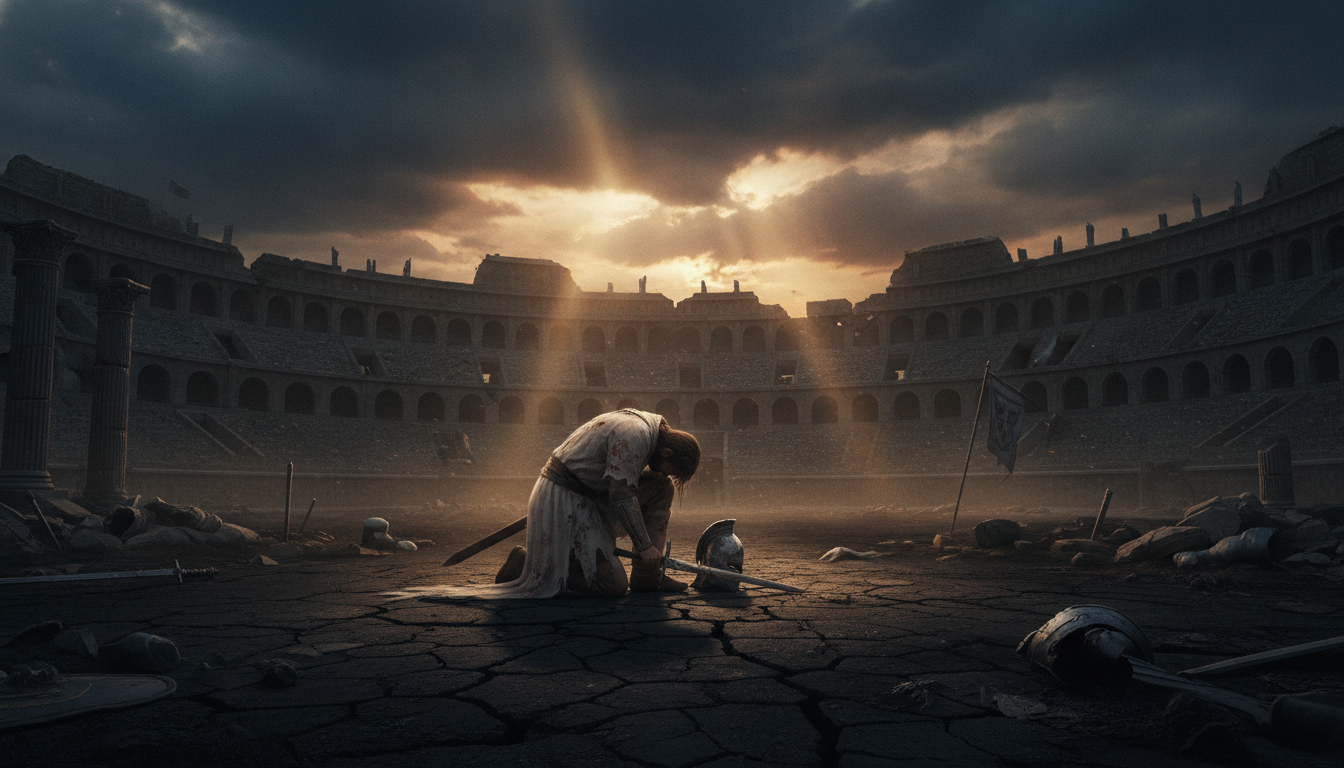
The question the fight ultimately raises for the Jujutsu Kaisen narrative is existential: if the person everyone believed was the ceiling is gone, what does the story become? Akutami has pushed the remaining cast — Yuji Itadori, Yuta Okkotsu, Megumi Fushiguro — into territories they were never supposed to reach this fast. It’s a narrative gamble that mirrors the thematic heart of the series: that the next generation must carry what the last one couldn’t finish.
In the end, only one fighter walked away from their clash, and the Jujutsu Kaisen universe will never be the same for it. Whether you believe the right person won, whether you think the outcome was earned or stolen — you can’t argue that it wasn’t consequential. Gojo vs. Sukuna is already cemented as one of the defining battles in modern manga, the kind of fight that defines a generation of fans the same way the Chunin Exams or Marineford defined the ones before them. The title of Strongest may belong to one of them — but the debate belongs to all of us.
