
Have you ever watched an anime and thought, “Why does that character keep avoiding the number four?” or “Why is there always a creepy woman with long black hair crawling out of somewhere dark?” If you chalked it up to “anime being anime,” you were only half right. A massive chunk of what feels like quirky anime storytelling logic is actually rooted in centuries-old Japanese superstitions — beliefs so deeply embedded in the culture that writers, animators, and directors include them almost instinctively. Once you crack the code, entire scenes, character decisions, and even plot structures start making a completely different kind of sense.
Japan has one of the richest supernatural folk traditions on the planet, blending Shinto animism, Buddhist cosmology, and localized folklore into a worldview where the spirit world is never far from the living one. These aren’t just dusty old myths gathering cobwebs in a library somewhere. They show up in everyday Japanese life — in hospital floor numbering, in how people handle chopsticks at a meal, in which gifts are considered bad luck. Anime, as a medium that grew organically from Japanese culture rather than being imported into it, naturally absorbed all of that. The result is a storytelling language full of symbolic shorthand that Japanese audiences read fluently, while international fans sometimes spend years piecing together why certain things feel so weighted.
This guide is here to bridge that gap. Whether you’re a longtime fan of Demon Slayer, Jujutsu Kaisen, or classic horror like Another, or you’re just getting started on your anime journey, understanding these superstitions will transform the way you watch — and honestly make everything way cooler.
The Number Four and Why Anime Characters Treat It Like a Curse
In Japanese, the number four can be pronounced shi — which is also the word for death. This concept, called tetraphobia, is taken seriously enough that many Japanese hospitals and hotels skip the fourth floor entirely, jumping from three straight to five. It’s the cultural equivalent of Western fear of the number thirteen, except arguably more widespread in daily life.
Anime leans into this constantly. In Jujutsu Kaisen, the entire thematic architecture around cursed energy, death, and inevitable doom carries the weight of shi throughout its storytelling. Character death flags in anime are often quietly announced through groupings of four, scene compositions, or even episode numbering choices. Horror anime like Another — a 2012 series set in a cursed classroom where students die one by one — uses numerical and structural symbolism throughout to create dread before anything visibly horrifying even happens.
Next time a character in an anime acts strangely hesitant about a seemingly ordinary choice, check whether the number four is lurking somewhere nearby. It almost certainly is.
Onryō: The Real Reason Behind Japan’s Iconic Long-Haired Ghosts
If you’ve ever seen a pale woman with long, tangled black hair covering her face slowly dragging herself toward a protagonist, you’ve met an onryō — a vengeful spirit from Japanese folklore. The concept predates anime by over a thousand years, appearing in classical texts like The Tale of Genji. Onryō are specifically the spirits of people — historically often women — who died consumed by intense negative emotions like jealousy, sorrow, or rage, and who return to haunt the living.
The visual language is precise and deliberate:
- Long, unkempt black hair signifies a spirit freed from social conventions (in feudal Japan, women kept their hair neatly bound)
- White burial kimono marks the figure as belonging to the dead
- Unnatural movement — crawling, jerking, slow dragging — signals something that has lost its humanity
- Pale or bluish skin echoes the color of corpses and cold
This imagery saturated J-horror films like Ringu (1998) and Ju-On: The Grudge (2002) before becoming a visual staple in anime. Series like Hell Girl (Jigoku Shōjo), which ran from 2005, built entire narrative frameworks around the onryō concept. Even in action anime, this ghost archetype appears as a shorthand for “something spiritually wrong has happened here” — and the audience immediately understands the gravity without a single line of explanation.
Kitsune, Tanuki, and Shapeshifters: Why Animal Transformations Are Never Just Comic Relief
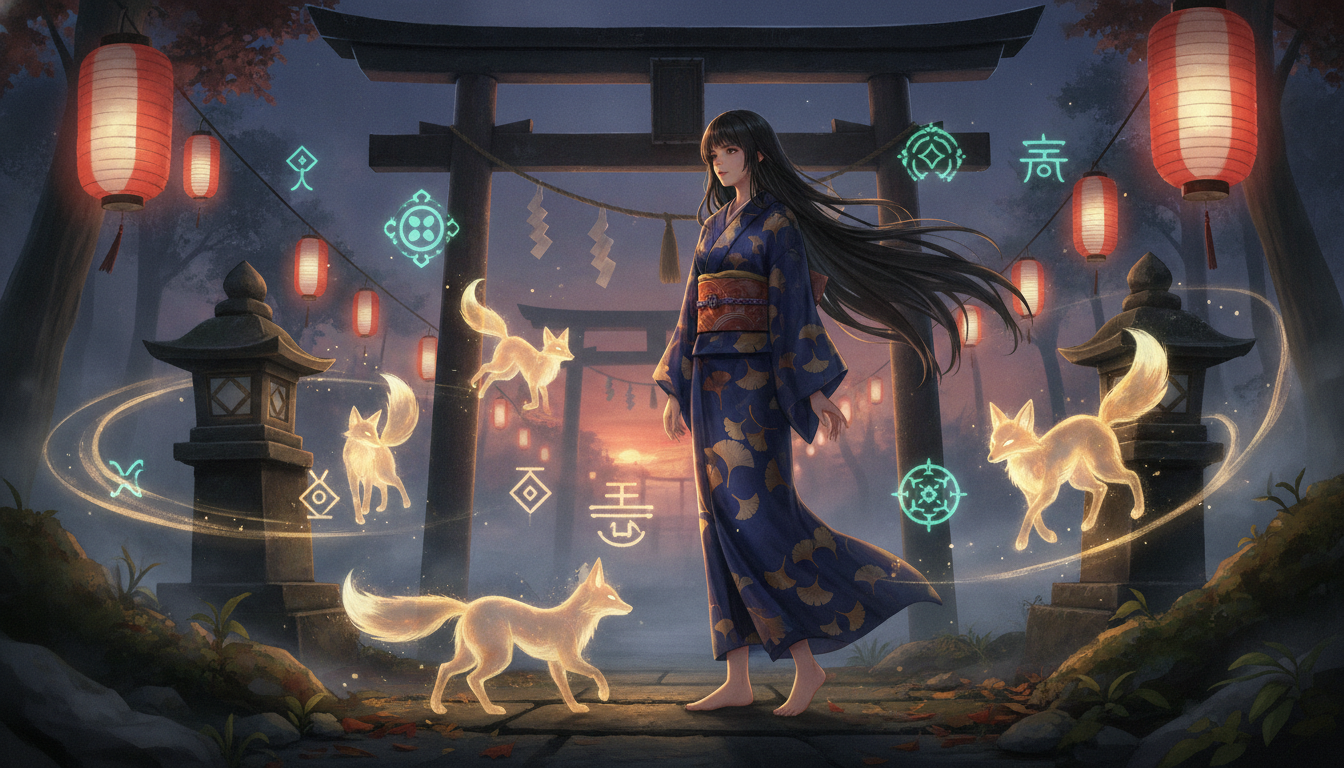
When an anime character transforms into an animal — or an animal takes human form — Western audiences often read it as a playful gimmick. Japanese audiences read it as folklore. The kitsune (fox) and tanuki (raccoon dog) are among the most powerful shapeshifter figures in Japanese mythology, both capable of assuming human form and both associated with trickery, magic, and ambiguous morality.
Kitsune are strongly tied to Inari, the Shinto deity of rice, fertility, and prosperity. A kitsune can be a benevolent guardian or a dangerous seducer depending on its alignment and the number of its tails — nine-tailed foxes represent peak power and wisdom. In Naruto, the Nine-Tails (Kurama) draws directly from this tradition. The fear and awe that Konoha villagers show toward Naruto isn’t just about a dangerous creature — it echoes the real cultural ambivalence toward the kitsune: something that could protect you or destroy you depending on how you treat it.
Tanuki appear constantly in anime with their pot-bellies and magical abilities, often played for laughs — but in original folklore, they’re cunning and sometimes dark figures. Pom Poko (1994), Studio Ghibli’s underrated film, takes tanuki mythology with complete seriousness, using it to explore environmental destruction and cultural loss.
The Superstition Table: Folklore to Anime Pipeline
| Japanese Superstition | Core Belief | Where It Shows Up in Anime |
|---|---|---|
| Shi (four = death) | The number 4 is deeply unlucky | Death flags, cursed groupings, episode structure |
| Onryō spirits | Vengeful ghosts born from strong emotion | Hell Girl, Another, horror antagonists |
| Kitsune shapeshifting | Foxes are magical tricksters or guardians | Naruto (Kurama), Inuyasha, Kamisama Kiss |
| Hitodama (soul flames) | Floating flames represent wandering souls | Ghost visuals in countless supernatural series |
| Blood type personality | Blood type determines character traits | Character profiles almost universally include blood type |
| Kamikakushi (spiriting away) | Gods or spirits can abduct humans | Spirited Away, isekai genre foundations |
Kamikakushi and the Entire Isekai Genre
Speaking of kamikakushi — this concept deserves its own section because it may be the single most influential Japanese superstition in anime history. Kamikakushi literally means “hidden by the gods” and refers to the folk belief that people — especially children — could be suddenly spirited away to the realm of gods or spirits, sometimes returning changed, sometimes never returning at all.
Hayao Miyazaki’s Spirited Away (2001) is practically a textbook illustration of kamikakushi. Ten-year-old Chihiro wanders into the spirit world, loses her name (a crucial detail — losing your name means losing your identity and your way back), and must navigate an entirely different set of rules to survive and return home. The film was a massive global success, winning the Academy Award for Best Animated Feature in 2003, but its emotional and spiritual logic is entirely built on this ancient belief.
The broader isekai genre — where a protagonist is transported to another world — is kamikakushi in modern clothes. From Sword Art Online to Re:Zero to That Time I Got Reincarnated as a Slime, the formula of an ordinary person yanked into extraordinary supernatural circumstances mirrors a folk anxiety about the fragility of the boundary between the human world and whatever lies beyond it. And if you want to understand just how thoroughly this kind of storytelling has conquered global pop culture, the roots are right here in Japanese folklore.
Blood Types, Unlucky Directions, and the Small Superstitions That Fill Character Sheets
Not every superstition in anime is dramatic. Some are woven into the texture of everyday storytelling in ways you might have scrolled past without noticing.
Blood type personality theory is huge in Japan. While not considered scientific, the belief that your blood type shapes your personality is culturally pervasive — similar to how Westerners use zodiac signs. Anime characters almost always have a listed blood type in their official profiles, and writers use these as genuine character shorthand. Type A characters are often depicted as careful and anxious; type B as selfish and passionate; type O as confident and insensitive; type AB as mysterious and unpredictable.
Other small superstitions that sneak into anime regularly include:
- Never sticking chopsticks upright in rice — it resembles funeral incense offerings and appears in scenes of mourning or bad omens
- Sleeping facing north is associated with death in Japan, which is why scenes of characters sleeping in unusual positions can carry quiet symbolic weight
- Cutting nails at night is said to mean you won’t be present at your parents’ death — a superstition that horror anime uses cleverly for atmosphere
- Sneezing once means someone is talking about you — a comedic device used in countless slice-of-life shows that has direct folk roots
- Compass directions carry luck associations tied to Feng Shui influences, which affect everything from house layouts in anime to which direction characters face during important decisions
Why This Knowledge Makes You a Better Anime Watcher
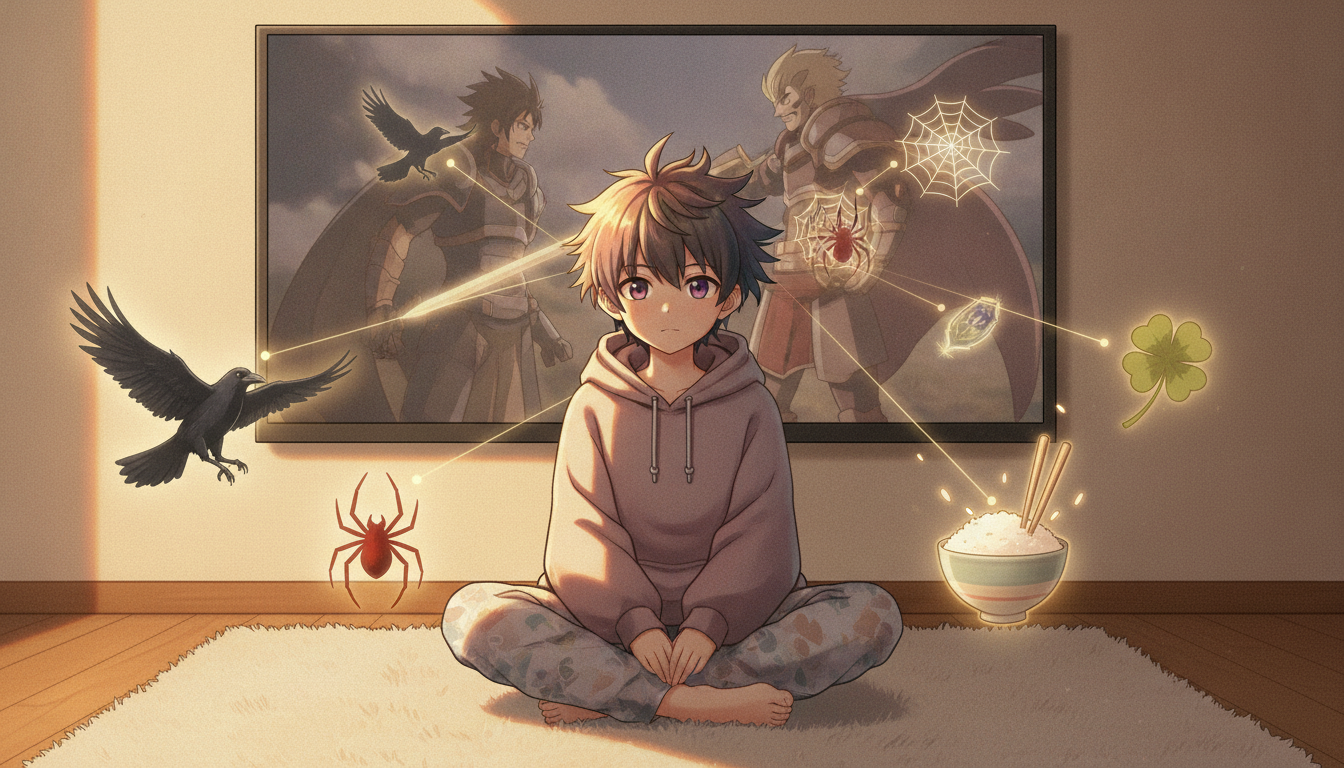
Understanding these superstitions doesn’t just give you trivia to flex at conventions — it fundamentally changes your relationship with the medium. Anime is dense with cultural encoding that its creators assumed a Japanese audience would absorb without explanation. When you recognize an onryō’s visual markers, you understand the weight the animators placed on that character before she says a word. When you see a character avoid the number four, you feel the quiet dread the writer intended rather than filing it away as a quirk.
This is the same reason that noticing hidden details in any creative work transforms the experience — much like how spotting video game easter eggs hidden in plain sight suddenly makes a familiar world feel richer and more deliberately crafted.
Japanese superstitions aren’t background noise in anime. They are the structural grammar of the genre’s supernatural logic, the emotional shorthand that makes horror feel genuinely horrifying and transformation genuinely meaningful. The more of this language you learn, the more anime stops being “weird” and starts being something far more fascinating: a living, breathing continuation of one of the world’s most imaginative folk traditions, retold in color and motion for a new generation of believers.
