

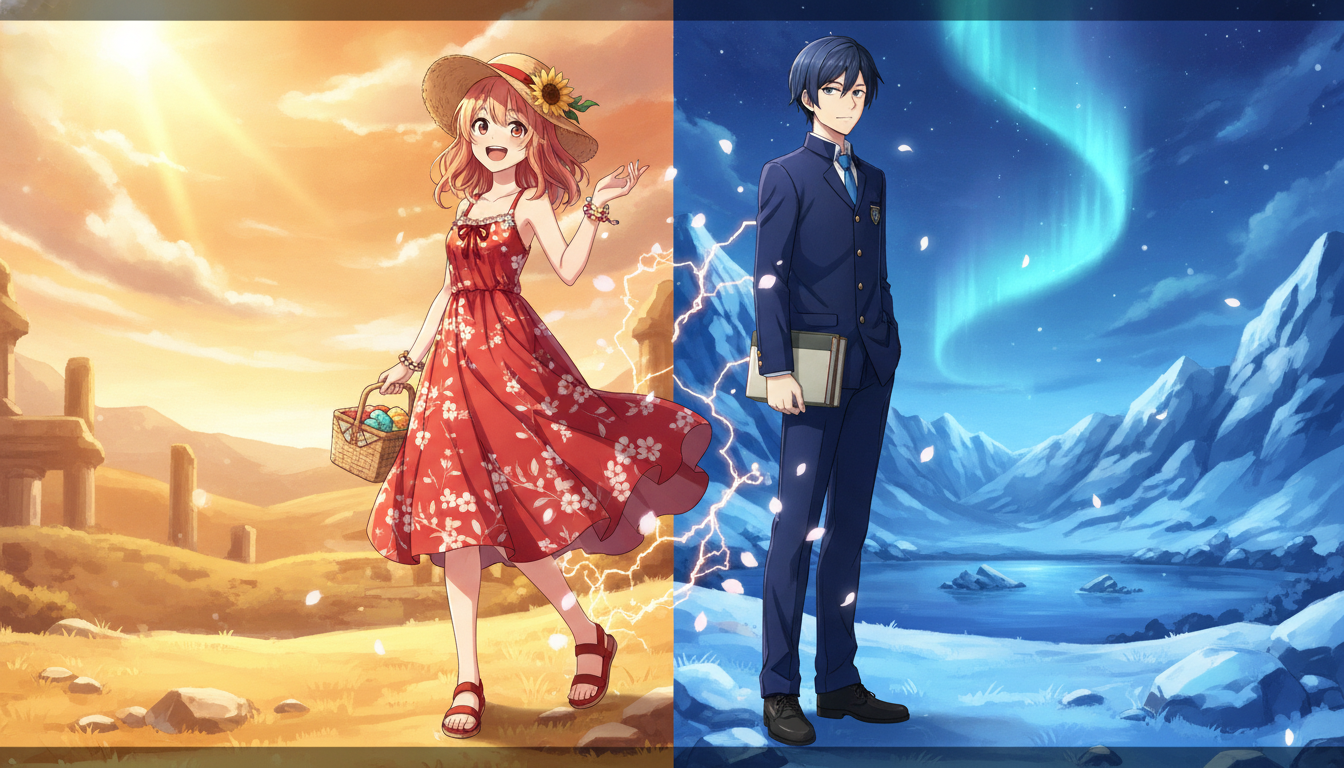
There are romantic comedies, and then there are the ones that somehow burrow into your chest and refuse to leave. You and I Are Polar Opposites — known in Japanese as Kimi to Boku wa Kokkyo no Nai de — is the kind of manga that sneaks up on you dressed as a lighthearted high school rom-com and then hits you with genuine emotional depth when you least expect it. It’s charming, it’s funny, it’s occasionally a little painful in the best possible way, and if you have been sleeping on it, consider this your wake-up call.
The series, serialized in Bessatsu Margaret magazine by Shueisha, is created by mangaka Nomo Shino. It follows Maki Kawahara, a cheerful, sociable girl, and Takashi Hananoi — wait, wrong series. Let’s be precise here, because accuracy matters. You and I Are Polar Opposites centers on two high school students who are essentially walking contradictions of each other in personality, yet find themselves inexplicably drawn together. The “opposites attract” formula is one of the oldest tricks in the romantic comedy playbook, but what this manga does differently is explore why people who seem mismatched actually fill in each other’s gaps in ways that feel honest rather than convenient.
What makes this title stand out in a crowded field of high school romance manga is its tonal balance. It doesn’t lean so heavily into comedy that the emotional beats feel cheap, and it doesn’t pile on melodrama to manufacture tears. Instead, it finds this rare, cozy middle ground — the kind of story you want to read wrapped in a blanket with a warm drink.
Why the “Opposites Attract” Formula Still Works
You might be thinking: haven’t we seen this a hundred times? The bubbly extrovert and the quiet introvert. The optimist and the cynic. The messy creative and the rigid perfectionist. Yes, we have. And yet, done well, it never gets old — because it taps into something genuinely relatable about human connection.
The appeal of opposites-attract stories in manga and anime runs deep. Think about how beloved pairings like Takeo and Yamato from My Love Story!! work — they’re not “opposites” in the classic sense, but the comedy and heart come from how different they are from what romance protagonists are supposed to look like. Or consider Taiga and Ryuuji from Toradora!, where the conflict between their outward personas and their inner vulnerabilities drives the entire emotional arc of the series.
You and I Are Polar Opposites leans into this tradition while giving it a fresh coat of paint. The characters don’t just clash — they genuinely challenge each other to grow. That’s the secret ingredient that elevates a rom-com from “cute distraction” to “something worth remembering.”
The Characters: More Layered Than Their First Impressions
One of the most common pitfalls in high school romance manga is reducing characters to their defining trait. The shy one is always shy. The loud one is always loud. The story never truly interrogates those personalities or asks what built them.
What You and I Are Polar Opposites does thoughtfully is hint at the reasons behind its characters’ personalities. Their surface-level differences are the entry point, not the whole story. Readers who stick with the series start to see that both leads carry their own quiet complexities — moments where the cheerful one isn’t quite as carefree as they seem, or where the reserved one reveals warmth they don’t know how to express yet.
This kind of character writing is why manga readers often say they “grew up” with certain stories. The best romance manga understand that why anime tragic backstories hit harder than any plot twist is because backstory reveals character, and character is everything.
The Tonal Sweet Spot: Comedy That Doesn’t Undercut Emotion
Let’s talk about tone, because it’s genuinely hard to get right. Too much comedy and you end up with a series that feels like it’s afraid of its own feelings. Too much drama and you lose the lightness that makes romance fun to read in the first place.
You and I Are Polar Opposites belongs to a category of manga that understands comedic timing as an emotional tool. A well-placed funny moment after something tender doesn’t cancel out the tenderness — it actually makes it more bearable and more real. This is the same energy you get from slice-of-life titles that feel therapeutic rather than exhausting. If you love that vibe, you might want to slow down with these slice of life anime that heal you after finishing this one.
The comedy in this manga is character-driven rather than situational-gag-driven, which means the jokes feel earned. They emerge from who these two people are when they’re around each other, and that specificity makes all the difference.
Bessatsu Margaret and the Legacy of Shojo Romance
For those newer to manga, Bessatsu Margaret (or Betsuma as fans call it) is one of the most storied shojo manga magazines in Japan. Published by Shueisha, it has been home to iconic series over the decades, and it has a particular reputation for romance stories that blend emotional sincerity with compelling relationship dynamics.
Shojo manga — a demographic category targeting young women — has historically produced some of the most emotionally sophisticated romance storytelling in the medium. Titles from this space often care deeply about interior emotional life, communication (or the painful lack of it), and the texture of everyday interactions between people who like each other but don’t quite know what to do with those feelings yet.
Here are a few things worth knowing about this corner of manga publishing:
- Bessatsu Margaret has been publishing since 1963, making it one of the longest-running shojo magazines in Japan
- The magazine releases monthly and has launched numerous anime adaptations over the years
- Shojo romance series published in Betsuma often prioritize relationship realism and emotional nuance over dramatic plot escalation
- The magazine’s readership has historically skewed toward high school and young adult readers, though its titles attract readers across demographics
- Series from Betsuma tend to have devoted international fanbases, particularly in Southeast Asia and through global platforms like Manga Plus
Why This Is the Rom-Com Moment We Needed
The current manga landscape in the mid-2020s has been saturated with isekai (the genre where a character gets transported to another world) and action-heavy series. That’s not a complaint — great stories exist across all genres — but it does mean that quiet, grounded romance manga can sometimes get overshadowed by flashier titles in the conversation.
You and I Are Polar Opposites is a reminder that there is enormous appetite for stories that are simply about two people figuring out their feelings. No magic systems. No world-ending stakes. Just the very human drama of being near someone who makes you feel things you don’t have words for yet.
In 2026, when media consumption trends toward bigger, louder, and more spectacular, there’s something genuinely radical about a manga that is content to be small and sincere. It trusts its readers to find meaning in the quieter moments — a shared look, an awkward silence, a joke that lands differently than expected.
Who Should Read This Series
This manga is especially for you if:
- You burned through My Love Story!!, Kimi ni Todoke, or Ao Haru Ride and need something new with similar energy
- You prefer romance stories where the leads actually communicate (at least eventually) rather than misunderstanding each other for hundreds of chapters
- You enjoy a protagonist duo where both characters feel like full people rather than archetypes
- You want something that will make you smile genuinely rather than perform emotions at you
- You’re newer to shojo manga and want a solid entry point into the Betsuma tradition
Final Thoughts: Give It a Chance
You and I Are Polar Opposites isn’t trying to reinvent the romantic comedy. It isn’t interested in subverting your expectations or delivering a twist that recontextualizes everything. What it offers instead is something arguably harder to achieve: a story that is genuinely, quietly lovely. The characters are worth rooting for. The relationship develops with care. The tone stays warm without becoming saccharine.
In a genre that can sometimes feel like it’s going through the motions, this manga earns its emotional moments by doing the character work upfront. It’s the rom-com equivalent of a homemade meal — familiar enough to be comforting, specific enough to feel like something made just for you. If you haven’t started reading it yet, you have a very good weekend ahead of you.
