

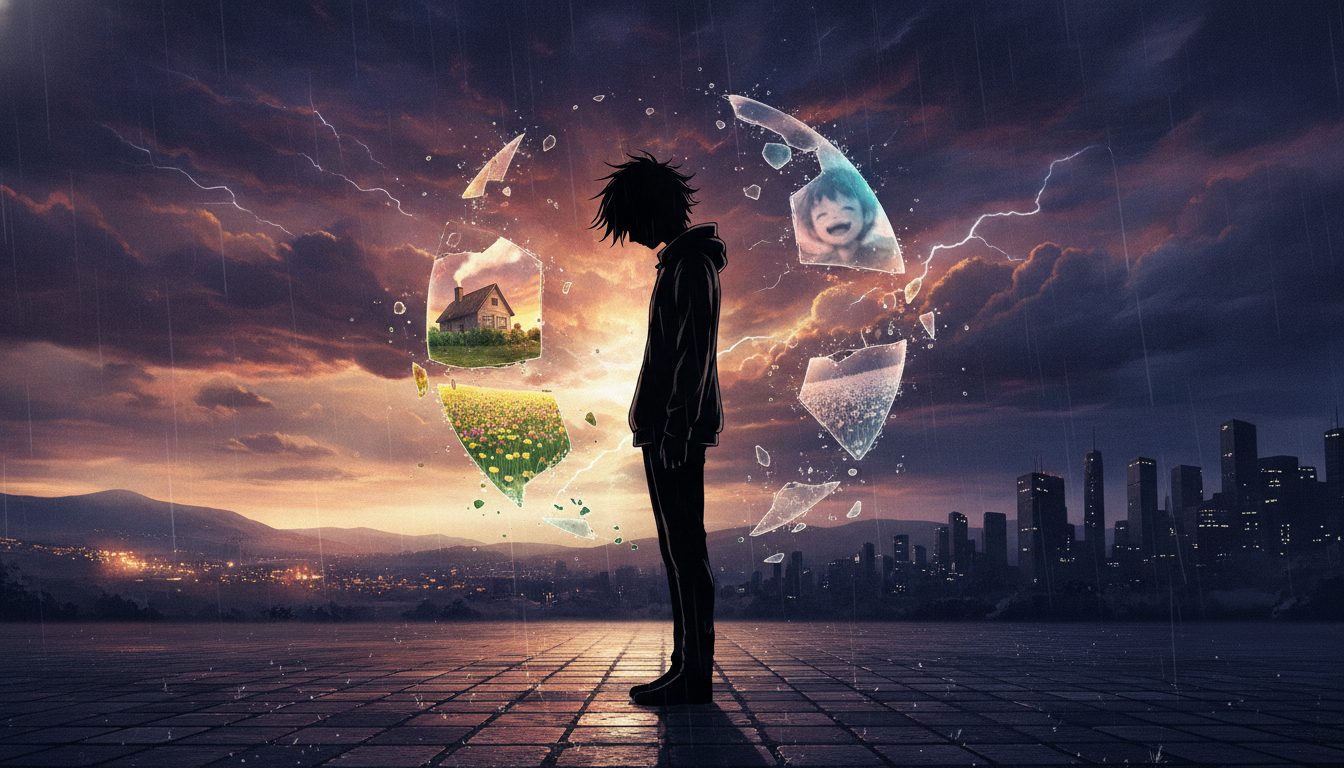
There is a specific kind of emotional devastation that only anime seems to deliver with surgical precision. You are thirty episodes deep into a shonen series, fully committed to watching your favorite hotheaded protagonist punch their way to victory, and then — without warning — a single flashback sequence reduces you to an absolute wreck. Not a cliffhanger. Not a surprise villain reveal. Just the quiet, heartbreaking story of how someone became who they are. That is the power of the anime tragic backstory, and it hits differently than nearly any other storytelling device in the medium.
What makes these moments so uniquely gut-punching compared to conventional plot twists? A twist rewires your understanding of what happened. A backstory rewires your understanding of who is suffering and why. One is intellectual; the other is visceral. When you learn that a character you have been watching for dozens of episodes spent their entire childhood in isolation, loss, or trauma, the emotional math changes completely. Every previous scene recalculates in your memory. Suddenly the aggressive loner, the villain who seemed cartoonishly evil, or the comic relief character who always deflects with jokes — they all become devastatingly human.
Anime has refined this craft to an almost unfair degree. The medium’s long-form storytelling, its willingness to dwell in emotional pain without rushing toward resolution, and its incredible character design language all conspire to make backstory sequences land like freight trains. And once you understand why they work so well, you will never watch them the same way again.
The Architecture of Pain: How Anime Builds Its Backstories
Most Western animated series treat backstory as exposition — a quick information dump to explain a character’s motivation before moving the plot forward. Anime treats it as architecture. A backstory is not something tacked onto a character; it is the foundation the entire character is built on top of. Writers and mangaka often plan these histories before a single page of the main story is drawn.
Take Naruto Uzumaki from Naruto. His loneliness as a child shunned by his entire village is not a detail inserted to make you feel sorry for him. It is the reason his most fundamental desire — to be acknowledged — drives every single decision he makes across hundreds of episodes. Masashi Kishimoto designed Naruto from the inside out. The result is that when his backstory is revealed in detail, it does not feel like new information. It feels like the answer to a question you have been holding without knowing it.
This architectural approach means that by the time a backstory is actually shown on screen, the audience has already spent significant time loving or even despising the character. The emotional investment is already there. The backstory just detonates it.
The Villain Problem: Why the Best Backstories Belong to the Antagonists
Here is the uncomfortable truth anime has been telling us for decades: the most emotionally devastating backstories do not belong to heroes. They belong to villains. And the reason is simple — when you understand why someone became a monster, it becomes impossible to simply hate them anymore.
Itachi Uchiha from Naruto remains one of the most discussed examples in anime history. For a large portion of the series, he is presented as a cold-blooded murderer who slaughtered his entire clan, including his parents, and left his younger brother Sasuke as the only survivor — purely, it seemed, out of ambition and cruelty. When the full truth of Itachi’s story is finally revealed, it recontextualizes every scene he appeared in. He was operating under impossible circumstances, protecting a village that would never acknowledge his sacrifice, and carrying a burden he chose to carry alone. Viewers who had written him off as a generic villain suddenly found themselves grieving.
The same phenomenon occurs with characters like:
- Zuko from Avatar: The Last Airbender — technically not anime by strict definition, but spiritually indistinguishable in this conversation
- Gaara from Naruto, whose backstory of childhood isolation and rejection mirrors Naruto’s own in heartbreaking ways
- Hisoka — actually, let’s use a clearer case — Kurapika from Hunter x Hunter, whose entire arc is built on the genocide of his clan
- Shigaraki Tomura from My Hero Academia, whose origin story in the manga reveals a child who was failed by every adult around him
- Annie Leonhart from Attack on Titan, whose quiet devastation in the Forest of Giant Trees scene lands so hard precisely because of what we eventually learn about her father
The pattern is consistent. Anime does not shy away from showing that broken people were once unbroken — and that something specific, often something preventable, did the breaking.
Silence and Stillness: The Visual Language of Grief in Anime
Part of what makes these sequences so effective is a technique that is almost counterintuitive: stillness. During the most emotionally devastating backstory moments in anime, animation often slows down or simplifies. Directors lean into limited animation not as a budget constraint but as an aesthetic choice. A single held frame of a child standing in an empty house communicates more than a fully animated action sequence ever could.
Grave of the Fireflies (1988), the Studio Ghibli film directed by Isao Takahata, is perhaps the most extreme example. It is barely an action film at all. It is a meditation on loss told almost entirely through quiet domestic moments — two siblings trying to survive the aftermath of wartime Japan. The stillness of the film is its weapon. There is nowhere to look away.
More recent series use this language just as deliberately. Frieren: Beyond Journey’s End, which became a cultural touchstone after its 2023 premiere, builds its entire emotional architecture around the concept of time and grief. Frieren is an elf who outlives her human companions and is only beginning to understand, centuries later, what she lost by not paying attention. If you want more anime that use this kind of quiet devastation, If You Loved Frieren, These Anime Will Wreck You Too is essential reading.
The Long Game: Why Serialized Storytelling Makes Backstories Hit Harder
A plot twist in a two-hour film can be emotionally effective. A backstory reveal after fifty or a hundred episodes of serialized anime is something else entirely. The investment compounds interest. Every episode you spend with a character is another layer of attachment that the backstory eventually weaponizes.
One Piece is perhaps the greatest example of this long-game emotional strategy. Eiichiro Oda has been telling this story since 1997 in manga form, and certain backstory arcs — particularly those of Nami, Robin, and Ace — have become legendary not just in anime fandom but in broader conversations about storytelling. The reason Robin’s “I want to live!” moment in the Enies Lobby arc destroys viewers is not because it comes out of nowhere. It comes after years of watching a character who had completely given up on her own survival, who had spent her entire life running and hiding, finally choose herself. The backstory earns that moment.
Did You Know? Backstory Facts That Make the Tears Make Sense
- The concept of a tragic origin story in manga and anime draws heavily from classical Japanese literary tradition, particularly the idea of mono no aware — the bittersweet awareness of impermanence
- Masashi Kishimoto has stated in interviews that Gaara’s character was designed to show what Naruto could have become without the friends who supported him
- The flashback structure in anime often borrows from film noir storytelling techniques that became popular in Japanese cinema during the post-war period
- Many of the most iconic backstory sequences in anime were not in the original manga, but were expanded significantly by anime directors who recognized their emotional potential
- Clannad: After Story, the Key/Visual Arts and Kyoto Animation production from 2008, is still regularly cited by fans as the single most emotionally devastating anime experience, almost entirely because of its use of backstory and consequence
The Healing Side of the Coin
It is worth noting that tragic backstories do not only exist to wound you. In many cases, they are also the foundation of the medium’s capacity for genuine emotional healing. Understanding why a character suffers is the first step toward watching them recover — or watching the people around them grow because of knowing them. If you need a breather between emotional devastations, Slow Down With These Slice of Life Anime That Heal You is exactly where to go next.
The best tragic backstories in anime do not end in despair. They end in something harder to manufacture and more valuable: earned empathy.
Anime tragic backstories hit harder than plot twists because they are not about information — they are about understanding. A twist changes what you know. A backstory changes how you feel. And in a medium that has spent decades perfecting the art of making audiences fall completely in love with drawn characters, that distinction makes all the difference in the world. The next time a single episode flashback leaves you emotionally wrecked on your couch, just know: it was always going to happen. They built it that way from the very beginning.
