

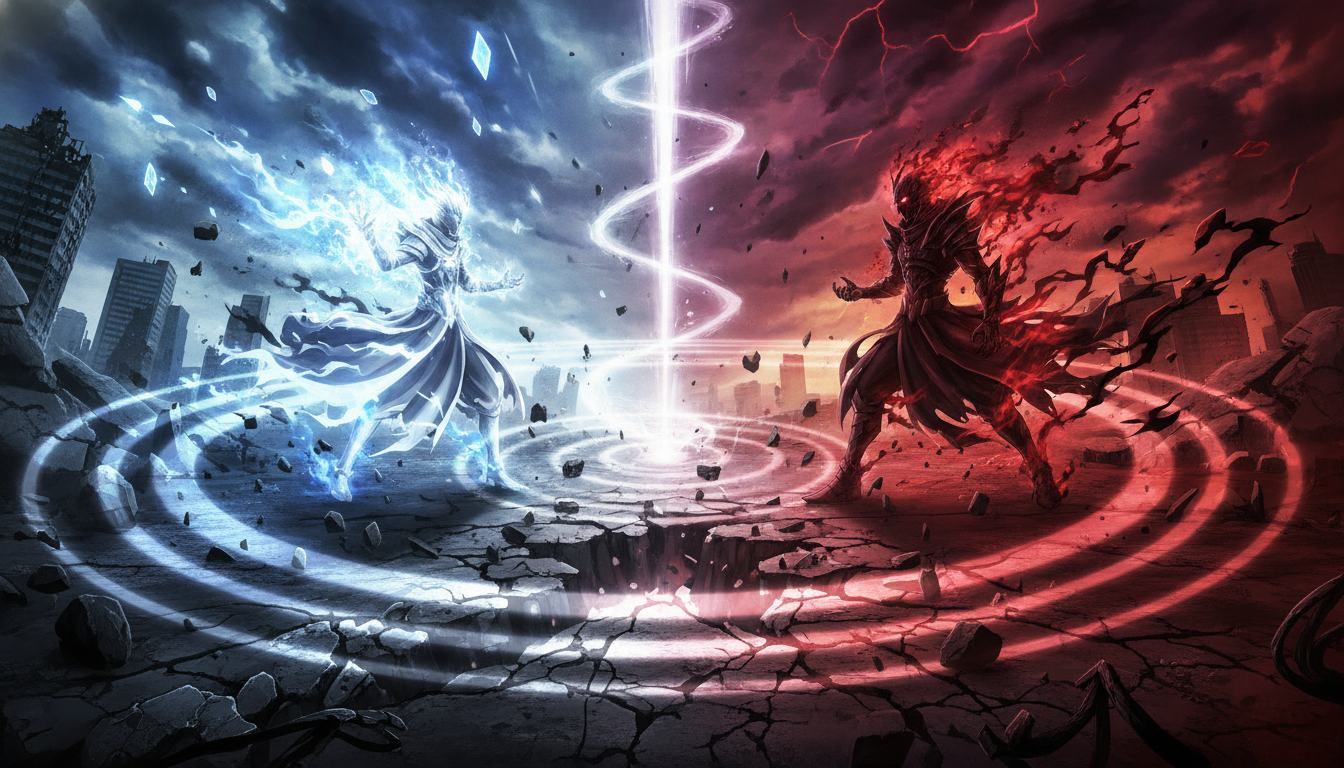
Few debates in the anime community burn as fiercely as the question of who sits at the absolute top of Jujutsu Kaisen‘s power hierarchy: Satoru Gojo, the blindfolded prodigy who once made every villain sweat just by showing up, or Ryomen Sukuna, the ancient King of Curses who spent centuries being treated like a myth and then proved every rumor was an understatement. Creator Gege Akutami built both characters to feel genuinely unbeatable within their own contexts, which is exactly why the fandom has been arguing about this since the manga was still finding its footing. The anime adaptation, produced by MAPPA, only poured gasoline on that fire by rendering their abilities in jaw-dropping animation that made the debate feel even more urgent and personal.
What makes this rivalry so compelling is that it isn’t just a numbers game. Gojo and Sukuna represent two completely different philosophies of power — one rooted in an almost cosmic defense and the other in overwhelming, merciless offense. Gojo is the untouchable fortress; Sukuna is the unstoppable blade. When an unstoppable force meets an immovable object, something eventually has to give, and Jujutsu Kaisen actually committed to answering that question in its manga run. The anime community, many of whom are still catching up through the MAPPA adaptation, is now grappling with an answer that left a significant portion of the fandom emotionally devastated. If you want to understand why this debate matters so much — and what the canon actually says — keep reading.
Understanding the Two Titans: Gojo and Sukuna at a Glance
Before diving into the comparison, it helps to know exactly who these two characters are for anyone newer to the series.
Satoru Gojo is a Special Grade Jujutsu Sorcerer and a teacher at Tokyo Jujutsu High. He’s widely considered the strongest sorcerer in the modern era, and the series spends a considerable amount of time reinforcing that reputation. His signature ability, the Six Eyes, gives him an almost supernatural level of cursed energy perception and efficiency, and his Infinity technique — a passive barrier that automatically slows anything approaching him to a near-standstill — makes him effectively untouchable by conventional means.
Ryomen Sukuna is a legendary cursed spirit, originally a human sorcerer from over a thousand years ago who became so powerful that even after death, his cursed energy refused to dissipate. Instead, it condensed into twenty indestructible fingers. In the modern timeline of JJK, Sukuna exists primarily inside the body of protagonist Yuji Itadori, though the story eventually gives him a more permanent vessel. He commands techniques including Malevolent Shrine, a Domain Expansion that covers a massive area and deals unavoidable slashing damage to everything within range.
The Six Eyes and Infinity: Why Gojo Was Considered Unbeatable
Gojo’s power set is built around one core idea: nothing can touch him unless he allows it. The Infinity technique is always active, functioning like an invisible, infinitely dense wall between Gojo and the rest of the world. Attacks slow as they approach him, decelerating to a theoretical standstill before they can make contact. Countering this requires either a technique that can manipulate space at a conceptual level or an ability that bypasses physicality entirely.
The Six Eyes amplify everything. They allow Gojo to process information at extraordinary speeds, optimize his cursed energy usage to near-zero cost levels, and see through virtually any technique. When Gojo uses his own Domain Expansion — Unlimited Void — it floods the target’s mind with infinite, unfiltered information, paralyzing them completely. The combination of these tools led the entire Jujutsu world, both allies and enemies, to treat Gojo as a one-man deterrent against catastrophe.
Here are some key highlights of what makes Gojo so exceptional:
- Passive Infinity means he doesn’t have to consciously defend — the protection is always on
- Six Eyes allow near-zero cursed energy consumption, meaning he can sustain high-level techniques far longer than others
- Unlimited Void is one of the most conceptually oppressive Domain Expansions in the series
- He mastered the Reverse Cursed Technique (the ability to heal oneself using cursed energy) at a young age, which few sorcerers ever achieve
- His presence alone historically prevented major curses and curse users from making large-scale moves
Sukuna’s Arsenal: The King of Curses and Why the Title Fits
Sukuna’s power isn’t defensive — it’s surgical and absolute. His Cleave and Dismantle abilities allow him to slice through essentially anything, adjusting the force of each strike based on the target’s cursed energy and physical makeup. This makes his offense adaptive in a way that passive barriers struggle to account for. His Domain Expansion, Malevolent Shrine, is unique in the series because it doesn’t construct an enclosed space like most Domains do — it manifests in the real world and covers an enormous radius, making it far harder to counter through conventional Domain-clashing strategies.
Sukuna also demonstrates the ability to use the Reverse Cursed Technique with terrifying proficiency, healing catastrophic damage almost in real time. Throughout the series, he is shown disassembling other characters’ techniques after brief exposure to them, displaying a level of analytical combat intelligence that rivals even Gojo’s Six Eyes perception. The ancient sorcerer has also shown command over fire-based techniques (referred to as the Shrine technique in some translations) that operate at a completely different conceptual level than typical cursed energy attacks.
The Canon Answer: What Actually Happened Between Them
This is where the article gets into genuine spoiler territory for anime-only fans, so consider this your warning.
In the Jujutsu Kaisen manga, Gojo and Sukuna fought directly during the Shinjuku Showdown arc. The fight was one of the most technically detailed and emotionally charged battles Akutami ever wrote. Gojo fought with everything at his disposal, and the clash was genuinely close in ways that validated every argument made about his power level over the years. However, Sukuna ultimately won. Gojo was killed during this confrontation.
The outcome hinged on several factors:
- Sukuna, inhabiting the body of Megumi Fushiguro (a sorcerer with the Ten Shadows Technique), gained access to a power combination that allowed him to work around Infinity at a conceptual level
- Sukuna’s analytical ability allowed him to identify and exploit the precise conditions under which Infinity could be challenged
- The use of Mahoraga, a shikigami (a type of summoned spirit in the JJK world) capable of adapting to any technique, was central to unraveling Gojo’s defenses over the course of the fight
- Gojo was fighting without backup at a critical moment, facing not just Sukuna but the lingering effects of a long, brutal engagement
The fandom’s reaction was seismic. For many viewers and readers, why anime tragic backstories hit harder than any plot twist applies perfectly here — because Gojo’s death wasn’t just a power statement, it was an emotional gut-punch that recontextualized everything about his character arc.
Comparing Their Abilities Side by Side
| Category | Satoru Gojo | Ryomen Sukuna |
|---|---|---|
| Primary Defense | Infinity (always active) | Healing + overwhelming offense |
| Domain Expansion | Unlimited Void | Malevolent Shrine |
| Unique Advantage | Six Eyes perception & efficiency | Adaptive analytical combat & Cleave |
| Healing Ability | Reverse Cursed Technique | Reverse Cursed Technique (exceptional) |
| Raw Destructive Output | Extremely high | Higher (per canon outcome) |
| Conceptual Adaptability | High | Higher (via Mahoraga) |
What the Result Actually Means for the JJK Power Hierarchy
Sukuna being canonically stronger than Gojo doesn’t diminish Gojo — if anything, it elevates both characters. The fact that the fight was competitive, that Gojo pushed the King of Curses harder than arguably anyone else in the series, only reinforces how extraordinary he was. Sukuna winning required extraordinary circumstances, a specific vessel, a particular shikigami, and a level of preparation and adaptation that speaks to how seriously he had to take Gojo as a threat.
This outcome also reshapes how fans think about the rest of the cast. If Sukuna at full power is the ceiling, and Gojo couldn’t clear it, the mountain everyone else has to climb becomes even more imposing and dramatic heading into the final chapters of the story.
The Fan Debate That Won’t Die
Despite having a canon answer, the debate continues — partly because the manga’s ending chapters sparked their own controversies, and partly because the anime adaptation hasn’t animated the Shinjuku Showdown in full as of early 2026. Anime-only fans are still experiencing Gojo’s peak moments without the devastating conclusion, which keeps the “what if” conversations alive and passionate across social media, YouTube, and forums everywhere.
It’s the kind of debate that makes the fandom feel alive, honestly. Much like how these unsolved mysteries are too creepy to be real hold their grip on the imagination precisely because they remain open, Gojo vs. Sukuna persists as a cultural conversation because it touched something deeper than power levels — it touched on legacy, potential, and what it means to be the best.
The Verdict
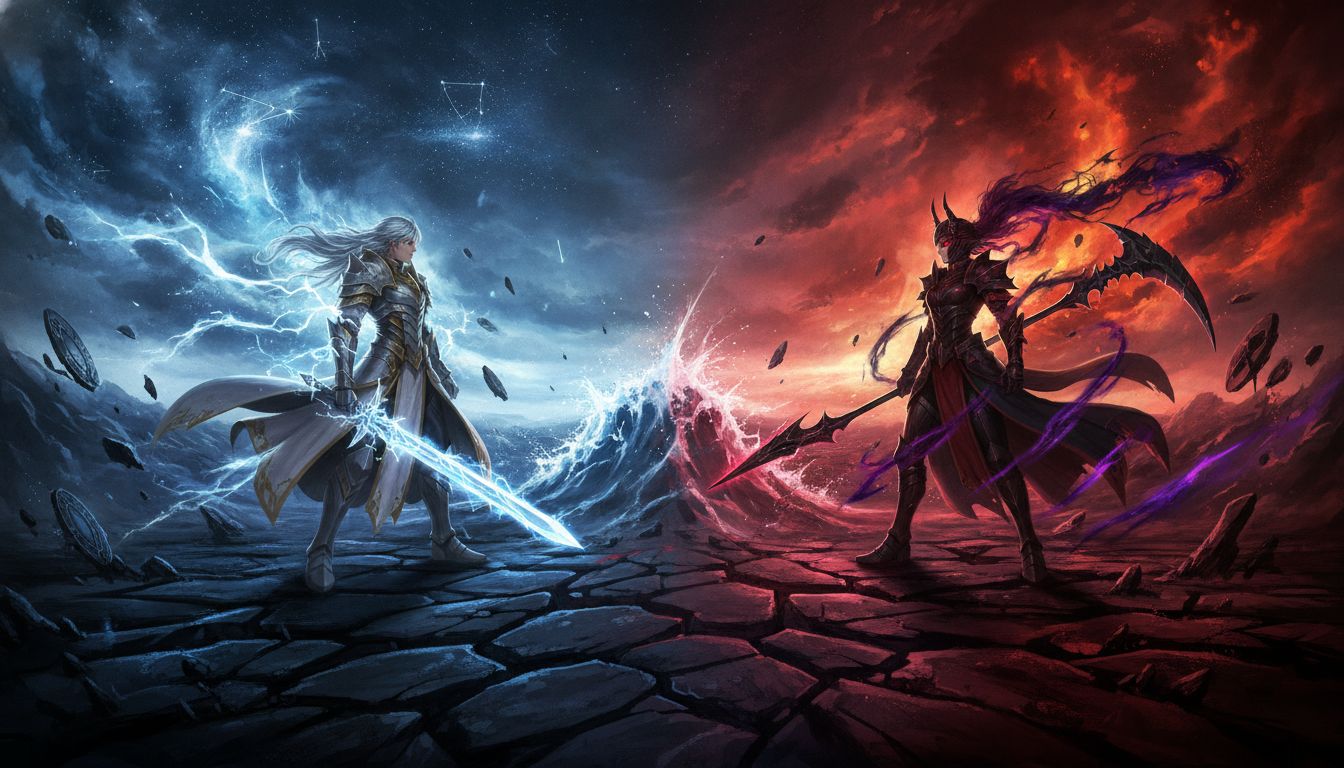
Canonically, Sukuna is stronger than Gojo — the manga made that definitive statement in one of the most talked-about fights in recent shonen history. But “stronger” in this context means Sukuna won a specific battle under specific conditions against a Gojo who was fighting at the absolute peak of his ability. The margin was not comfortable, and the cost was real. In terms of raw brilliance, conceptual innovation, and impact on the series’ world, both characters stand on a tier entirely their own. The King of Curses sits marginally above the strongest sorcerer of the modern age — and that margin is exactly what makes Jujutsu Kaisen one of the most thrilling shonen series of its generation.
