

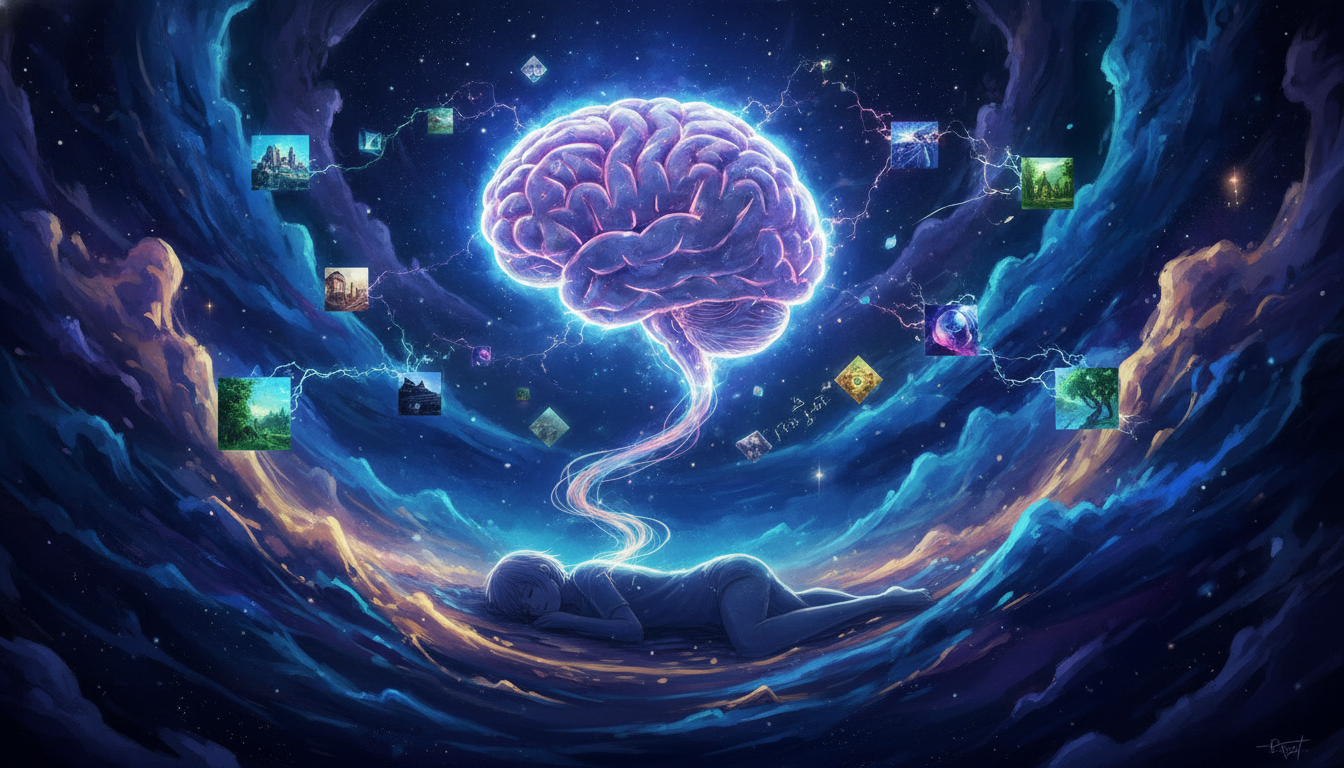
Imagine your brain deciding to run a full-scale hallucinatory theater production every single night, complete with original storylines, emotional plot twists, and characters you’ve never consciously met — all while you’re completely unconscious and drooling on your pillow. That’s sleep. And once you understand what’s actually happening inside your skull during those eight hours, you may never look at bedtime the same way again. This isn’t science fiction. This is the weird, wild, and genuinely unsettling neuroscience of what your brain does the moment you close your eyes.
From the outside, sleep looks like the most boring human activity imaginable. You lie still, you breathe, you occasionally steal all the blankets. But internally, your brain is doing something so complex, so active, and so deliberately orchestrated that scientists are still unwrapping its mysteries in 2026. Sleep isn’t your brain powering down. It’s your brain shifting into a completely different operating mode — one that processes memories, flushes toxic waste, rehearses emotional responses, and generates vivid alternate realities on demand. If you’re a fan of anime like Paprika (Satoshi Kon’s mind-bending 2006 masterpiece about a device that lets therapists enter patients’ dreams) or Dr. Stone (where characters obsess over how science explains the human body), the real neuroscience of sleep will hit different.
Buckle up, because your brain at night is genuinely freakier than any anime arc you’ve watched this season.
The Four Stages of Sleep Are Wilder Than Any Story Arc
Most people vaguely know that sleep has “stages,” but the specifics are where things get truly strange. Every night, your brain cycles through four distinct stages, typically repeating the full cycle four to six times across a full night’s rest.
- Stage 1 (NREM 1): The lightest sleep. Your muscles may twitch in what’s called a hypnic jerk — that falling sensation that startles you awake. This is your brain briefly misreading muscle relaxation as a loss of balance.
- Stage 2 (NREM 2): Your body temperature drops, heart rate slows, and your brain begins producing bursts of rapid electrical activity called sleep spindles. These spindles are now strongly linked to memory consolidation.
- Stage 3 (NREM 3): Also called slow-wave sleep or deep sleep. This is the physically restorative phase. Growth hormone is released. Tissue repairs happen. Your brain emits large, slow delta waves. Waking someone from this stage is surprisingly difficult.
- REM Sleep (Rapid Eye Movement): The nightmare-and-dream factory. Your eyes dart beneath your eyelids, your brain activity looks nearly identical to when you’re fully awake, and your body is actively paralyzed by a mechanism in your brainstem. Yes — paralyzed on purpose.
Each of these stages serves radically different functions. Skipping any of them — through sleep deprivation, alcohol consumption, or poor sleep hygiene — has measurable, documented consequences on your health and cognition.
Your Brain Paralyzes Your Body Every Single Night
Let’s linger on that last point, because it deserves its own conversation. During REM sleep, your brainstem activates a process called REM atonia, which essentially cuts the signal between your brain and your voluntary muscles. The purpose is elegant: your brain is generating vivid, often physically intense dream scenarios, and REM atonia prevents you from acting them out.
Without it, you would physically run, punch, kick, and flail in response to your dreams. This is not hypothetical. There’s a real neurological condition called REM Sleep Behavior Disorder (RBD) in which REM atonia fails, and affected individuals do exactly that — they act out their dreams, sometimes injuring themselves or their partners in the process. It sounds like something from a horror anime, but it’s a real clinical phenomenon associated with certain neurodegenerative conditions.
The flipside of this system is sleep paralysis — a state where you wake up consciously but the atonia mechanism hasn’t switched off yet. You’re aware, you can see your room, but you cannot move. Many people also experience vivid hallucinations during episodes, often reporting a shadowy figure pressing on their chest. Cultures across the world have named this entity: the Old Hag in Newfoundland, Kanashibari in Japan, the Mare in European folklore. Sleep science gives us the neurology. The folklore gives us the existential dread.
Your Brain Is Literally Cleaning Itself While You Sleep
One of the most stunning sleep-science discoveries of the past decade involves something called the glymphatic system. Think of it as your brain’s night-shift janitorial crew. During sleep — particularly deep, slow-wave sleep — your brain’s cells shrink slightly, allowing cerebrospinal fluid to flush through the spaces between neurons and wash out metabolic waste products.
One of the key waste products cleared by this process? Amyloid-beta — a protein strongly associated with Alzheimer’s disease. Chronic sleep deprivation has been linked in multiple studies to increased amyloid-beta accumulation. In other words, consistently bad sleep doesn’t just make you foggy and irritable. Over time, it may contribute to the buildup of exactly the proteins implicated in neurodegenerative disease.
This discovery reframed how researchers think about sleep’s purpose. It’s not passive rest. It’s mandatory biological maintenance. If you want a science-heavy anime rabbit hole while your brain marinates on this fact, Dr. Stone Season 3 Recap: Science Never Looked This Epic is a great place to start.
Dreams Are Your Brain Running Emotional Simulations
Why do we dream? Neuroscience doesn’t have a single definitive answer, but the leading theories are fascinating. One prominent model suggests that REM dreaming functions as a kind of emotional processing simulator — your brain replays emotionally charged experiences in a neurochemical environment stripped of certain stress hormones (notably norepinephrine), allowing you to reprocess difficult memories with reduced emotional intensity.
This is why nightmares about a stressful event can gradually become less distressing over time. Your brain is essentially doing emotional editing while you sleep. Matthew Walker, neuroscientist and author of Why We Sleep (2017), describes REM sleep as “overnight therapy” — a phrase that’s stuck in the popular science conversation for good reason.
Dreams also appear to facilitate creative problem-solving. The hypnagogic state — that floaty half-asleep threshold between wakefulness and sleep — has historically been exploited by creative minds. Salvador Dalí reportedly napped while holding a key over a plate so that the noise of it dropping would wake him just at the edge of sleep, to capture the wild, associative imagery of that liminal moment.
The Most Unhinged Sleep Facts That Are Completely Real
Just in case your brain isn’t sufficiently rattled, here’s a rapid-fire collection of verified sleep phenomena that sound entirely made up:
- Exploding Head Syndrome is a real, documented condition where people hear a sudden, extremely loud sound (a bang, a crash, a cymbal) right as they fall asleep. There is no external sound. The brain manufactures it entirely.
- Sexsomnia is a recognized parasomnia in which individuals engage in sexual behavior while completely asleep, with no memory of it afterward.
- Sleep-eating disorder causes people to raid their kitchens while asleep and consume food — sometimes bizarre combinations — with zero waking recollection.
- The world record for documented, verified sleep deprivation in a human is 11 days and 24 minutes, set by Randy Gardner in 1964. By day 11, he was experiencing paranoia, hallucinations, and could not complete simple sentences.
- Dolphins and certain whales practice unihemispheric sleep — sleeping with one brain hemisphere at a time so the other can remain alert. One eye stays open. Half the brain keeps watch.
For more facts that sound too strange to be true (but are), Why Do These Trivia Facts Sound Too Weird to Be Real? is required reading.
Why Anime and Geek Culture Keeps Returning to Sleep and Dreams
From Paprika and Inception‘s obvious lineage, to the dream sequences in Evangelion, to the memory-diving concepts in Sword Art Online, creators have long sensed that the sleeping mind is a narrative goldmine. And now we understand why on a biological level: dreams are already cinematic. They come with stakes, emotions, surreal imagery, and personal symbolism baked in. The sleeping brain is, in a very real sense, a storytelling engine running without a script.
This is what makes the neuroscience of sleep so uniquely captivating for geek culture audiences. It validates our obsession with constructed realities, alternate consciousness, and the blurry line between imagination and experience. Your brain doesn’t stop being interesting when you close your eyes. If anything, that’s precisely when it gets started.
Stop Sleeping on Sleep Science
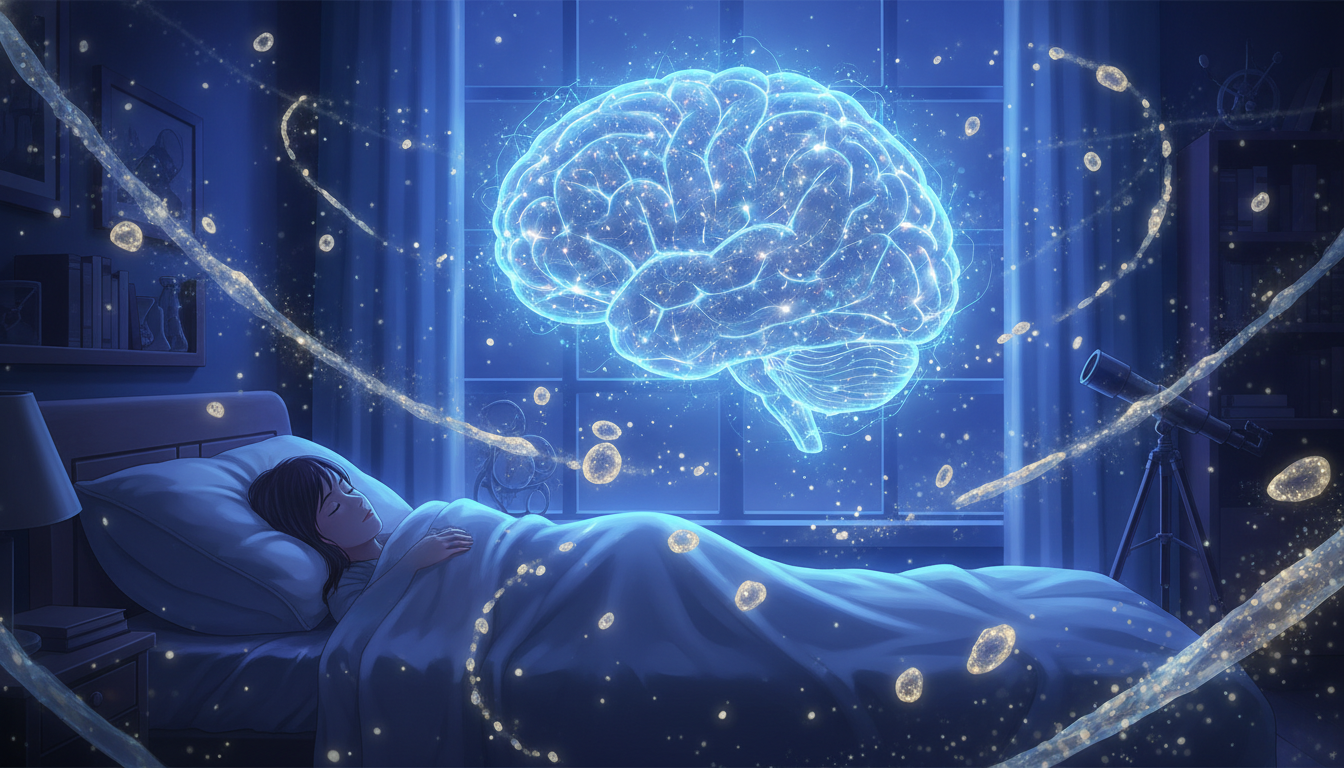
Here’s the bottom line: sleep is not downtime. It’s one of the most complex, multi-functional biological processes in your body, and your brain is the star performer every single night. The paralysis. The hallucinations. The toxic waste removal. The emotional rewiring. The involuntary sound effects. All of it, every night, whether you remember it or not.
So next time someone tells you they’ll “sleep when they’re dead,” feel free to hit them with the amyloid-beta data. Sweet dreams — your glymphatic system is counting on them.
