

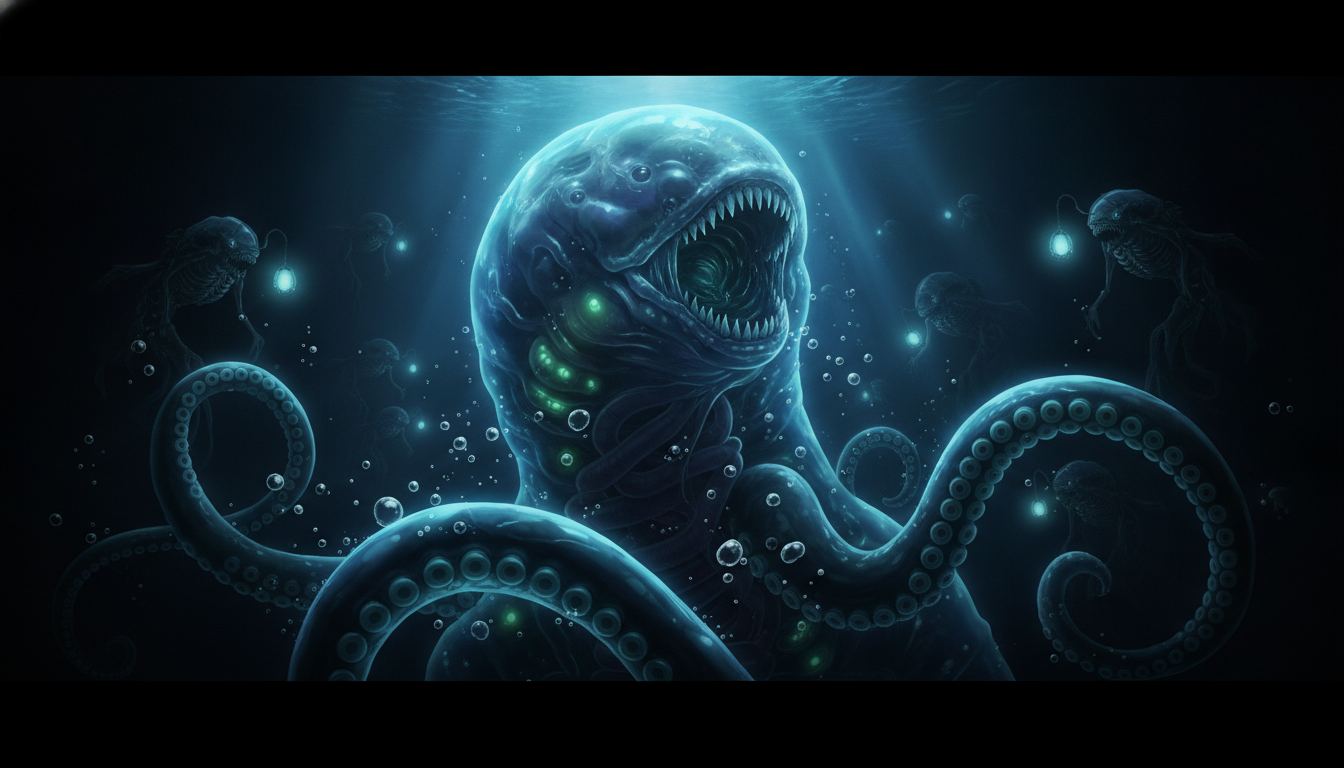
Beneath the surface of our oceans lies a world so alien, so pitch-black, and so utterly hostile to human life that it makes the scariest sci-fi horror movie look like a children’s cartoon. We’ve explored more of the surface of Mars than we have the deep ocean floor — and that fact alone should tell you everything. The creatures that have evolved to survive in these crushing, lightless depths aren’t just weird. They are the stuff of nightmares given biological form, shaped by millions of years of pressure, starvation, and darkness into things that look like they were designed by a horror writer with a biology degree and zero chill.
What makes deep sea creatures genuinely terrifying isn’t just their appearance — though trust us, we’re going to get into that — it’s the context. These animals exist in conditions that would kill a human being instantly. Water pressure at the deepest parts of the ocean, like the Mariana Trench’s Challenger Deep at roughly 36,000 feet below the surface, is more than 1,000 times the atmospheric pressure at sea level. There is no light. Temperatures hover just above freezing. Food is so scarce that some species wait months between meals. And yet, life not only survives down there — it thrives, and it does so in the most horrifying ways imaginable.
If you think anime’s best monster designers — the folks behind the creatures in Fullmetal Alchemist, Attack on Titan, or Berserk — have wild imaginations, wait until you meet the real-world nightmare fuel that evolution has been quietly cooking up for hundreds of millions of years. Nature didn’t need a writer’s room. It had time, pressure, and darkness. That’s more than enough.
The Abyss Is Real: Understanding the Deep Ocean
The ocean is divided into zones based on depth and light penetration. Most people are familiar with the sunlit surface zone — the top 200 meters or so where coral reefs, dolphins, and sea turtles live. But beneath that begins a series of increasingly dark and hostile layers:
- The Mesopelagic Zone (200–1,000 m): Twilight zone. Some sunlight filters in, but not enough for photosynthesis.
- The Bathypelagic Zone (1,000–4,000 m): Midnight zone. Total darkness. Bioluminescence is the only light source.
- The Abyssopelagic Zone (4,000–6,000 m): The abyss. Near-freezing temperatures, crushing pressure.
- The Hadal Zone (6,000 m+): Found in ocean trenches. The most extreme environment on Earth outside of volcanic systems.
Most deep sea monsters — and we’re absolutely calling them monsters — live in the bathypelagic zone and below. The deeper you go, the stranger and more terrifying the residents become.
Bioluminescence: Beauty That Wants to Kill You
Here’s where things get deceptively pretty before getting horrifying. Bioluminescence — the ability to produce and emit light — is extraordinarily common in the deep sea. Scientists estimate that the majority of deep sea animals produce some form of bioluminescence. But don’t let the glow fool you. These creatures aren’t putting on a light show for fun.
The anglerfish is the poster child of deep sea nightmare fuel. The female anglerfish uses a glowing lure called an esca, which dangles from a spine on her head, to attract prey in the pitch-black depths. Smaller creatures, drawn to the light, swim right into her enormous, fang-filled mouth. The teeth of an anglerfish are translucent and angled inward, meaning once something goes in, it cannot come back out. To make things even more unsettling, the male anglerfish is dramatically smaller than the female — and when he finds a mate, he bites into her body and physically fuses with her, eventually sharing her bloodstream. He becomes, effectively, a permanently attached parasite. Romance in the deep sea is horrifying.
The Goblin Shark: A Living Fossil With a Projectile Face
The goblin shark (Mitsukurina owstoni) looks like what would happen if a regular shark got a serious cosmetic surgery gone wrong. With its distinctive elongated, flattened snout and protruding, nail-like teeth, it already looks disturbing enough. But the goblin shark’s real party trick is its jaw, which can shoot forward — almost like a separate entity — to snap up prey. This is called slingshot feeding, made possible by highly elastic ligaments in the jaw. Imagine a monster that can literally extend its face at you. That’s the goblin shark. It’s a deep sea species found in oceans around the world, and it’s been around in roughly the same form for millions of years. It is, in the truest sense, a living fossil.
The Vampire Squid: Dark Lord of the Deep
Despite its name, the vampire squid (Vampyroteuthis infernalis — yes, its scientific name literally translates to “vampire squid from hell”) is not actually a squid. It belongs to its own taxonomic order and is more closely related to octopuses. Found in the oxygen minimum zones of tropical and subtropical oceans, it sports a dark, cloak-like webbing between its arms that it can wrap around itself like a cape when threatened — giving it that signature Dracula aesthetic.
What makes the vampire squid genuinely eerie isn’t its appearance but its survival strategy. It feeds primarily on marine snow — decomposing organic particles that drift down from above. It’s a passive scavenger in one of the most hostile environments on Earth, drifting through near-zero-oxygen water in near-complete darkness. If you’re looking for an anime villain aesthetic in real life, this creature nailed it centuries before any character designer got the chance. Speaking of creatures that seem ripped from fiction, if you enjoy stories packed with bizarre and powerful beings, Ready to Watch One Piece in 2026? Start Here — Oda’s ocean world has some deep-sea inspiration written all over it.
The Giant Isopod and the Art of Patient Horror
The giant isopod (Bathynomus giganteus) is essentially a roly-poly bug — the kind you might flip over in your backyard — scaled up to terrifying proportions. These crustaceans can grow over 30 centimeters long and have been found at depths of over 1,000 meters. They are scavengers, feeding on dead whales, fish, and squid that sink to the seafloor. One captive giant isopod at an aquarium in Japan reportedly went over five years without eating before eventually dying — a testament to the deep sea survival strategy of extreme patience and metabolic slowdown. They look like something out of a Guillermo del Toro film. They are, in fact, very much real.
Deep Sea Creatures That Anime and Pop Culture Got Right (and Wrong)
Anime and geek culture have long been fascinated by sea monsters and abyssal horrors. Made in Abyss, the acclaimed dark fantasy anime series, takes its worldview literally — a massive chasm filled with increasingly dangerous and bizarre creatures the deeper you descend. The show’s creature design draws heavily on themes of deep sea biology: bioluminescence, predatory camouflage, and creatures adapted to crushing pressure and darkness. It’s one of the most accurate thematic translations of deep sea horror into animated fiction, even if the specifics are fantastical.
Meanwhile, the Kraken — the legendary sea monster of Norse and maritime mythology — is almost certainly inspired by real encounters with the **giant squid (Architeuthis dux)**, a massive cephalopod that can reach lengths of up to 13 meters. Giant squid were considered mythological for centuries. We now have photographs and video of them in their natural habitat. Hidden Anime Gems You’ve Been Sleeping On Too Long — much like these obscure ocean facts, some of the best stories are hiding in plain sight.
Why We Should Be Terrified — and Fascinated
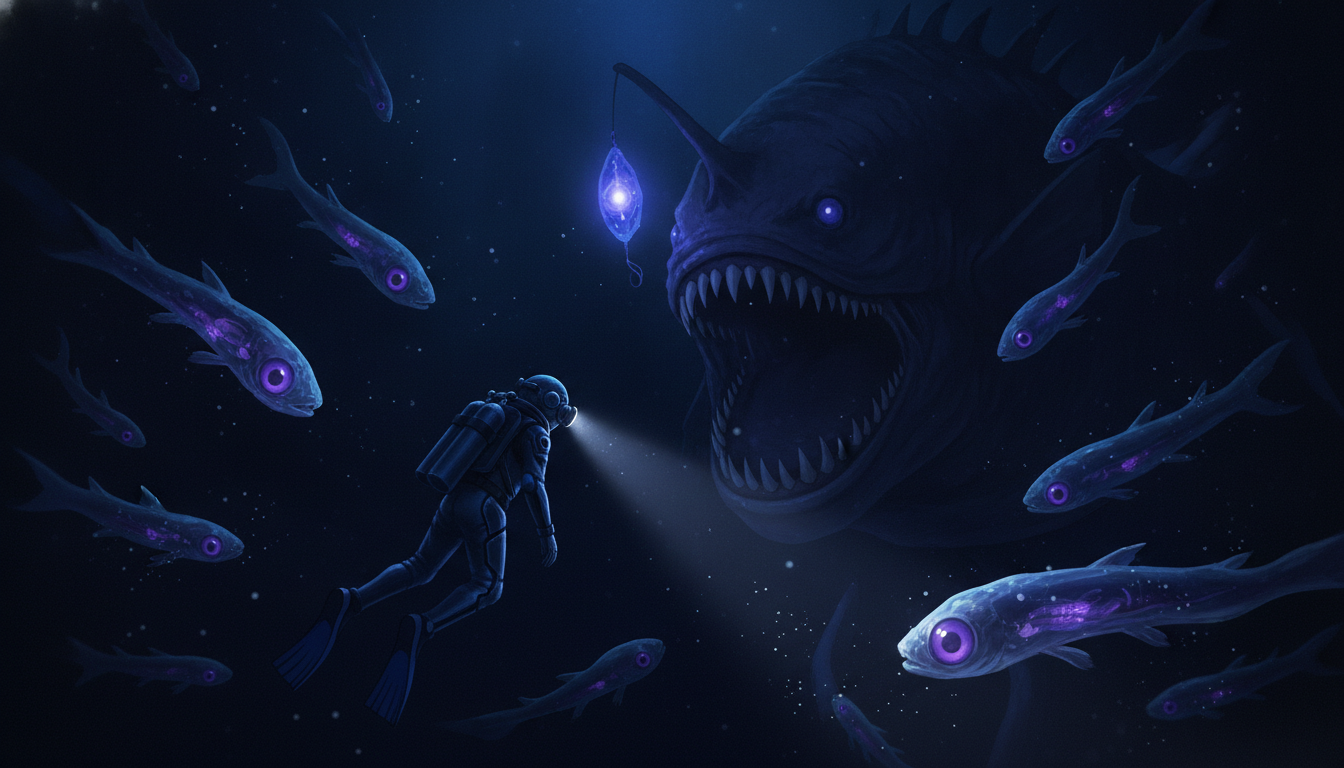
Here’s the uncomfortable truth: we have explored less than 25% of the world’s ocean floor. The deep sea remains the largest and least understood ecosystem on Earth. New species are discovered regularly, and some estimates suggest millions of deep sea species have yet to be identified. Every time we send a submersible into the abyss, it comes back with footage that redefines what life can look like.
The creatures of the deep ocean are not monsters in the fictional sense — they are not evil, they do not hunt humans, and they are not interested in terrorizing anyone. But they are the most powerful argument nature has ever made that reality can be stranger, darker, and more awe-inspiring than anything the human imagination can construct. They evolved in isolation, in darkness, under conditions that should be incompatible with complex life. And they are magnificent for it.
The deep ocean is Earth’s final frontier — and its most honest horror story. The monsters are real. They were always real. We just hadn’t looked deep enough.
