

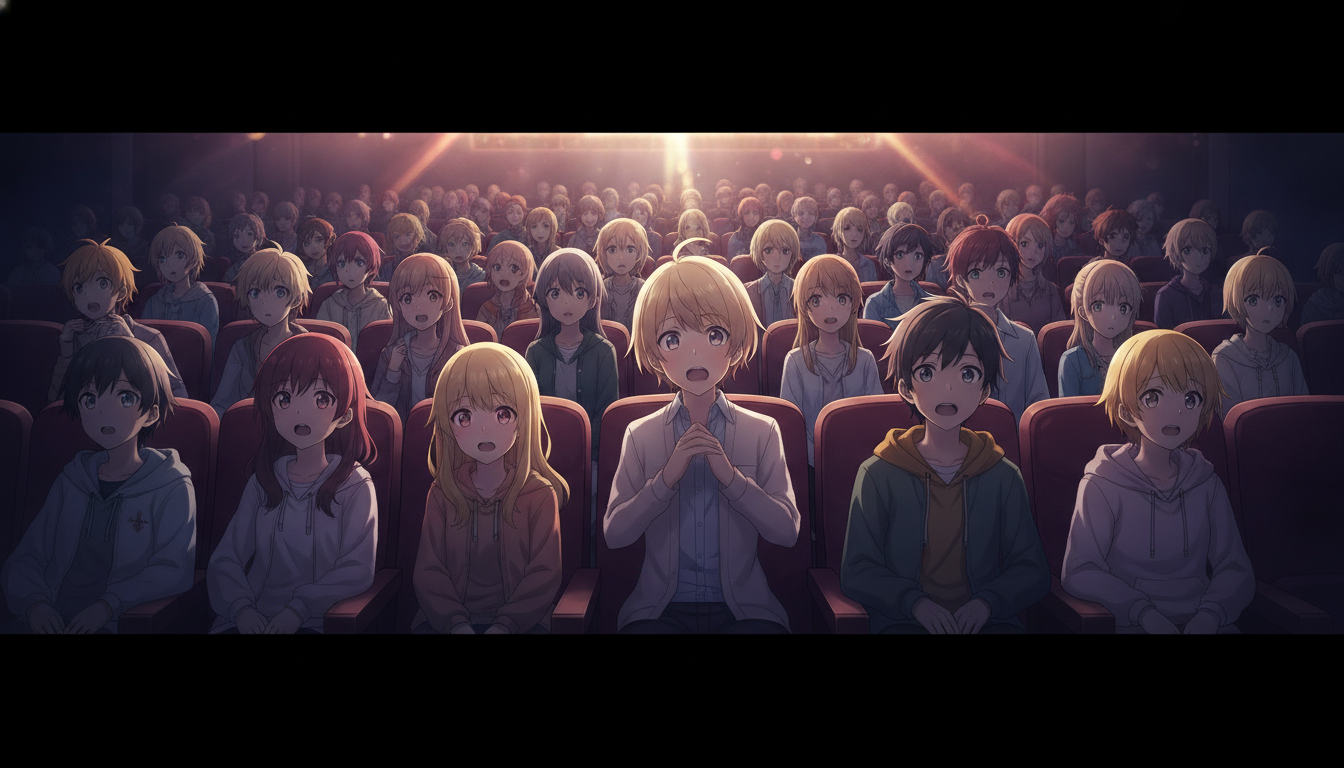
Anime movies occupy a completely different universe from their TV counterparts — tighter storytelling, breathtaking animation budgets, and emotional gut-punches that linger for years. Whether you stumbled into this medium through a Studio Ghibli film at a sleepover or fell headfirst into the rabbit hole after your first Makoto Shinkai watch party, you already know the feeling: that quiet devastation after the credits roll, when the real world feels slightly less vivid than the one you just left. The anime film landscape has produced some of the most artistically ambitious works in all of cinema, and yet so many of them still fly under the radar for casual viewers who haven’t quite dipped their toes in.
This list is built for everyone — the newcomer who just finished Your Name and doesn’t know what to watch next, the seasoned fan who rewatches Akira every couple of years and needs a fresh recommendation, and everyone in between. We’ve ranked these films not just by popularity or critical reception, but by their ability to genuinely redefine what you expect from animation as an art form. These aren’t just “good for anime movies” — they’re great films, full stop. Buckle up, because your watchlist is about to get a serious upgrade.
The Ranking: Anime Movies That Belong on Every Screen
Here’s a curated ranking of essential anime films that hit differently — across genres, studios, and decades — to give you the full spectrum of what this medium can do.
| Rank | Title | Director | Year | Studio |
|---|---|---|---|---|
| 1 | Spirited Away | Hayao Miyazaki | 2001 | Studio Ghibli |
| 2 | Akira | Katsuhiro Otomo | 1988 | Tokyo Movie Shinsha |
| 3 | Your Name (Kimi no Na wa) | Makoto Shinkai | 2016 | CoMix Wave Films |
| 4 | Grave of the Fireflies | Isao Takahata | 1988 | Studio Ghibli |
| 5 | Princess Mononoke | Hayao Miyazaki | 1997 | Studio Ghibli |
| 6 | Perfect Blue | Satoshi Kon | 1997 | Madhouse |
| 7 | The Boy and the Heron | Hayao Miyazaki | 2023 | Studio Ghibli |
Spirited Away — The Undisputed Crown Jewel
If you’ve only ever seen one anime film, there’s a good chance it was Spirited Away. Released in 2001 by Studio Ghibli and directed by the legendary Hayao Miyazaki, it became the first anime film to win the Academy Award for Best Animated Feature in 2003. The film follows 10-year-old Chihiro, who becomes trapped in a spirit world after her parents are transformed into pigs, and must work in a bathhouse for gods and spirits to save them.
What makes it rank number one isn’t just nostalgia or prestige — it’s the sheer density of imagination packed into every frame. The world-building is effortless, the characters are unforgettable (Yubaba and No-Face especially), and the themes about identity, labor, and growing up hit differently every time you revisit it at a new stage of life.
Akira — The Film That Changed Everything
Long before anime was mainstream in the West, Akira arrived like a freight train in 1988 and rewired the brains of everyone who saw it. Katsuhiro Otomo adapted his own manga into a cyberpunk epic set in a dystopian Neo-Tokyo, following biker gang member Kaneda and his friend Tetsuo, who develops terrifying psychic powers after a government experiment goes wrong.
The film is technically staggering even by modern standards. The animation was produced at 24 frames per second — unusually high for the era — and included hand-drawn lip-syncing that matched dialogue recorded before the animation, a near-unheard-of approach at the time. Akira essentially put anime on the international map and influenced everything from The Matrix to countless Western animated projects. If you haven’t watched it yet, you’ve been missing the origin story of modern sci-fi animation.
Your Name and the Makoto Shinkai Effect
Few films have exploded into mainstream global consciousness as quickly as Your Name (Kimi no Na wa) did in 2016. Directed by Makoto Shinkai and produced by CoMix Wave Films, it follows two teenagers — Taki in Tokyo and Mitsuha in rural Japan — who mysteriously begin swapping bodies. What starts as a quirky rom-com premise unfolds into something far more emotionally devastating and structurally clever.
Your Name became the highest-grossing anime film of all time upon release, surpassing Spirited Away at the worldwide box office (though Spirited Away later reclaimed that title after a 2020 re-release in China). The film’s visual language — particularly Shinkai’s signature hyper-detailed cityscapes and sky sequences — inspired a generation of animators. If you want to understand why anime fans talk about Shinkai the way film buffs talk about Wong Kar-wai, this is your starting point. And much like the overpowered main characters who break every rule in anime, the film itself breaks the rules of what a romance movie is supposed to do to you emotionally.
Grave of the Fireflies — The One That Will Ruin You (In the Best Way)
Grave of the Fireflies is not a film you watch for fun. It is a film you watch because you need to feel something true and terrible and human. Released the same year as Akira in 1988, this Isao Takahata masterpiece follows two siblings — teenage Seita and his little sister Setsuko — struggling to survive in Japan during the final months of World War II.
It is widely considered one of the most emotionally devastating films ever made, animated or otherwise. The film opens with Seita’s death, so there are no spoilers — only the slow, unbearable unfolding of how he and Setsuko arrived at that moment. Roger Ebert included it in his “Great Movies” collection. It is not an anti-war polemic; it is something quieter and more gutting: a story about love and failure and the unbearable cost of pride.
Perfect Blue — Satoshi Kon’s Psychological Masterpiece
Satoshi Kon was one of the most singular directorial voices anime has ever produced, and his 1997 debut Perfect Blue remains his most unsettling work. A former pop idol named Mima transitions to acting, only to find herself stalked and her sense of reality increasingly fractured as a mysterious figure begins living her old life online.
The film predates the modern internet era and yet feels terrifyingly prescient about identity, parasocial obsession, and the violence of public consumption of female celebrities. Director Darren Aronofsky has cited Kon’s work as an influence, and the bathtub scene in Perfect Blue bears a striking resemblance to one in Requiem for a Dream. Kon passed away in 2010, leaving behind only four feature films — each a masterwork. Perfect Blue is the perfect place to start with his work.
The Boy and the Heron — Miyazaki’s Return to Form
When Hayao Miyazaki announced his retirement in 2013, many fans accepted it with bittersweet grace. When The Boy and the Heron (Kimitachi wa Dō Ikiru ka) released in 2023, it became clear he had more to say. The film is deeply personal — loosely autobiographical — following a boy named Mahito who enters a mysterious tower and discovers a fantastical world connected to life, death, and memory.
It won the Academy Award for Best Animated Feature in 2024, marking Miyazaki’s second Oscar win in that category. The film is stranger and more elliptical than his earlier work, rewarding patience and repeat viewings. Paired with its epic, emotionally resonant score, it’s a meditation on creativity, grief, and what we pass on to future generations.
Did You Know? Quick Facts About These Films

- Spirited Away held the record for highest-grossing film in Japanese box office history for nearly two decades.
- Akira‘s animation team used approximately 160,000 animation cels to complete the film.
- Grave of the Fireflies and My Neighbor Totoro were released as a double feature on April 16, 1988 in Japan.
- Satoshi Kon directed only four feature films in his lifetime: Perfect Blue, Millennium Actress, Tokyo Godfathers, and Paprika.
- Princess Mononoke was the highest-grossing Japanese film of all time when it released in 1997, briefly surpassing E.T. the Extra-Terrestrial in Japan.
- Makoto Shinkai’s follow-up to Your Name, Weathering with You (2019), also became a massive global hit.
Anime movies aren’t a niche genre for a dedicated few anymore — they’re some of the most artistically vital films being made anywhere on Earth. Whether you start with the wonder of Spirited Away, the existential terror of Perfect Blue, or the emotional gut-punch of Grave of the Fireflies, you’re stepping into a canon that will permanently expand what you believe animation — and cinema — can do. Don’t just save these for a rainy weekend. Watch them, then watch them again. Your watchlist will never look the same.

1 Comment
Pingback: Why Iconic Anime Art Styles Look So Wildly Different - ICL Geek Curiosities