

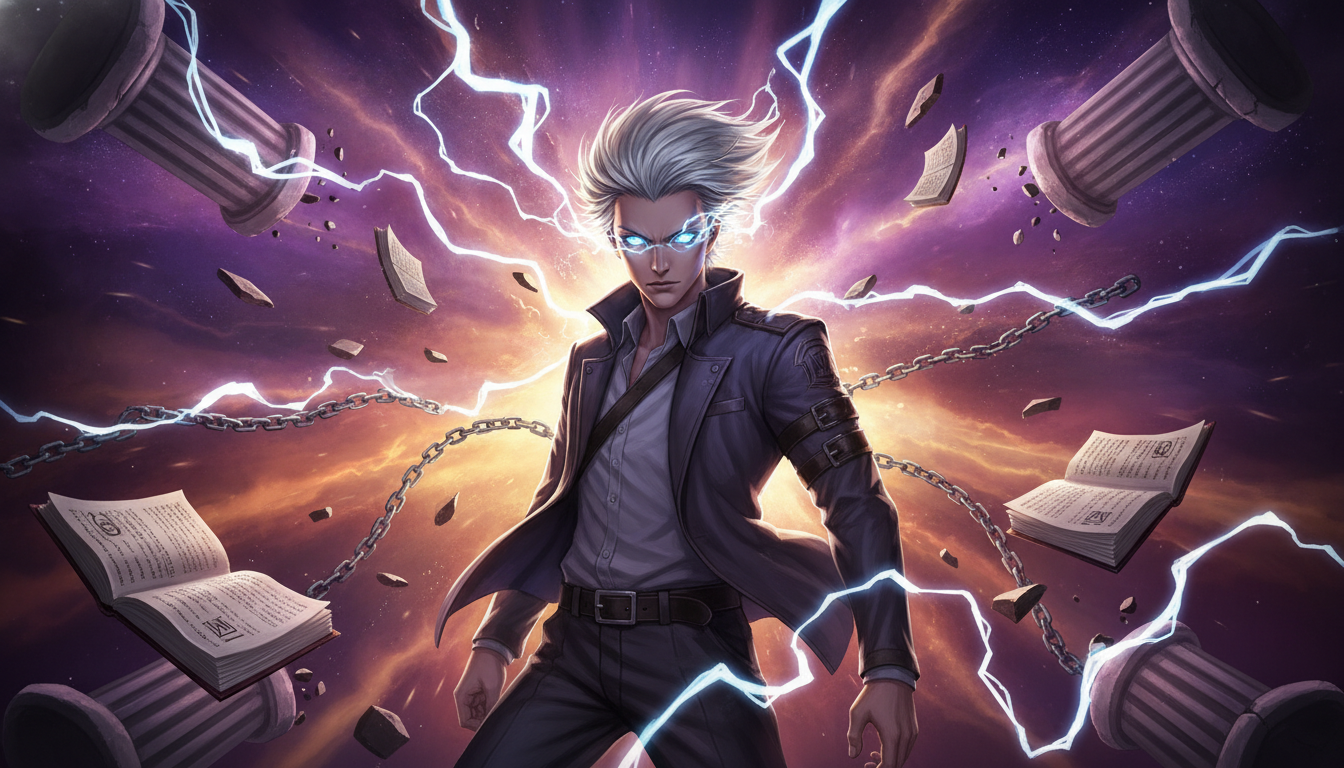
There’s something deeply satisfying about watching an anime character completely shatter the limits that everyone else in their universe has accepted as gospel. Whether it’s a hero who levels up so fast the system can’t keep track, or a villain-turned-protagonist who one-punches gods for breakfast, overpowered main characters — affectionately known in fandom as “OP MCs” — have become one of anime’s most beloved and endlessly debated tropes. They make us feel powerful by proxy, and honestly? Sometimes that’s exactly what we need.
But the best OP MCs aren’t just walking cheat codes. The truly iconic ones carry weight behind their absurd strength — loneliness, existential boredom, the burden of being fundamentally different from everyone around them. Saitama from One Punch Man can end any fight with a single strike, but what’s quietly devastating about his story is that he’s lost the ability to feel the thrill of battle at all. That tension between limitless power and very human vulnerability is what separates a genuinely great overpowered protagonist from a simple power fantasy. And anime, more than almost any other medium, has mastered this balance.
From shonen juggernauts to isekai breakouts, let’s explore the characters who didn’t just bend the rules of their worlds — they erased them entirely.
What Actually Makes a Main Character “Overpowered”?
Before we dive into the heavy hitters, it’s worth clarifying what “overpowered” actually means in anime terms, because not every strong character qualifies. An OP MC typically:
- Surpasses the established power ceiling of their world absurdly early or completely
- Defeats enemies with little to no effort that would otherwise challenge other characters
- Often breaks narrative tension by making conflicts feel one-sided
- May lack a clear weakness that can be exploited by antagonists
The key distinction is relative power. Goku from Dragon Ball Z is incredibly strong, but his world scales with him, making his fights feel earned. Saitama, by contrast, exists in a world where every other hero struggles to survive — and he ends fights accidentally. That gap is what defines the OP MC experience.
Saitama: The King of Existential Overpowering
No discussion of OP MCs is complete without Saitama, the bald-caped hero of One Punch Man, created by the artist ONE and adapted into an anime by Madhouse in 2015 (with a second season by J.C. Staff in 2019). Saitama became strong through sheer, absurd dedication — 100 push-ups, 100 sit-ups, 100 squats, and a 10km run every day for three years. That’s it. No magic, no special bloodline.
What makes Saitama brilliant isn’t the power itself — it’s the comedy and sadness layered underneath it. He’s ranked C-class by the Hero Association for most of the series despite being the strongest being alive, simply because he doesn’t play the bureaucratic game. His fights are jokes that end in one panel (or one frame), yet the show’s real story is about identity, recognition, and the hollow feeling of having achieved everything you wanted.
The 12 anime soundtracks so epic they give you chills list would be incomplete without One Punch Man‘s bombastic score by Makoto Miyazaki — because the music works overtime to make Saitama’s one-punch victories feel genuinely earth-shaking every single time.
Rimuru Tempest: The Isekai Slime Who Conquered Everything
That Time I Got Reincarnated as a Slime — known in Japanese as Tensei shitara Slime Datta Ken — began as a web novel by Fuse before becoming a hugely popular manga and anime series (animated by Eight Bit, first airing in 2018). Its protagonist, Rimuru Tempest, starts out as a reincarnated Japanese salaryman who dies getting stabbed and is reborn as… a slime.
Sounds humble, right? Not quite. Rimuru’s core ability, Predator (later evolving into Gluttony), lets him absorb essentially anything and acquire its skills, resistances, and abilities. By the time the series enters its second and third seasons (the third season aired in 2024), Rimuru has become a literal deity — a Demon Lord who can rewrite reality through sheer force of divine power. The wild part is that the show never really frames this as a problem. It leans all the way into the fantasy, building a satisfying nation-building narrative around Rimuru’s ever-expanding capabilities.
Rimuru is also notable for being gender-fluid post-reincarnation, a narrative choice that’s handled with surprising warmth and consistency throughout the series.
Gojo Satoru: The Strongest, and He Knows It
If you want an OP MC who is completely, unapologetically aware of his own superiority, look no further than Gojo Satoru from Jujutsu Kaisen. Created by Gege Akutami and animated by MAPPA (first airing in 2020), Gojo is a teacher at Tokyo Jujutsu High and widely acknowledged — in-universe and out — as the strongest jujutsu sorcerer alive.
His signature technique, Infinity, creates an automatically calculated barrier around him that makes it essentially impossible for any attack to reach him at full force. On top of that, his Limitless cursed technique and the rare Six Eyes ability make him a walking anomaly. Entire arcs of the series hinge on what happens when Gojo is removed from a conflict, because with him present, almost nothing poses a real threat.
What’s fascinating about Gojo is his personality — he’s theatrical, playful, and slightly insufferable in the best way. He weaponizes his invincibility as confidence, which makes the moments where the narrative genuinely challenges him hit much harder than they would with a more traditionally humble hero.
A Quick Ranking: Iconic OP MCs and Their Defining Trait
| Character | Series | Signature Overpowered Trait |
|---|---|---|
| Saitama | One Punch Man | One hit ends any fight, no exceptions |
| Rimuru Tempest | That Time I Got Reincarnated as a Slime | Absorbs and copies any ability |
| Gojo Satoru | Jujutsu Kaisen | Infinity barrier; near-untouchable |
| Alucard | Hellsing Ultimate | Immortal vampire who can be “killed” infinitely |
| Ainz Ooal Gown | Overlord | Max-level undead sorcerer with near-omnipotent magic |
| Sung Jinwoo | Solo Leveling | Levels infinitely in a world with a fixed power ceiling |
Ainz Ooal Gown and the Comedy of Accidental Genius
Overlord, based on the light novel series by Kugane Maruyama and animated by Madhouse (debuting in 2015), deserves its own spotlight because of how cleverly it subverts the OP MC formula. Ainz Ooal Gown — formerly a regular office worker who got trapped in a game world as his max-level undead character — is so powerful that no enemy in his world can meaningfully challenge him. So instead of action tension, the series generates drama from political and social maneuvering.
The dark comedy genius of Overlord is that Ainz frequently stumbles into looking like a mastermind genius, when in reality he’s panicking internally and winging it. His subordinates, all devoted and terrifyingly powerful themselves, interpret everything he does as brilliant strategic planning. The show is essentially about an anxious, underpowered human mind trying to live up to the legend of an unstoppable skeletal overlord.
Why We Can’t Stop Watching Characters Who Can’t Be Stopped
Some critics argue that overpowered protagonists undercut narrative tension and make for lazy storytelling. And in some cases? They’re not wrong. A character who wins every fight effortlessly, with no emotional stakes and no cost, is just a power fantasy with good animation.
But here’s the thing — the best OP MC stories have always understood that strength alone is not interesting. They use unbeatable power as a lens to examine:
- Loneliness (Saitama has almost no equal, and it isolates him)
- Responsibility (Rimuru must constantly make moral choices about his growing influence)
- Identity (Ainz is losing his human emotions to his undead form)
- Legacy (Gojo’s power raises the question: what happens to the world when he’s gone?)
These are deeply human questions wrapped in fantastical packages. And that’s exactly why, even in 2026 with dozens of new isekai and power-fantasy series airing every season, the truly great OP MCs still resonate.
The Trope That Refuses to Die (And Probably Shouldn’t)
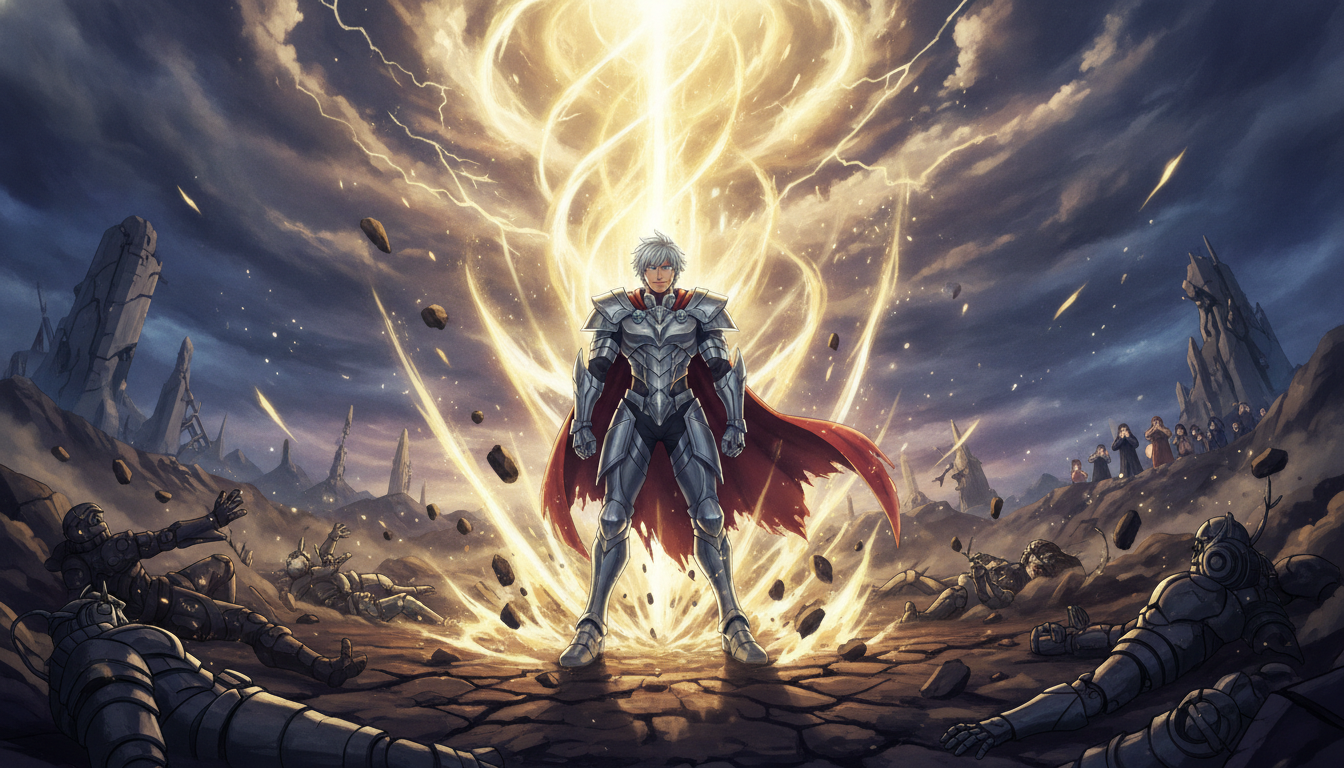
The overpowered main character has evolved far beyond its origins as a simple wish-fulfillment device. Today’s best examples of the trope are self-aware, emotionally textured, and often quietly subversive — holding up a mirror to our collective desire to feel invincible in a world that constantly reminds us we’re not.
Whether you’re rooting for Saitama to finally find a worthy opponent, watching Rimuru build his monster utopia, or cheering as Gojo makes impossible things look boring, there’s a reason these characters have become cultural touchstones. They don’t just break the rules of their worlds. They make us wish, just for a moment, that we could too.
