
There are moments in anime when a series arrives so quietly, so elegantly, that you almost miss it — and then it rewires your entire brain. Witch Hat Atelier is exactly that kind of show. Based on Kamome Shirahama’s celebrated manga that began serialization in Monthly Morning Two back in 2016, the anime adaptation finally arrived in 2025, and the geek community collectively exhaled. This was the one fans had been waiting years for. The kind of adaptation where you can tell, frame by frame, that the people making it actually love the source material.
For the uninitiated: Witch Hat Atelier (known in Japanese as Tongari Bōshi no Atorie) follows Coco, a young girl who dreams of becoming a witch in a world where magic is considered an innate gift — something you’re either born with or not. Coco has no such gift. Or so she thinks, until she witnesses the traveling witch Qifrey performing magic and discovers the shocking truth: magic isn’t inherited. It’s written. It’s a craft. Anyone, in theory, can learn it. This revelation sets off a story that is equal parts coming-of-age journey, mystery thriller, and love letter to the act of creation itself. It’s Harry Potter if Harry Potter cared about the philosophy of knowledge. It’s Fullmetal Alchemist if the rules had texture you could feel.
What makes the anime’s arrival in 2025 so significant is the long, patient anticipation behind it. The manga has been widely regarded as a modern masterpiece, winning the Kodansha Manga Award for general manga and earning a passionate international following. Expectations were sky-high. So — did the anime deliver? Buckle up, because we’re going deep.
The Animation: When Every Frame Earns Its Place
Let’s start with the most immediately obvious thing: Witch Hat Atelier looks extraordinary. The anime was produced by Kamikaze Douga, a studio with a distinctive artistic pedigree, and from the very first episode it’s clear that visual fidelity to Shirahama’s artwork was the north star of this production.
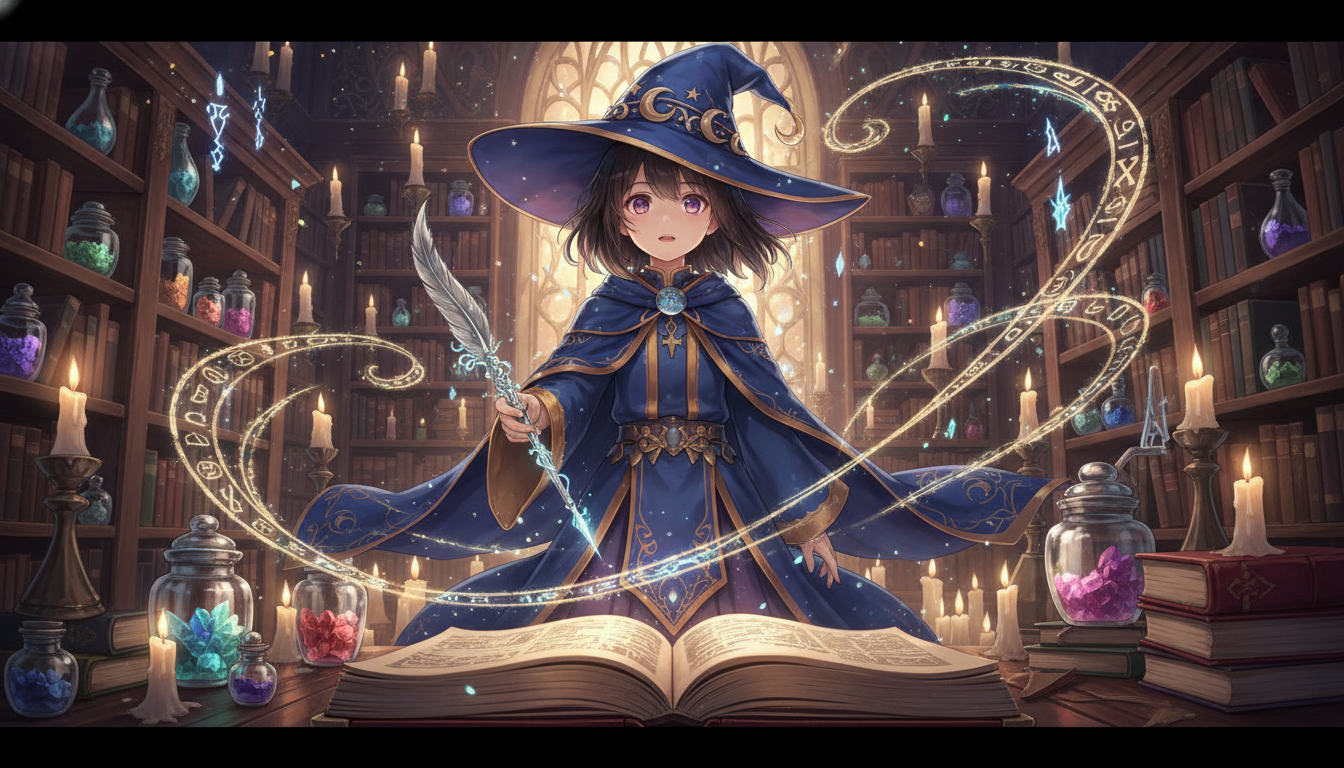
Shirahama’s original manga art is famously intricate — her character designs have a soft, almost storybook quality, while the magical sigils (the “glyphs” that make up spells in this world) are rendered with obsessive detail. The anime preserves this beautifully. The character linework feels genuinely close to the manga panels. The magic effects, when spells activate, bloom across the screen with an organic elegance rather than the explosive flashiness you might expect from a shonen action title.
Background art deserves special mention. The witches’ world — its workshops, its layered forests, its ancient libraries — is painted with a richness that makes you want to pause every five minutes just to look around. It’s the kind of environmental storytelling that reminds you why animation, at its best, is a visual medium first.
Story and World-Building: A System That Actually Makes Sense
One of the most intellectually satisfying things about Witch Hat Atelier is its magic system, and the anime conveys it with admirable clarity. Magic here works through drawn glyphs — specific symbols combined in specific ways, inscribed with magical ink. The rules are tight, the limitations are meaningful, and the consequences for breaking those rules carry genuine weight.
This is the kind of world-building that rewards curious minds. If you’ve ever been fascinated by the idea of the smartest anime characters being defined by their understanding of systems rather than raw power, Witch Hat Atelier is your show. Coco doesn’t succeed through special abilities or a hidden destiny — she succeeds through observation, study, and an almost reckless willingness to ask “but why does it work that way?”
The world’s central mystery — why magic is kept secret from common people, and who the shadowy “Brimmed Caps” are — deepens satisfyingly over the course of the season. The writing never insults your intelligence, and it never rushes.
Characters Who Feel Like Real People
Coco is an instantly lovable protagonist, but what elevates the show is how fully realized every character around her feels. Qifrey, her mentor, is warm and brilliant — and deeply suspicious. The anime does excellent work layering his charm with just enough unease to keep you asking questions.
Coco’s fellow apprentices — Agott, Richeh, and Tetia — each carry distinct personalities and personal stakes. Agott in particular gets some of the season’s best character work: a driven perfectionist whose initial hostility toward Coco slowly, genuinely melts as the two come to understand each other. It’s earned development, not shortcuts.
The antagonists, particularly among the Brimmed Caps, avoid the trap of being purely evil. There’s ideology behind their actions — a warped ideology, but a coherent one — which makes confrontations feel like genuine ethical collisions rather than hero-versus-villain cardboard.
Themes That Hit Harder Than Expected
Witch Hat Atelier is, at its core, a story about the democratization of knowledge — who gets to learn, who decides who is worthy, and what happens when those gatekeepers are wrong. In Coco’s world, the witching community hoards magical knowledge to maintain order and prevent catastrophe. Their reasons aren’t entirely bad. But the cost is enormous, and the show refuses to let either side off the hook easily.
This thematic richness makes it feel like more than a fantasy adventure. There’s something almost radical in a story where the hero’s defining act is learning something she wasn’t supposed to know and then refusing to un-know it. For a medium that sometimes defaults to “power of friendship” as its deepest message, that’s genuinely refreshing.
How It Stacks Up Against Other 2025 Fantasy Anime
The 2025 anime season was genuinely stacked — no shortage of fantasy and isekai titles competing for attention. Witch Hat Atelier distinguished itself by refusing to play by isekai rules at all. There’s no truck-reincarnation, no stats screen, no overpowered protagonist breaking the game.
Some quick comparisons worth making:
- vs. typical isekai fantasy: Witch Hat Atelier prioritizes craft and consequence over convenience. The protagonist earns every step forward.
- **vs. Frieren: Beyond Journey’s End:** Both shows have a contemplative pace and deep world-building, but Witch Hat is warmer in tone, more focused on mentorship and growth.
- vs. action-heavy magic anime: Think less Black Clover explosive energy, more Mushishi quiet wonder — though with more narrative momentum than the latter.
If you’ve been looking through the most underrated anime that deserve way more hype, keep Witch Hat Atelier at the top of your list. Despite its manga pedigree, the anime hasn’t yet broken into the broadest mainstream conversations — and that’s a crime against good taste.
Did You Know? Key Facts About Witch Hat Atelier
- Kamome Shirahama is one of the relatively few female manga artists serialized in a seinen magazine (Monthly Morning Two targets adult male readers), and her success there has been widely celebrated.
- The manga has been published in multiple languages internationally, with Kodansha USA handling the English release.
- Shirahama has cited Moebius (the legendary French comic artist) and Studio Ghibli films as major influences — and once you know that, you see it everywhere in the art.
- The title in Japanese, Tongari Bōshi no Atorie, translates literally to “The Atelier of Pointed Hats.”
- The manga had been on many fans’ “please adapt this” lists for nearly a decade before the anime was greenlit.
The Verdict: Required Viewing for Anyone Who Loves Magic Done Right
Witch Hat Atelier is not a loud show. It doesn’t announce its greatness with explosions or tournament arcs. It earns it — slowly, carefully, the way Coco earns her place in Qifrey’s atelier — through integrity, attention, and genuine love for what it’s doing.
The animation honors the manga. The story rewards patience. The characters feel human in the best way. And the magic system is so thoughtfully designed that you’ll find yourself thinking about it in the shower, wondering what glyph combinations might do something nobody’s tried before. That’s the mark of truly great world-building: it keeps living in your head after the screen goes dark.
Whether you’re a longtime manga reader finally seeing your favorite series brought to life, or a newcomer who wandered in on a recommendation, Witch Hat Atelier offers something rare — an anime that respects both its source and its audience. In a landscape crowded with noise, that kind of quiet mastery deserves every bit of attention it gets.
Don’t sleep on this one. The atelier is open. Step inside.

1 Comment
Pingback: Daemons of the Shadow Realm Finally Explained - ICL Geek Curiosities