
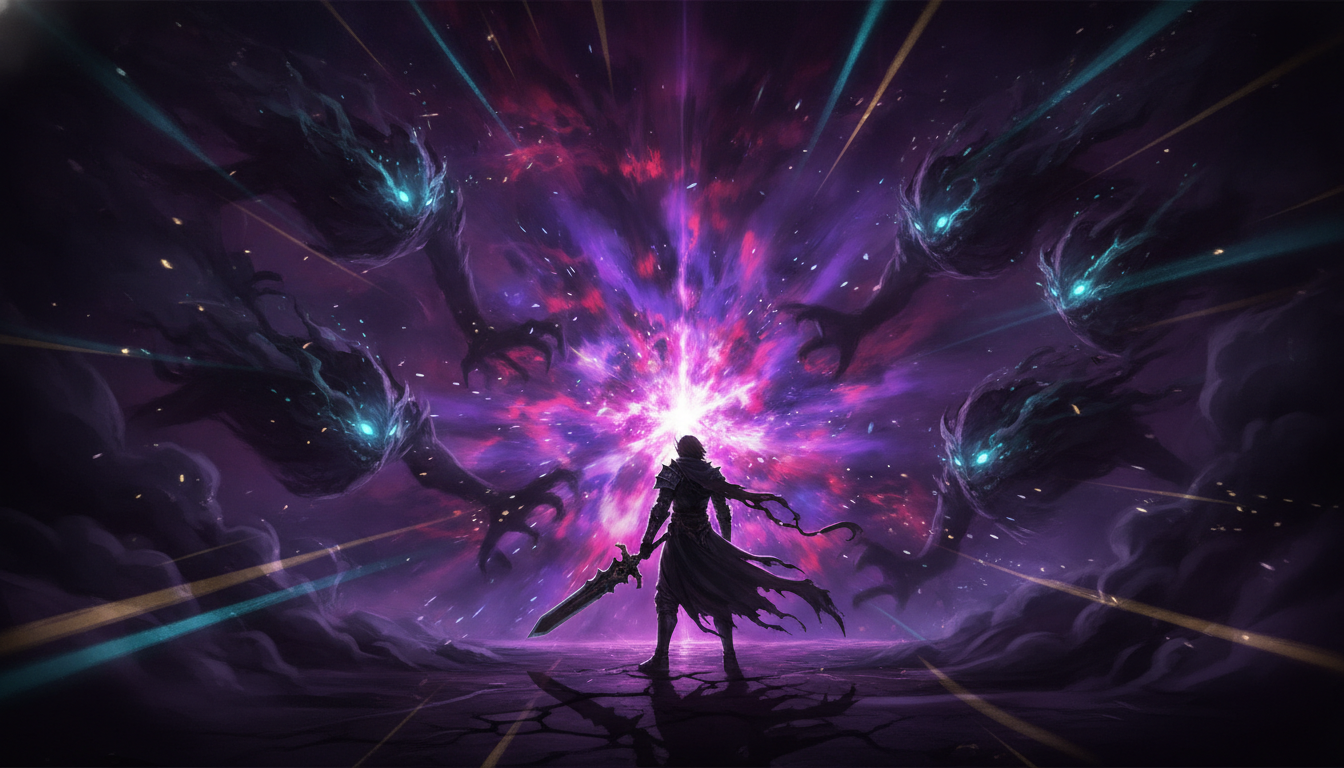
Few concepts in anime and fantasy fiction fire up the imagination quite like shadow realms and the terrifying entities that inhabit them. From the ink-black voids between dimensions to the writhing, half-formed creatures that lurk just beyond the edge of light, the idea of a “shadow realm” has become one of geek culture’s most enduring and fascinating obsessions. Yet despite how often these settings appear — in card game anime, dark fantasy, shonen epics, and everything in between — many fans still aren’t entirely sure what a daemon of the shadow realm actually is. Is it a demon? A spirit? A god? Something far worse?
The confusion is understandable. The term “daemon” itself carries centuries of philosophical and mythological baggage, and when you layer that onto the rich, often deliberately cryptic world-building of anime and dark fantasy, things get complicated fast. Different series use the concept in wildly different ways, borrowing from Greek philosophy, Judeo-Christian demonology, Lovecraftian horror, and pure creative invention all at once. The result is a patchwork mythology that’s as thrilling as it is difficult to pin down — and that’s precisely what makes it worth digging into.
Whether you’re a seasoned anime veteran who wants to finally untangle the lore, or a newcomer who just heard the phrase “shadow realm” and wants to know what all the fuss is about, this guide has you covered. Let’s pull back the curtain on daemons of the shadow realm, explore where they come from, how they function in your favorite stories, and why they continue to capture our collective imagination decades after first appearing on page and screen.
What Exactly Is a “Daemon”? The Word Itself Has a Wild History
Before we can talk about shadow realm daemons in anime and fiction, we need to clear up a major source of confusion: the spelling. “Daemon” is not simply a fancy or archaic spelling of “demon.” These two words have genuinely different origins and meanings, and the distinction matters enormously for understanding how the concept functions in modern storytelling.
The word daemon comes from the ancient Greek daimōn, which referred to a spirit or divine power — not inherently evil, but rather a supernatural intermediary between gods and humans. The philosopher Socrates famously described his own daimonion, a personal spiritual guide or inner voice that warned him away from wrong actions. These Greek daemons were neutral or even benevolent forces, closer to what we might call guardian spirits or manifestations of fate.
Demon, by contrast, is a word that carries the heavy weight of Judeo-Christian tradition, describing fallen angels or malevolent supernatural beings in opposition to the divine. When early Christian writers translated Greek texts, they reframed the neutral daimōn as something sinister — and that shift in meaning has echoed through Western culture ever since.
Modern fantasy and anime have gleefully exploited the gap between these two concepts, often using “daemon” specifically to signal something other than a simple villain monster: an entity with its own logic, its own rules, and its own relationship to power.
The Shadow Realm as a Concept: More Than Just Yu-Gi-Oh!
Ask a millennial what the shadow realm is, and there’s a good chance they’ll immediately think of Yu-Gi-Oh! — specifically the iconic (and heavily edited for Western audiences) fate that awaited losers of card game duels in the 4Kids Entertainment English dub. In the original Japanese version of the series, losers faced genuine death or severe supernatural punishment; the “shadow realm” was an invention of the localization team, inserted to soften the content for younger viewers. The joke has lived rent-free in internet culture ever since.
But the shadow realm as a narrative and philosophical space goes far deeper than one beloved card game anime. Across countless series and traditions, the shadow realm functions as:
- A parallel dimension that mirrors or underlies the physical world
- A liminal space between life and death, order and chaos
- A source of power that characters tap into at great personal risk
- A prison for entities too dangerous to exist in the waking world
- A reflection of humanity’s fears, unconscious drives, and repressed emotions
This last interpretation connects the concept to the psychological theories of Carl Jung, whose concept of “the Shadow” — the hidden, darker aspect of the human psyche — has heavily influenced dark fantasy world-building. Many anime writers and authors have absorbed this Jungian framework, whether consciously or through cultural osmosis.
How Daemons Function in Shadow Realms Across Different Series
The mechanics of shadow realm daemons vary dramatically from series to series, but certain patterns emerge when you look across the genre as a whole. In many dark fantasy anime, daemons aren’t simply monsters to be defeated — they operate according to strict internal rules, often tied to contracts, names, or symbolic logic.
Naming is a recurring element: knowing a daemon’s true name frequently grants power over it, a concept borrowed from traditions as old as the Hebrew Bible and the Egyptian Ren (the concept of a true name as part of the soul). In anime like Fullmetal Alchemist: Brotherhood, homunculi and shadowy entities follow rules of equivalent exchange; power has a cost, and daemons exist partly as embodiments of that cost.
In Bleach, the hollows and entities from the space between worlds follow a rigid hierarchy and possess defined abilities tied to their nature and history — they are not random chaos but structured power. Similarly, the demons in Demon Slayer: Kimetsu no Yaiba (demons created by Muzan Kibutsuji’s blood) possess defined hierarchies and individual personalities shaped by who they were as humans.
What shadow realm daemons almost universally share is this: they represent power divorced from moral constraint, and the human characters who interact with them must navigate the terrifying freedom that comes with that.
The Aesthetic of Shadow: Why Darkness Looks So Good in Anime
There’s a purely visual reason why shadow realm daemons have become such a beloved fixture of anime in particular: the medium is extraordinarily well-suited to rendering darkness, void, and the uncanny. Animation allows for impossible geometries, color palettes that shift beyond reality, and movement that defies physics — all tools perfectly matched to depicting entities that aren’t supposed to make sense in normal terms.
Studios have pushed this aesthetic in memorable directions. Ufotable, the studio behind Demon Slayer and the Fate franchise, has become particularly celebrated for its use of dark, fluid animation to render supernatural combat. The way demonic or shadow entities move in modern anime — fluid, wrong, beautiful in a deeply unsettling way — owes a great deal to advances in digital animation tools over the past decade.
This visual language has also influenced game design, comic art, and fan communities worldwide, creating a shared aesthetic vocabulary around shadow entities that cuts across national and cultural boundaries.
Did You Know? Shadow Realm and Daemon Facts Worth Knowing
- The 4Kids dub of Yu-Gi-Oh! invented the phrase “shadow realm” around 2001; the concept doesn’t exist in that form in the original Japanese manga by Kazuki Takahashi
- Philip Pullman’s “His Dark Materials” trilogy uses the spelling daemon specifically to distinguish his beings (physical animal companions tied to human souls) from conventional demons
- Carl Jung introduced his concept of “the Shadow” archetype in the early 20th century; it remains one of the most referenced psychological frameworks in dark fantasy writing
- The Greek word daimōn appears in Plato’s “Symposium” (circa 385–370 BCE), where the figure of Eros is described as a great daemon mediating between gods and mortals
- In Fullmetal Alchemist: Brotherhood, the villain Father literally imprisons God-like beings inside himself, a concept that draws on shadow realm logic even without using the term explicitly
- Many anime fans credit Berserk (manga by Kentaro Miura, beginning 1989) with codifying the modern anime aesthetic of shadow realm entities through the God Hand and the Idea of Evil
Why Shadow Realm Daemons Still Hit Different in 2026
Part of what keeps the shadow realm daemon concept so alive and resonant is its flexibility. As anime has evolved into a truly global medium — with simulcast releases, international co-productions, and fan communities spanning every continent — the shadow realm has become a kind of shared mythological shorthand. You don’t need to have read Plato or Jung to feel the pull of a dark, unknowable dimension populated by ancient, rule-bound entities.
If you’re interested in stories that explore the boundary between light and darkness with genuine craft and intelligence, the Witch Hat Atelier Anime Review: Magic Done Right is a perfect companion read — it examines how thoughtful world-building elevates magic systems beyond simple spectacle.
For fans who want to understand why certain anime characters navigate these shadow dimensions so effectively, check out The Smartest Anime Character Ever Might Surprise You — intelligence, it turns out, is one of the most powerful weapons against beings that operate on symbolic logic rather than brute force.
Conclusion: Embrace the Darkness (It Has Rules)
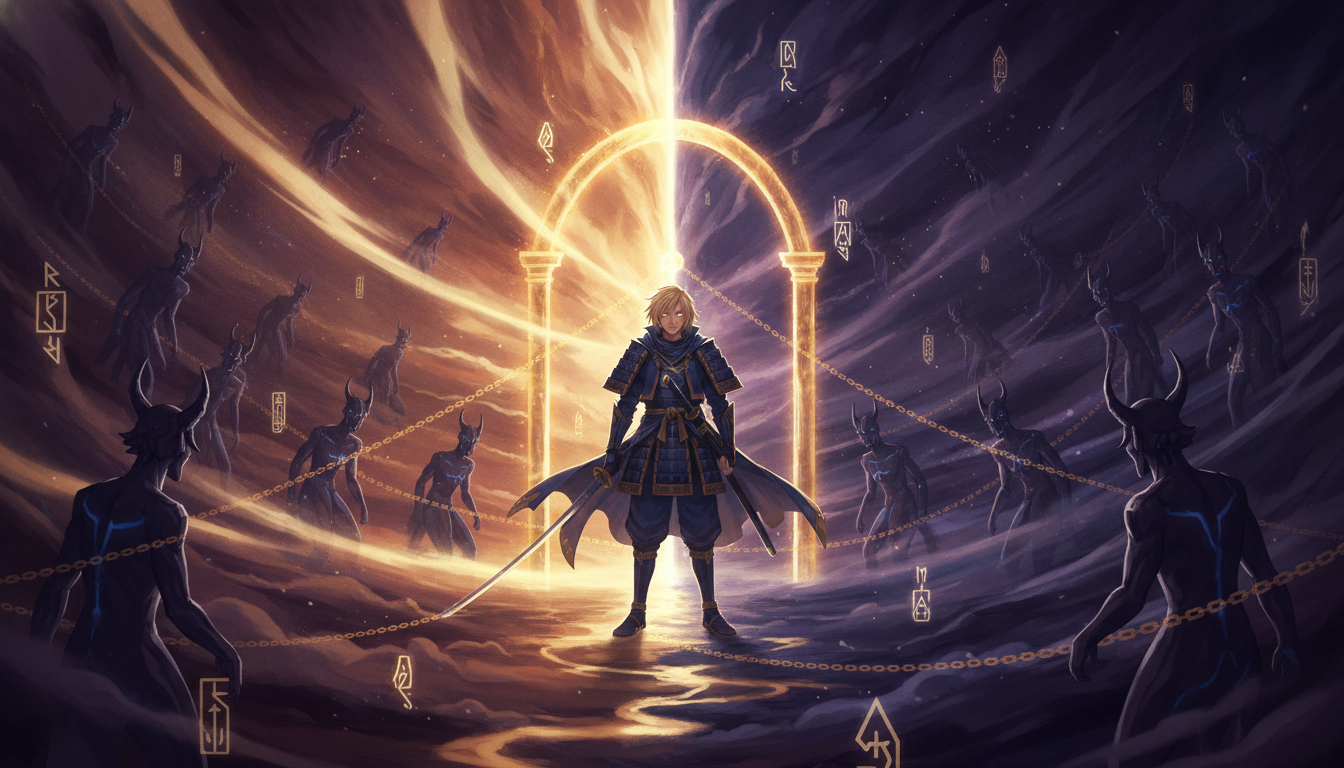
Shadow realm daemons aren’t just scary monsters lurking in the dark corners of your favorite anime. They are carefully constructed narrative devices that draw on thousands of years of mythology, philosophy, and human psychology. They represent the power we fear, the rules we can’t escape, and the parts of ourselves we’d rather not examine too closely. That’s why they keep appearing, keep evolving, and keep captivating us no matter how many times we think we’ve figured them out. The shadow realm doesn’t disappear when you shine a light on it — it just gets more interesting.
