

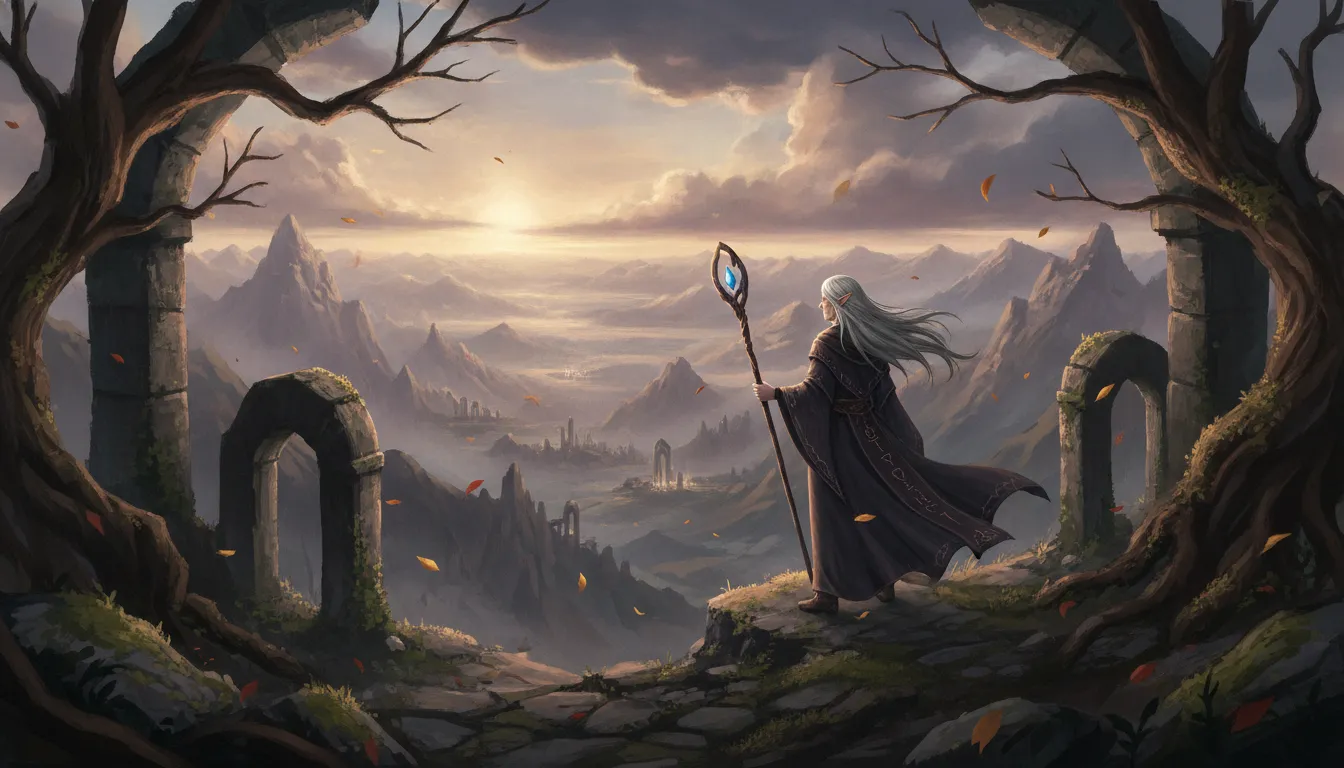
There are anime that entertain you. Then there are anime that quietly rearrange the furniture inside your soul and leave you staring at the ceiling at 2 a.m., wondering where the time went. Frieren: Beyond Journey’s End (Sousou no Frieren) belongs firmly in that second category — and if you’ve watched even a single episode, you already know exactly what that feels like. What’s remarkable is that this isn’t an action-heavy shonen with explosive power-ups or a romance that keeps you on the edge of your seat. It’s a story about an elf who outlives her friends, walks the roads they once traveled together, and slowly, painfully learns what it means to feel something.
Adapted from the manga by Kanehito Yamada and Tsukasa Abe, the anime premiered in September 2023 with a special two-hour broadcast in Japan, produced by Madhouse — one of the most celebrated animation studios in the industry. It immediately became a cultural phenomenon, topping seasonal charts, winning major awards, and converting skeptics who thought they were done being surprised by the medium. By the time Season 1 wrapped up, Frieren had secured its place in the pantheon of genuinely great anime. And the reason it hits so hard, every single time you watch it, isn’t one thing. It’s a constellation of creative choices that all point in the same direction: truth.
What Makes Frieren Stand Apart From Every Other Fantasy Anime
Fantasy anime is one of the most crowded genres in existence. Isekai alone has produced hundreds of titles over the past decade, and even traditional high-fantasy adventure stories are everywhere. So the fact that Frieren manages to feel completely fresh is worth examining seriously.
The key is its narrative inversion. Most fantasy stories begin at the start of the adventure and build toward the climax. Frieren begins after the climax. The Demon King has already been defeated. The hero’s party has already won. The story opens with the celebration, fast-forwards through the years, and then watches the human members of the party grow old and die while Frieren barely changes. The first episode alone — covering decades in under an hour — is one of the most emotionally efficient pieces of storytelling in recent anime history.
This structural choice forces the audience to experience loss the same way Frieren does: retrospectively. You grieve people you barely knew because she barely knew them too, even though they traveled together for ten years. That gap between time spent and connection made is the emotional engine of the entire series.
The Quiet Power of an Elf Who Doesn’t Understand Humans
Frieren herself is a fascinating protagonist precisely because she is not immediately relatable. She’s over a thousand years old, emotionally distant, obsessed with collecting obscure spells, and regularly misses social cues that would be obvious to anyone else in the room. She’s not cold — she’s just operating on a completely different timescale than everyone around her.
What Madhouse does brilliantly is let that alienness breathe. There are long, almost wordless sequences where the weight of Frieren’s centuries sits on the frame like morning fog. And then, without warning, something small cracks that composure open — a remembered phrase, a shared meal, a gesture that echoes someone long gone — and the emotion hits like a freight train precisely because the show earned it through patience.
This is the “slow burn” approach to storytelling done at a masterclass level. Think of it as the opposite of instant gratification. The show trusts its audience, and that trust is repaid with scenes that fans still talk about years later.
Grief, Memory, and the Anime Tradition of Making You Feel Everything
Frieren sits in a lineage of anime that treats emotional complexity as a feature rather than a bug. Titles like Clannad: After Story, March Comes in Like a Lion, and A Silent Voice have proven that anime can carry the full weight of human experience — grief, regret, love, and the terrifying passage of time — without flinching.
What Frieren adds to that conversation is a fantasy filter that makes universal emotions feel newly strange and therefore newly powerful. The fact that Frieren mourns Himmel the Hero decades after his death — mourns him more as time passes, because she finally understands what she lost — is a profoundly human experience dressed in elf ears and a mage’s robe.
If you’re curious about how other anime push emotional and thematic boundaries in similarly unexpected ways, these retro anime shaped an entire generation forever — and understanding that history makes appreciating Frieren‘s place in the tradition even richer.
The Animation and Score: Madhouse Giving Everything It Has
Let’s be direct: **the production quality of Frieren is exceptional**. Madhouse has a legendary reputation for a reason — the studio behind Hunter x Hunter (2011), Death Note, and Cardcaptor Sakura brings a level of craft to Frieren that elevates every scene.
Some standout production elements worth appreciating:
- Spell design: Magic in Frieren is visually distinctive — understated and elegant rather than flashy, which perfectly reflects Frieren’s personality and philosophy.
- Background art: The landscapes are breathtaking. Forests, ruins, snow-covered roads — every environment feels like a place that existed before the characters arrived and will exist after they leave.
- Character animation subtlety: Micro-expressions and body language carry enormous narrative weight throughout the series.
- The score by Evan Call: The composer behind Violet Evergarden‘s soundtrack brings the same sweeping, melancholic sensibility to Frieren, creating musical motifs that linger long after an episode ends.
The combination of these elements creates a watching experience where the craft itself becomes part of the emotion. You’re not just hearing that something is beautiful — you’re seeing it, frame by frame.
Why the Supporting Cast Elevates the Entire Story
Frieren doesn’t travel alone for long. Her companions — the young mage apprentice Fern, and the warrior Stark — bring warmth, comedy, and their own emotional arcs that complement rather than overshadow the main story. Fern in particular is one of the better-written apprentice characters in recent fantasy anime, with a quiet intensity and a relationship with Frieren that mirrors, in meaningful ways, Frieren’s own lost relationship with her former master Flamme.
The original hero’s party — Himmel the Hero, Heiter the Priest, and Eisen the Dwarf — appear primarily in flashbacks, but their presence is felt constantly. The show understands that great ensemble storytelling doesn’t require every character to be on screen at the same time. It just requires that every character feels real enough to be missed.
This is also where Frieren rewards rewatching in a way few anime do. Details you notice on a second pass — a look, a repeated phrase, a visual echo — carry entirely different weight once you understand the full emotional context. Much like how most movie Easter eggs are hidden in plain sight, Frieren hides its deepest emotional beats in quiet moments that only reveal themselves when you’re paying close attention.
What Frieren Says About Time, Purpose, and Living Fully
At its core, Frieren is a meditation on what it means to be present. Frieren spent ten years adventuring with people who loved her, and she was so caught up in her immortal perspective — what’s ten years to someone who’s lived a thousand? — that she didn’t fully appreciate the gift she was given until it was gone.
That’s not a fantasy problem. That’s a human problem. And Frieren articulates it with a clarity that’s almost uncomfortable, because most of us recognize ourselves in that failure. We’ve all let time pass with people we love without realizing that the time itself was the treasure.
The series doesn’t moralize about this. It simply shows it — through Frieren retracing old roads, seeking out the kinds of small magic her old friends loved, trying to understand them better now that understanding is all she has left.
Why Frieren’s Impact Will Last
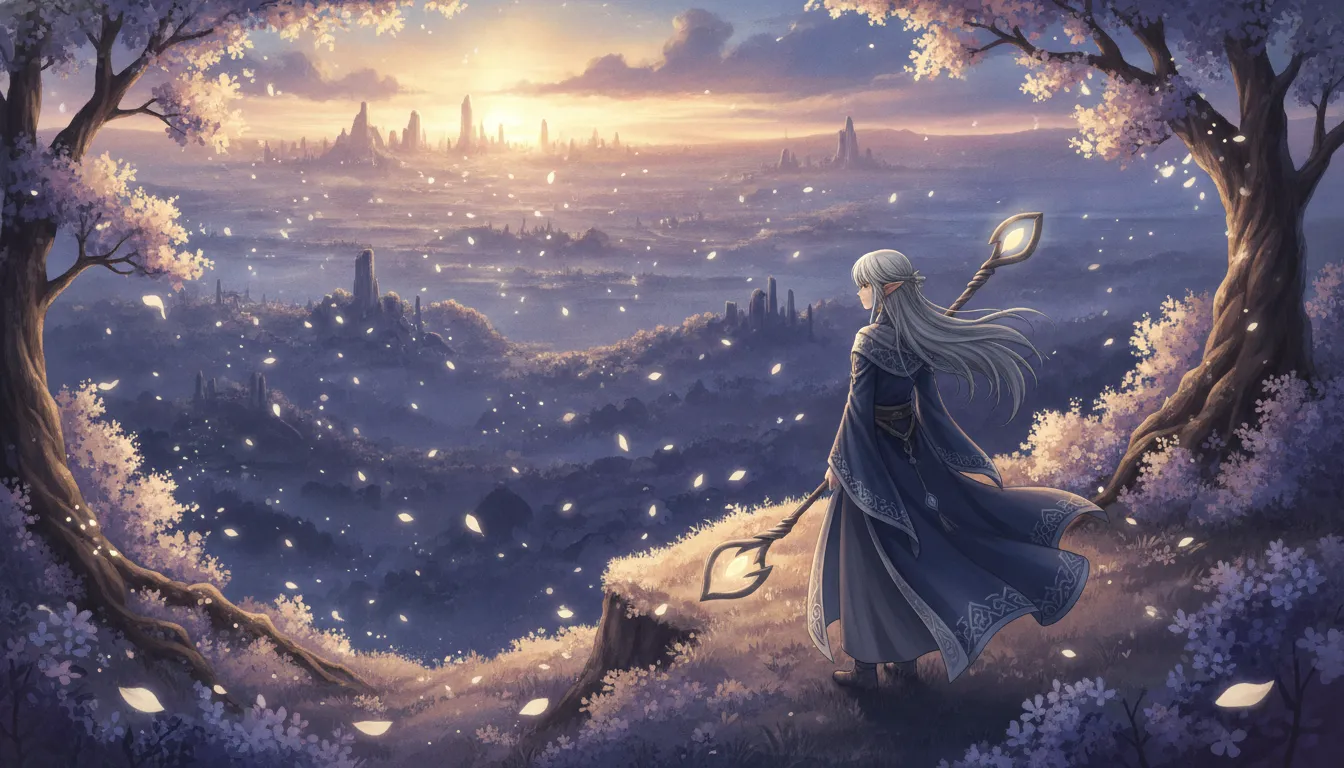
Frieren: Beyond Journey’s End is a rare achievement: an anime that is simultaneously accessible to newcomers and deeply rewarding for longtime fans of the medium. It doesn’t require genre literacy, obscure references, or hours of prerequisite watching. It just requires your willingness to sit with something quiet and let it work on you.
As the series continues beyond Season 1 and anticipation builds for what comes next, the conversation around Frieren shows no signs of cooling down. Fans don’t just love it — they return to it, because every rewatch surfaces something new. That quality, the ability to grow with its audience, is the hallmark of truly great storytelling — in any medium, in any language, in any world, real or imagined.
