


Before the internet made fact-checking a two-second endeavor, myths spread like wildfire — passed from neighbor to neighbor, written into encyclopedias, and even taught in classrooms with complete confidence. Some of these beliefs shaped how entire generations understood the human body, the natural world, history, and science. Looking back now, it’s almost impossible to believe that intelligent, educated people accepted some of these ideas as gospel truth. Yet here we are, simultaneously horrified and fascinated by how spectacularly wrong humanity has been, and how long it took us to figure that out.
The most unsettling part? These weren’t just fringe conspiracy theories whispered by eccentrics. Many were official doctrines — endorsed by doctors, philosophers, governments, and religious institutions. They influenced laws, medicine, warfare, and everyday life in ways that ranged from mildly inconvenient to catastrophically harmful. And in every era, people were absolutely convinced they had it figured out, which should probably make all of us a little more humble about what we think we know today. If you’ve ever marveled at still-baffling things humans accept as normal, wait until you see what previous generations were willing to die on a hill for.
So buckle up, because we’re diving deep into the hall of fame of unhinged past myths — the ones that had entire civilizations nodding their heads while the universe quietly facepalmed.
The Four Humors: When Doctors Thought You Were Made of Soup
For roughly 2,000 years — from ancient Greece all the way through the Renaissance and into the early modern period — the dominant theory of human health was that your body was controlled by four fluids called humors: blood, phlegm, yellow bile, and black bile. This framework, largely associated with the ancient Greek physician Hippocrates and later expanded by Galen in the 2nd century CE, held that illness was caused by an imbalance of these four substances.
Feeling sad or depressed? Too much black bile — you were “melancholic.” Angry and aggressive? Yellow bile was your problem. The treatment was often to forcibly remove whichever humor was in excess, which led to terrifying medical practices like bloodletting — deliberately cutting patients open to drain blood — and inducing vomiting or sweating. People were bled for fevers, infections, and even childbirth complications. George Washington, the first U.S. president, died in 1799 after his physicians removed an estimated five to nine pints of blood over the course of his final illness, convinced they were helping him. He had a severe throat infection. The bloodletting almost certainly accelerated his death.
The fact that this theory persisted for two millennia speaks less to human stupidity and more to the terrifying inertia of authority. When Galen said it, it was doctrine. Questioning it risked your career — and sometimes your freedom.
The Flat Earth (Medieval Edition): More Complicated Than You Think
Here’s a myth about a myth: most people today believe that medieval Europeans thought the Earth was flat. This is itself largely false — educated people in the Middle Ages generally knew the Earth was spherical, thanks to ancient Greek astronomers like Eratosthenes, who calculated the Earth’s circumference with impressive accuracy around 240 BCE. What’s wild is that the “medieval people believed in flat Earth” narrative became widely popularized in the 19th century, partly through Washington Irving’s embellished biography of Christopher Columbus.
The actual flat-Earth belief, as a serious modern movement, is a much more recent phenomenon. But ancient and early civilizations — including early Mesopotamian and some pre-Socratic Greek traditions — did genuinely conceptualize the Earth as a flat disc surrounded by a cosmic ocean. Ancient Egyptians depicted the world as flat, with the sky as a goddess arching overhead. The Babylonian map of the world from around 600 BCE shows a flat disc.
So the myth here is layered: ancient peoples did believe in flat Earth, medieval people mostly didn’t, and somehow the internet era brought it back. History is truly a wild ride.
Spontaneous Generation: Life Just… Appeared From Nowhere
Before Louis Pasteur’s famous experiments in the 1850s and 1860s, a wildly popular belief held that living organisms could spontaneously arise from non-living matter. This wasn’t a fringe idea — it was mainstream science. People observed maggots appearing in rotting meat and concluded that the meat itself was generating life. Mice seemed to appear in grain stores. Frogs seemed to emerge from mud after floods.
The ancient Greek philosopher Aristotle was one of the most influential proponents of spontaneous generation, and his authority kept the idea alive for nearly two thousand years. In the 17th century, a Belgian chemist named Jan Baptist van Helmont even published a “recipe” for generating mice: place a sweaty shirt and wheat husks in an open jar, wait 21 days, and mice will appear. He was completely serious.
It took Francesco Redi’s controlled experiments in 1668 and then Pasteur’s iconic swan-neck flask experiments — which definitively showed that microorganisms came from the air, not from the broth itself — to finally put spontaneous generation to rest. Science, when it works, is beautiful.
Phrenology: Your Skull Shape Determines Your Character
Few pseudosciences have been as harmful — or as oddly widespread — as phrenology, the 19th-century belief that the shape and bumps of your skull revealed your personality, intelligence, and moral character. Developed by German physician Franz Joseph Gall around 1796, phrenology claimed that the brain was divided into distinct organs, each responsible for a specific trait, and that a skilled practitioner could “read” your character by feeling your head.
Phrenology was embraced by educators, employers, courts, and colonial administrators. It was used to justify racism, classify criminals, and deny people opportunities based on the literal shape of their heads. Phrenological charts — maps of the skull divided into labeled sections like “Benevolence,” “Combativeness,” and “Acquisitiveness” — were sold in shops and displayed in doctor’s offices. Traveling phrenologists set up booths at fairs. It was treated as rigorously as any medical specialty.
The harm it caused was real and lasting. It provided pseudoscientific cover for eugenics movements in the late 19th and early 20th centuries. It took decades of neurological research to fully discredit it, and by then the damage to individuals and entire communities had been done.
The Miasma Theory of Disease: Bad Air Was Killing Everyone
Before germ theory was established in the latter half of the 19th century, most physicians and public health officials believed that diseases were caused by miasma — noxious, foul-smelling air rising from rotting organic matter. This wasn’t entirely irrational; bad smells often did correlate with disease outbreaks, because contaminated water sources and poor sanitation produced both. The correlation felt like causation.
This belief had some genuinely strange consequences. Cities spent enormous resources trying to eliminate bad smells rather than improving sanitation infrastructure in ways that would actually help. The word “malaria” itself comes from Italian: mala aria, meaning “bad air.” Doctors recommended that people avoid swamps and low-lying areas — advice that accidentally worked, since those areas also harbored disease-carrying mosquitoes, even though the mechanism was completely misunderstood.
Here are a few wild facts about the miasma era:
- Florence Nightingale was initially a believer in miasma theory, though her meticulous hygiene reforms accidentally aligned with germ-theory best practices.
- The Great Stink of London in 1858, when the Thames became so polluted it stank up Parliament, actually accelerated the construction of a proper sewage system — for the wrong reasons, but with the right results.
- Physicians sometimes burned aromatic substances near patients to “neutralize” bad air, a practice about as effective as it sounds.
- Some miasma believers wore beak-shaped masks filled with herbs and flowers during plague outbreaks — the iconic “plague doctor” look.
The Earth as the Center of the Universe: An Empire Built on Pride
The geocentric model — the belief that the Earth sat motionless at the center of the universe with the sun, moon, planets, and stars revolving around it — dominated Western astronomy for over 1,400 years after Ptolemy codified it in the 2nd century CE. It wasn’t just a casual assumption; it was an elaborate mathematical system that could actually predict planetary positions with reasonable accuracy by using a complex system of epicycles.
When Copernicus published his heliocentric model in 1543 and Galileo later championed it, the pushback was fierce. Galileo’s conflict with the Catholic Church in the early 17th century is one of history’s most famous scientific controversies, ending with his house arrest. It took the combined work of Copernicus, Kepler, Galileo, and Newton to fully overturn the geocentric model — and even then, acceptance was gradual.
The lesson here isn’t that people were foolish. It’s that entrenched authority, religious doctrine, and the sheer comfort of familiarity can hold back knowledge for centuries. Which, if you want to go down a rabbit hole of things that defy easy explanation, puts wild animal facts that challenge what we think we know in a surprisingly humbling light.
Why We Should All Be a Little More Humble
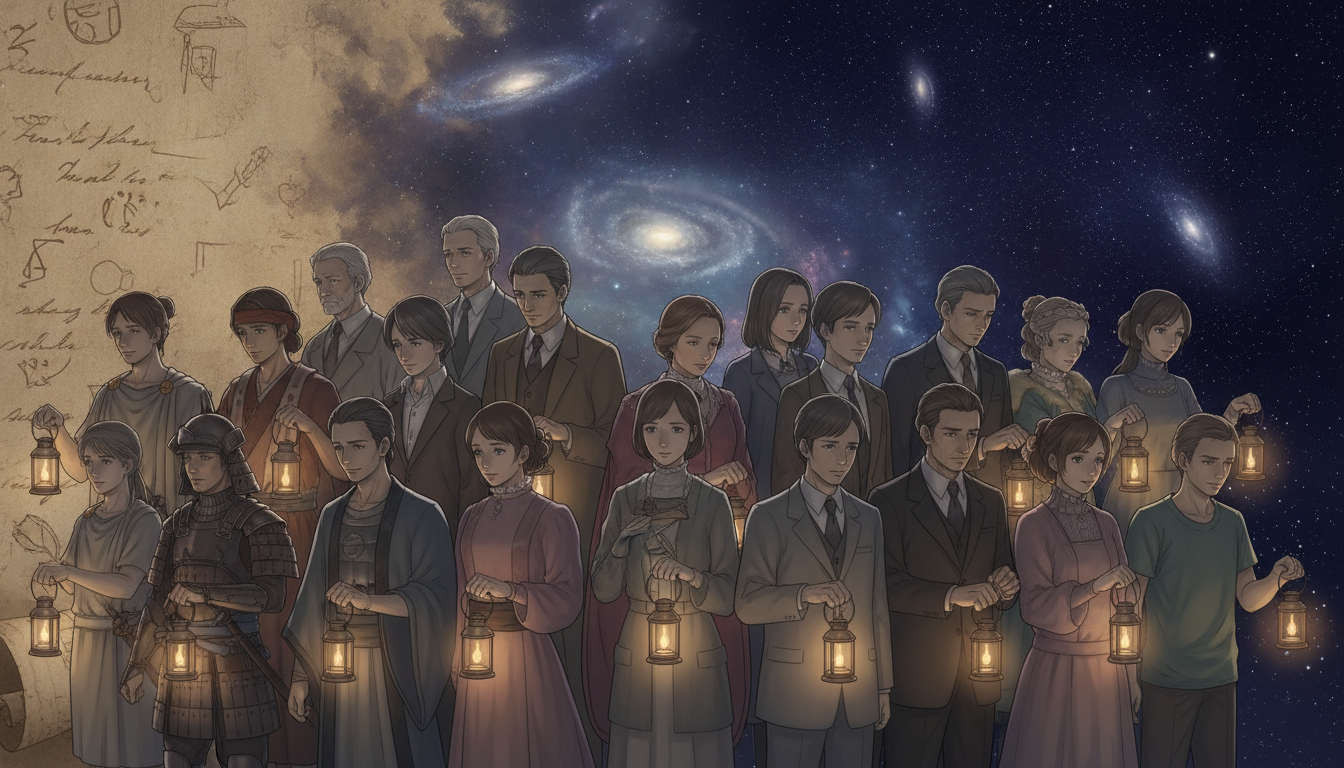
Looking at this parade of confident, catastrophically wrong beliefs, a pattern emerges: in every era, the smartest people around were absolutely certain they had the answers. The humors, the geocentric universe, spontaneous generation, miasma, phrenology — none of these survived contact with rigorous, open-minded inquiry. They collapsed the moment someone was willing to question authority and follow evidence instead.
The genuinely unsettling takeaway is that we are not somehow immune. Future generations will almost certainly look back at certain 21st-century beliefs — in medicine, nutrition, psychology, cosmology — with the same mix of horror and baffled amusement we feel reading about bloodletting and skull-reading. The best defense isn’t certainty. It’s curiosity, critical thinking, and the willingness to say, “I might be wrong about this.” That, more than any particular belief, is what actually moves humanity forward — one debunked myth at a time.
