

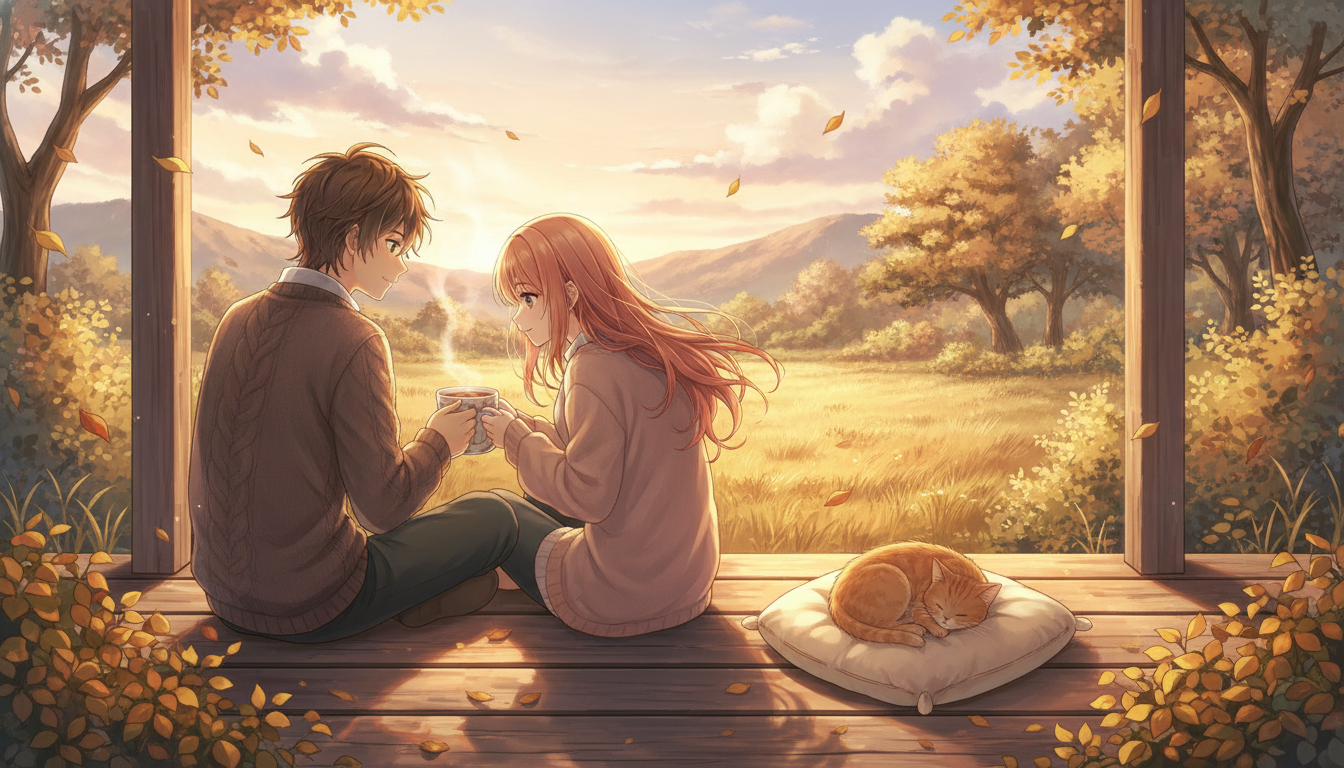
There are days when the world feels like it is running at double speed — deadlines stacking up, notifications never stopping, and your brain refusing to switch off even when you finally lie down. On those days, the last thing you need is another high-stakes battle anime where the fate of the universe hangs on a single punch. What you need is a warm bowl of fictional comfort, and slice of life anime delivers exactly that. It is the genre built not on explosions or plot twists, but on the quiet, beautiful rhythm of everyday moments that somehow feel more meaningful than any climactic showdown.
Slice of life anime has a superpower that no other genre quite replicates: it slows time down. Watching characters share a meal, walk to school through autumn leaves, or nervously confess a small secret makes your own rushing thoughts settle. Scientists and wellness experts have long discussed the therapeutic value of calm, repetitive storytelling — the kind that lowers your heart rate and signals to your nervous system that everything is, in fact, okay. Slice of life anime is essentially that signal, wrapped in stunning animation and a soundtrack that could make a stone cry happy tears.
Whether you are a longtime anime fan or someone who just finished their first series and is looking for something gentler, this list is your guided relaxation tour through some of the most stress-melting anime ever made. Grab your favorite drink, get comfortable, and let the healing begin.
Why Slice of Life Anime Works Like Therapy
Before diving into specific titles, it is worth understanding why this genre hits differently. Unlike shonen or action series — which, as explored in this deep dive on why shonen and seinen anime hit so differently — slice of life is not built around conflict escalation. Instead, it thrives on relatability and emotional authenticity.
The genre mirrors the small victories and quiet struggles that make up real human life: making a new friend, learning to cook, dealing with loneliness, finding joy in a sunset. These stories do not demand anything from the viewer. You do not need to track power levels or political alliances. You simply exist alongside the characters, and that coexistence is genuinely restorative.
Barakamon — Finding Yourself Far From the City
If you have ever burned out from chasing perfection, Barakamon (2014, produced by Kinema Citrus) is the anime equivalent of a long exhale. The story follows Seishuu Handa, a young professional calligrapher who, after a public meltdown, is sent by his father to live on a remote island in Nagasaki Prefecture. What begins as an exile becomes an unexpected awakening.
The island’s eccentric villagers — especially the irrepressibly energetic little girl Naru — chip away at Handa’s rigid, achievement-obsessed worldview one chaotic, joyful afternoon at a time. The anime never lectures you. It simply shows you what it looks like when someone stops performing and starts living. The rural Japanese landscapes are drawn with a warmth that practically smells like salt air and cedar wood, and every episode ends feeling like a long, satisfied sigh.
Laid-Back Camp — The Art of Doing Absolutely Nothing Stressful
Yuru Camp△ (Laid-Back Camp, 2018, C-Station) may be the single most effective stress-relief anime ever produced. The premise is breathtakingly simple: high school girls go camping, mostly in winter, around the base of Mount Fuji. That is it. That is the whole show.
And yet it is magnificent. The attention to detail in the camping gear, the accurate depictions of real camping sites across Japan, the gorgeous seasonal light — all of it creates an atmosphere of such profound coziness that viewers coined a term for it: “iyashikei” (a Japanese word meaning “healing-type”). The show was so impactful that it reportedly caused a notable spike in camping interest among young Japanese people after its release.
A second season aired in 2021, a film followed in 2022, and the franchise remains one of the most beloved comfort watches in modern anime. If you want to feel like you are sitting beside a campfire under a star-filled sky without leaving your couch, this is your answer.
Mushishi — Slow, Mysterious, and Deeply Meditative
For those who want their slice of life with a touch of the supernatural and a lot of quiet wonder, Mushishi (2005, Artland) is in a category entirely its own. The series follows Ginko, a traveling “Mushi-shi” — a specialist who studies and deals with mysterious life forms called Mushi that exist outside normal human perception, somewhere between life and nature itself.
Each episode is an almost completely standalone story, making it perfect for slow, unhurried watching. The pacing is deliberate and dream-like, the folklore-inspired atmosphere is deeply immersive, and the emotional weight of each tale is handled with extraordinary care. There are no villains, no world-ending stakes — only quiet, profound questions about existence, nature, and what it means to be alive.
Mushishi won the Excellence Prize at the Japan Media Arts Festival in 2006 and is still frequently cited as one of anime’s greatest achievements. It is the kind of series that makes the world feel larger and more mysterious in the best possible way — a little like discovering mysterious places science simply cannot explain, but in animated form.
A Silent Voice and March Comes in Like a Lion — When Slice of Life Goes Deeper
Not all healing anime avoids difficult emotions. Some of the most cathartic series in the genre confront loneliness, depression, and regret head-on — and emerge on the other side with something genuinely hopeful.
A Silent Voice (Koe no Katachi, 2016 manga adaptation released as a film in 2017 by Kyoto Animation) tells the story of Shoya Ishida, a former bully seeking redemption with Shoko Nishimiya, the deaf girl he once tormented. It is one of the most emotionally intelligent pieces of animation ever made, handling themes of guilt, disability, and human connection with extraordinary sensitivity.
March Comes in Like a Lion (3-gatsu no Lion, 2016, Shaft) follows Rei Kiriyama, a teenage professional shogi player living alone in Tokyo, struggling with depression and a deep sense of isolation. His gradual emotional recovery, guided by the warmth of the Kawamoto sisters who befriend him, is told through some of the most visually inventive and emotionally honest storytelling in the medium.
Both series remind you that healing is not about avoiding pain — it is about moving through it alongside people who care.
Quick Picks: More Stress-Melting Gems Worth Watching
If you are in the mood to build a full comfort watchlist, here are some essential titles to add:
- Natsume’s Book of Friends (Natsume Yuujinchou, 2008) — A lonely boy inherits a book containing the names of spirits his grandmother captured; each episode he returns a name and gains a small piece of connection.
- Non Non Biyori (2013) — Rural school life in the Japanese countryside, almost aggressively peaceful.
- Aria the Animation (2005) — Set on a terraformed Mars modeled after Venice, gondoliers explore a world of gentle beauty.
- Usagi Drop (2011) — A 30-year-old man unexpectedly becomes the guardian of his grandfather’s young daughter; wholesome and tender.
- Flying Witch (2016) — A teenage witch moves to rural Aomori Prefecture; magic is treated as something quiet and ordinary, and it is wonderful.
How to Build Your Personal Slice of Life Viewing Ritual
Getting the most out of these anime means being intentional about how you watch them. A few suggestions from fans who treat this genre as actual self-care:
- Watch one episode at a time, slowly, rather than binge-watching. These shows are designed to be savored.
- Pair them with a warm drink — tea, cocoa, or coffee. The sensory combination amplifies the cozy effect significantly.
- Turn off your phone notifications for the duration of the episode. Full presence makes a real difference.
- Watch at night or during twilight hours, when your body is naturally winding down.
The goal is not to consume content — it is to give your overworked mind a genuine rest.
The Quiet Revolution of Comfort Anime
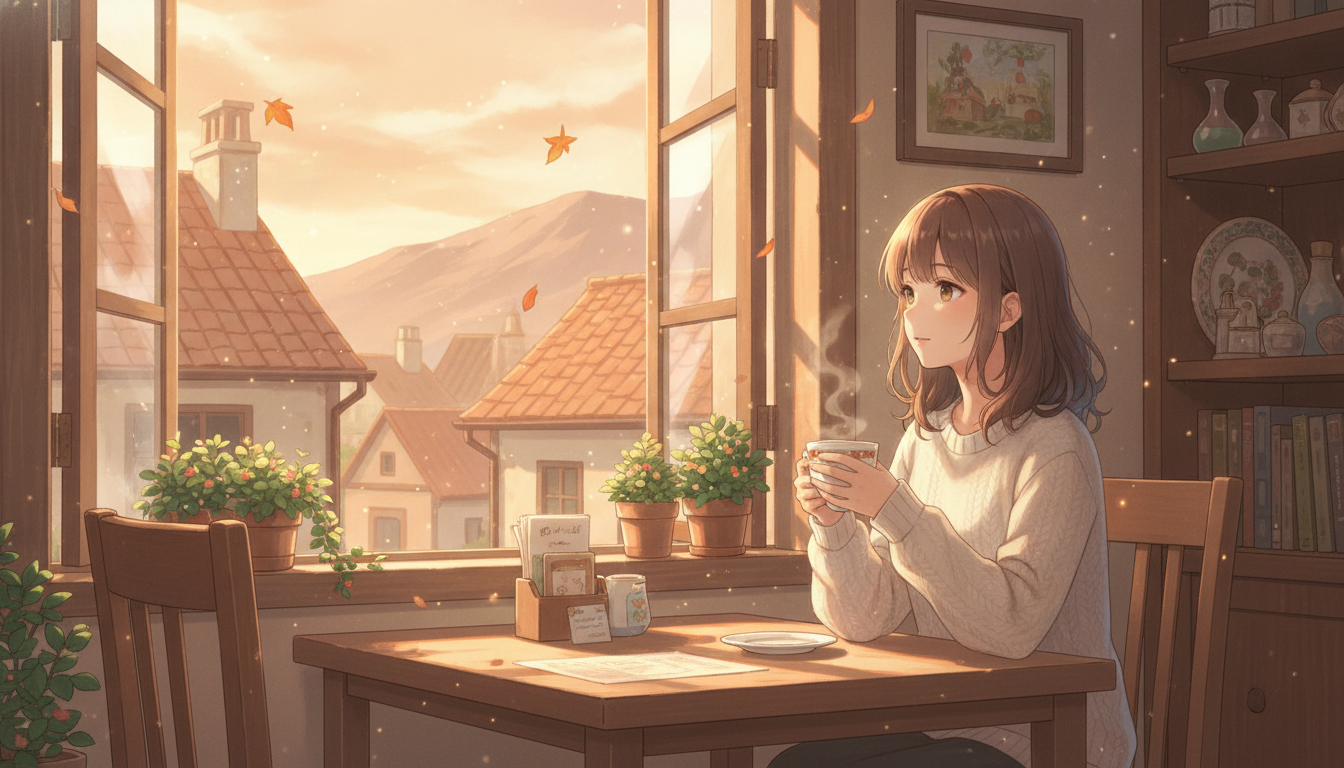
In a media landscape that often rewards intensity and shock value, the enduring popularity of slice of life anime feels quietly radical. These series insist that the small moments matter, that ordinary lives are worth examining closely, and that rest is not weakness — it is wisdom. From Ginko wandering misty forests in Mushishi to Rin sitting beside a glowing campfire in Laid-Back Camp, these stories offer something increasingly rare: permission to simply be still.
So the next time stress threatens to swallow you whole, remember that a whole library of warmth is waiting for you — one perfect, unhurried episode at a time. The world will still be there when you come back. And you will be better equipped to face it.
