


Food is one of those universal languages that transcends borders, generations, and even fictional universes — and yet most of us barely scratch the surface of how wild, weird, and genuinely mind-blowing the world of food actually is. Whether you’re a dedicated foodie who watches cooking anime like Food Wars! Shokugeki no Soma with a notebook in hand, or someone who just loves snacking while binging the Spring 2026 Anime Picks That Deserve Your Full Attention, there’s a good chance food plays a bigger role in your daily joy than you realize. But how much do you actually know about what you’re eating?
Prepare yourself, because some of these food facts are going to hit different. We’re talking ancient discoveries that rewrote human history, scientific quirks that sound like they belong in a fantasy world, and cultural food traditions so fascinating they’d make even the judges of Iron Chef raise an eyebrow. This isn’t your average trivia night warmup — this is the kind of knowledge that changes how you look at your next meal. So grab a snack (ironic timing, we know), get comfortable, and let’s dive into a rabbit hole of culinary truth that genuinely goes hard.
Honey Never Expires — And That’s Not Even the Wildest Part
Let’s start with the one fact that almost everyone has heard but still manages to blow minds on a regular basis: honey is essentially immortal. Archaeologists have discovered honey in ancient Egyptian tombs that is over 3,000 years old — and it was still perfectly edible. The reason? Honey’s unique chemical composition makes it nearly impossible for bacteria to survive in it. Its low moisture content and naturally occurring hydrogen peroxide create an environment where microorganisms simply cannot thrive.
But here’s what takes it further — honey was actually used as a wound dressing in ancient medicine precisely because of these antibacterial properties. Even today, a specific type called Manuka honey from New Zealand is used in clinical wound care. So the next time someone in a fantasy anime pulls out a mysterious golden healing salve, there’s a solid chance the writers were inspired by something very real.
The Spicy Truth About Capsaicin That Nobody Warned You About
If you’ve ever watched Food Wars! and wondered whether the reactions characters have to spicy food are exaggerated — they’re actually not that far off. Capsaicin, the compound that makes chili peppers hot, doesn’t technically cause physical damage when you eat it. Instead, it tricks your brain into thinking you’re experiencing heat or burning by binding to the same pain receptors (called TRPV1 receptors) that respond to actual high temperatures.
This means the burning sensation is entirely a neurological illusion. Your body responds with real physical reactions — sweating, increased heart rate, the release of endorphins — because your nervous system genuinely believes there’s a threat. Those endorphins, by the way, are the same ones released during exercise and moments of joy, which is exactly why some people become legitimately addicted to spicy food. The pepper isn’t hurting you. Your brain is just dramatically overreacting, and then rewarding you for surviving its own panic.
Bizarre Food Facts That Sound Made Up But Absolutely Aren’t
Sometimes reality outdoes fiction, and the food world is full of examples:
- Strawberries are not technically berries. Botanically speaking, strawberries are “accessory fruits.” Meanwhile, bananas, avocados, and watermelons are all true botanical berries. This fact has caused genuine existential crises at dinner tables worldwide.
- Apples, pears, and roses are all in the same plant family — Rosaceae. So when someone says their love is like a rose, they’re also, technically, comparing it to an apple.
- Chocolate was once used as currency. The ancient Maya and Aztec civilizations valued cacao beans so highly that they were used as a form of money. Cacao was literally worth more than gold in some contexts.
- Cashews grow outside a fruit called the cashew apple. The nut hangs below a swollen, pear-shaped fruit — which is actually edible and popular in Brazil. The nut itself must be carefully processed because the raw shell contains a caustic resin related to poison ivy.
- The most expensive coffee in the world, Kopi Luwak, comes from coffee beans that have been eaten and passed through the digestive system of Asian palm civets. It sells for hundreds of dollars per pound.
- Pineapple contains an enzyme called bromelain that actively breaks down proteins — including the proteins in your mouth. When you eat pineapple, it is, in a very mild sense, eating you back.
- Almonds are seeds, not nuts. They’re the seed of a drupe — the same category of fruit that includes peaches and cherries.
Why Food in Japanese Anime Looks So Impossibly Delicious
If you’ve ever watched a Studio Ghibli film and suddenly felt ravenously hungry at a scene involving food — you’re not alone, and you’re not imagining things. Hayao Miyazaki and his team are famously meticulous about the way food is depicted in their films. The meals in Spirited Away, My Neighbor Totoro, and Kiki’s Delivery Service are drawn with such attention to texture, steam, and color that they trigger a very real psychological response.
This phenomenon even has a name: “the Ghibli meal effect,” though more formally it connects to research around food imagery and appetite stimulation. Highly detailed, warm-lit food visuals activate reward pathways in the brain before a single bite is taken. Anime studios understood this intuitively long before neuroscience caught up. The phenomenon extends far beyond Ghibli — the ramen scenes in Naruto, the elaborate cooking battles in Food Wars!, and the street food sequences across countless slice-of-life series all use the same principle: make the food feel real and alive, and the viewer is hooked emotionally.
Ancient Food Discoveries That Rewrote Human History
Bread Is Older Than Agriculture
One of the most startling archaeological discoveries in recent food history came from a site in Jordan called Shubayqa 1, where researchers found evidence of flatbread baked approximately 14,400 years ago — roughly 4,000 years before the dawn of agriculture as we know it. This challenged the long-held belief that bread was a product of farming civilizations. Hunter-gatherers were apparently baking before they were farming, which flips the traditional narrative of food history entirely.
Cheese-Making Goes Back Further Than Most Civilizations
Evidence of cheese-making has been found in ancient Polish pottery dating back around 5,500 years. Residues of cow’s milk fat were detected in ceramic sieves, suggesting early humans were already developing dairy processing techniques that required real scientific understanding — even if they didn’t call it that.
How the Global Spice Trade Literally Changed the World
It’s hard to overstate how much of human history was driven by the desire to control flavorful little plants and seeds. The spice trade between Europe and Asia — particularly involving black pepper, nutmeg, cinnamon, and cloves — directly led to the Age of Exploration. European nations funded dangerous ocean voyages not for gold initially, but to find faster routes to spice markets. The Dutch, Portuguese, Spanish, and British empires were substantially built on the economic power of controlling spice trade routes.
Black pepper alone was so valuable at certain points in medieval Europe that it was used to pay rent, taxes, and even ransom. When the Visigoths sacked Rome in 410 CE, their ransom demand reportedly included 3,000 pounds of black pepper. For something most of us shake absently onto scrambled eggs without a second thought, that’s a genuinely stunning historical footnote.
A World of Food Waiting to Be Explored
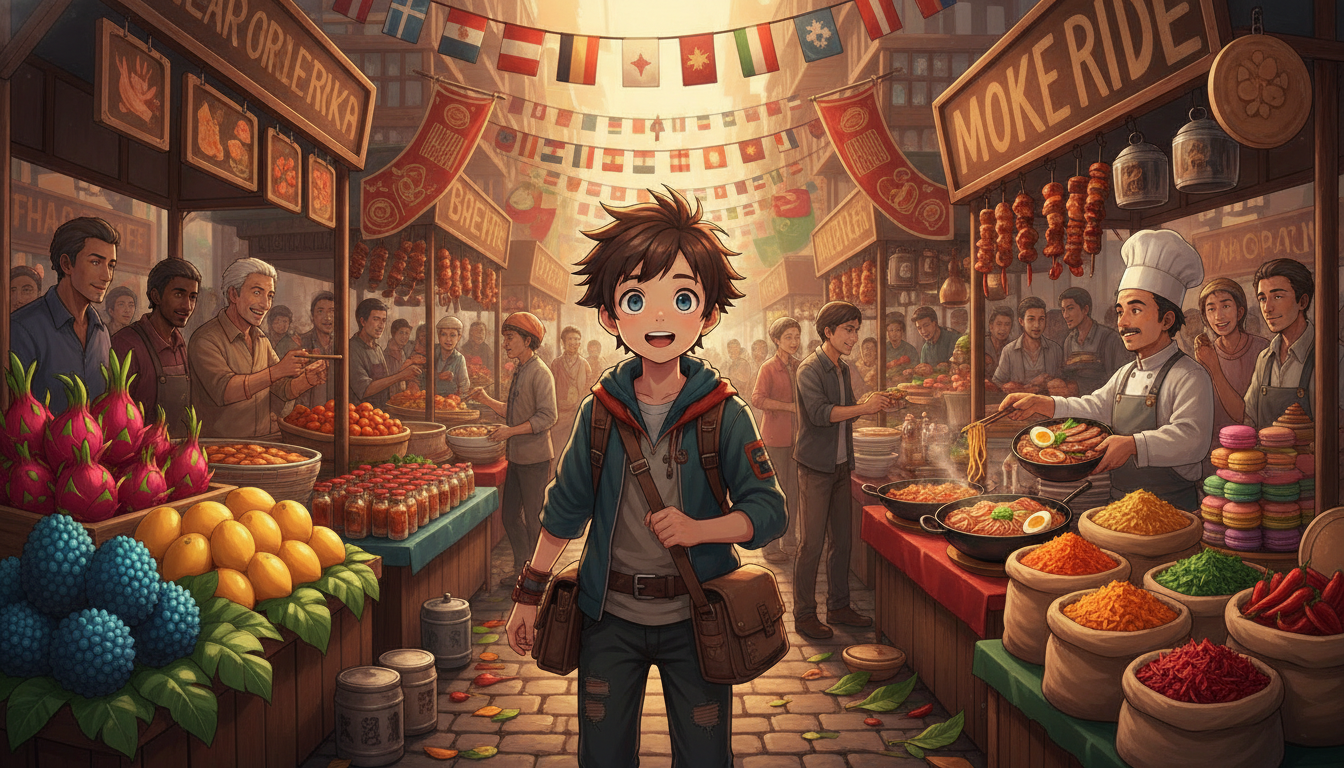
Food is one of humanity’s oldest and most intimate forms of storytelling — it carries culture, memory, history, and science all in a single bite. From honey that outlasted pharaohs to spices that launched empires, from neurological illusions disguised as heat to the impossibly real-looking ramen bowls of your favorite anime, the world of food is frankly never boring once you start looking closely.
If facts about the real world can hit this hard, imagine what it’s like when reality blends with the fantastical — which is probably why food plays such an emotional role in so much great storytelling. The next time you sit down to eat something, even something ordinary, remember: there’s almost certainly a wild fact hiding somewhere in that meal. And if you’re looking for more reality-bending trivia to pair with your next snack session, check out Space Facts So Weird Even NASA Sounds Like It’s Lying — because apparently the universe, much like your plate, is full of surprises.
