

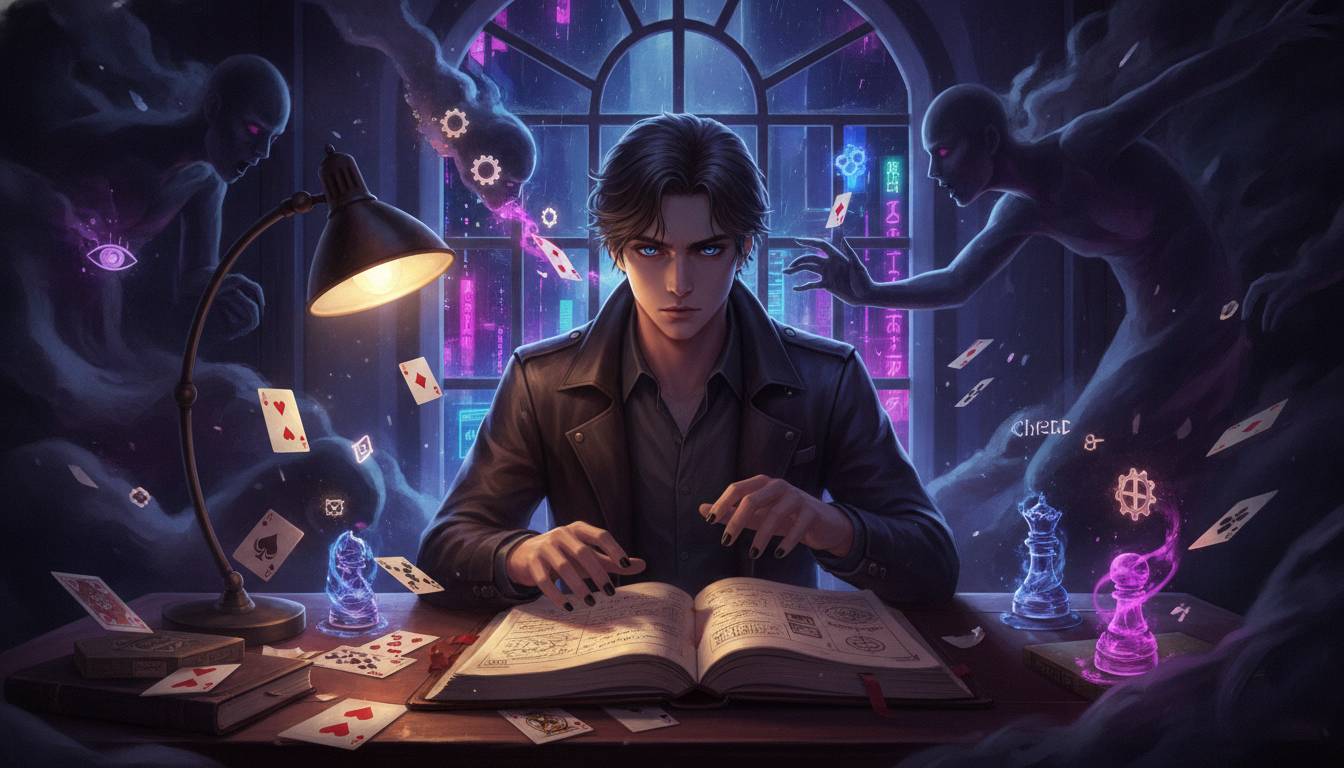
There are very few anime that leave you staring at the ceiling at 2 a.m., completely unable to sleep because your brain is still running through plot twists, moral arguments, and the creeping realization that you might have been rooting for the villain this whole time. Death Note is one of those rare, once-in-a-generation series that turns a simple premise — a notebook that kills anyone whose name is written in it — into a masterclass of psychological chess. Light Yagami versus L is not just a cat-and-mouse game; it’s a full-blown philosophical war about justice, power, and what happens when a genius convinces himself he’s a god.
But here’s the thing: once you’ve burned through all 37 episodes of Death Note and sat with the emptiness it leaves behind, you’re going to want more. Not just more anime — more of that feeling. That electric tension of not knowing who to trust, that vertigo of watching brilliant minds collide, that unsettling question of whether the “hero” is actually the most dangerous person in the room. The good news? The anime world has plenty of series ready to break your brain in exactly the right ways.
Whether you finished Death Note back when it first aired between 2006 and 2007 or you discovered it for the first time on a streaming binge last weekend, this list is your next obsession waiting to happen. Buckle up, because these picks are not here to comfort you.
The Undisputed King of Psychological Thrillers: Monster
If any anime deserves to sit right next to Death Note on the prestige shelf, it is Monster. Adapted from Naoki Urasawa’s acclaimed manga, the 2004 Madhouse series follows Dr. Kenzo Tenma, a brilliant Japanese neurosurgeon working in Germany who saves the life of a young boy — only to discover decades later that the boy, Johan Liebert, has grown into one of the most terrifyingly intelligent and emotionally hollow serial killers in fictional history.
What makes Monster so devastating is its patience. This is a 74-episode series that builds dread the way a thunderstorm builds on the horizon — slowly, methodically, until you are completely surrounded. Johan is often compared to Death Note‘s Light Yagami, but where Light is theatrical and arrogant, Johan is quietly, surgically terrifying. You will finish Monster and feel like you need to take a long walk in the sunlight just to remember the world is okay.
Mind Games at Their Most Elegant: Code Geass
Code Geass: Lelouch of the Rebellion is the series that Death Note fans almost universally discover next — and for excellent reason. The 2006 Sunrise anime follows Lelouch vi Britannia, an exiled prince who gains the power of Geass, which allows him to command anyone to obey a single order. Sound familiar? Like Light Yagami, Lelouch is brilliant, morally compromised, and utterly convinced that the ends justify the means.
The strategic battles in Code Geass — called Knightmare Frame warfare — function almost like chess matches, and the series absolutely wants you to feel that parallel. What separates it from Death Note is its scale: this is a political and military revolution, not just a two-man duel. The emotional stakes are sky-high, the plot twists are legendary in anime fandom, and the finale remains one of the most discussed endings in the medium’s history. If these tragic backstories will break your anime-loving heart, Code Geass is Exhibit A.
The Claustrophobic Genius of Classroom of the Elite
For viewers who love watching hyper-intelligent characters dissect other people’s psychology in real time, Classroom of the Elite — based on the light novel series by Syougo Kinugasa — is almost uncomfortably satisfying. The anime, which began in 2017 and received a highly anticipated second and third season in 2022 and 2023, follows Kiyotaka Ayanokoji, a seemingly apathetic student at an elite government school who turns out to be calculating on a level that is genuinely chilling.
Ayanokoji is arguably the closest thing to a “dark genius protagonist” that modern anime has produced since Light Yagami. He is not overtly cruel, but he treats people as variables in equations, and watching him operate is deeply fascinating and just a little bit frightening. The social hierarchy and manipulation at the core of the show hit the same intellectual itch as Death Note‘s cat-and-mouse tension.
Paranoia and Identity Collapse: Ergo Proxy
Released in 2006 by Manglobe, Ergo Proxy is the kind of anime that requires — and rewards — your full attention. Set in a dystopian future where humans and androids called AutoReivs coexist inside domed cities, the series follows Re-l Mayer, an investigator who begins unraveling a conspiracy that challenges everything she understands about consciousness, humanity, and identity.
Ergo Proxy is philosophically dense in a way that can feel overwhelming, drawing on existentialism, Gnosticism, and postmodern theory. But that density is the point. Like Death Note, it refuses to spoon-feed you answers. It trusts you to wrestle with the ideas, and the payoff for that effort is a story that genuinely haunts you long after the credits roll.
Quick-Fire Picks for the Truly Obsessed
If you have already seen some of the deeper cuts above, here are additional titles that belong firmly in the Death Note psychological thriller conversation:
- Steins;Gate (2011) — A time travel thriller that starts as quirky and becomes one of the most emotionally devastating anime ever made. The protagonist Okabe Rintaro is a self-styled “mad scientist” whose brilliant mind becomes both his greatest weapon and his worst enemy.
- Talentless Nana (2020) — Do yourself a favor and go in completely blind. The first episode will make you think you know exactly what this show is. You do not.
- The Promised Neverland (Season 1, 2019) — Children in an idyllic orphanage discover a terrifying secret and must outsmart adults with overwhelming power advantages. The chess-match tension is pure Death Note energy.
- Kaiji: Ultimate Survivor (2007) — A gambling anime that is somehow more psychologically brutal than most thriller anime. Watching Kaiji outthink rigged games against corrupt elites is the most underrated intellectual ride in the genre.
- 91 Days (2016) — A revenge thriller set during Prohibition-era America, built on betrayal, long-game scheming, and a protagonist whose moral clarity crumbles beautifully across its runtime.
What Makes These Series Work: The Anatomy of a Mind-Bending Anime
Not every smart anime scratches the same itch as Death Note. There are specific ingredients that make these shows work on a deeper psychological level:
- A protagonist who is not traditionally heroic — Light, Lelouch, Ayanokoji: none of them are safe characters to root for, and that ambiguity is the engine of tension.
- An antagonist who is equally or more intelligent — L in Death Note, Johan in Monster: the best mind-game anime live or die by the quality of their intellectual opposition.
- Stakes that feel genuinely irreversible — These shows make you believe that any character can die, lose, or be fundamentally destroyed at any moment.
- Themes that outlast the plot — Questions about justice, free will, identity, and power that stick with you long after the finale.
If you are actively hunting for your next obsession right now, it is also worth checking out Spring 2026 anime picks that deserve your full attention, because the current season has a few titles already generating serious buzz in the psychological thriller space.
The Lasting Legacy of Death Note on Anime Culture
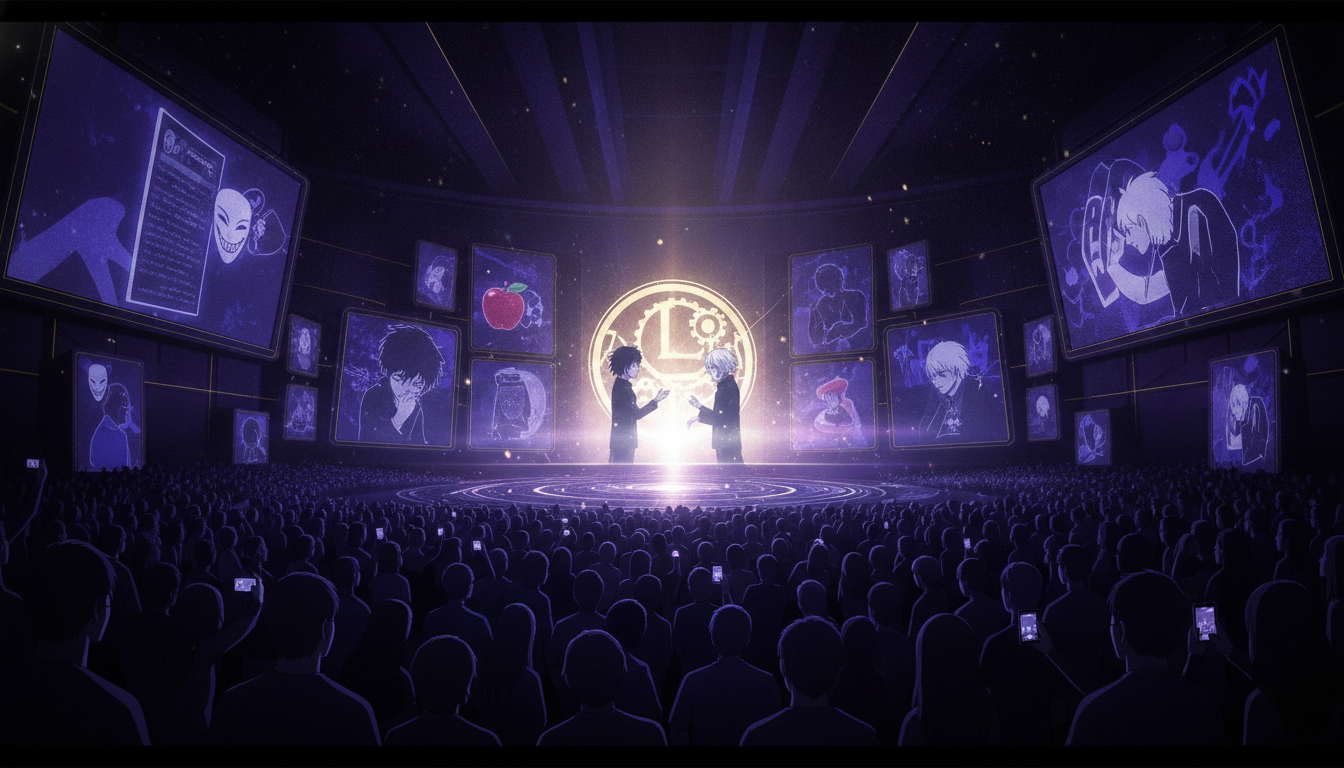
Death Note premiered in October 2006 and fundamentally changed what mainstream audiences expected from anime storytelling. It proved that the medium could sustain a slow-burn intellectual thriller aimed squarely at adult viewers without relying on action spectacle. The series was produced by Madhouse and ran for 37 episodes, concluding in June 2007. Its influence is visible across nearly every serious psychological anime that followed it.
Two decades later, in 2026, new anime fans are still discovering Death Note for the first time and having their brains scrambled in the best possible way. That kind of longevity is not an accident — it is the mark of a story that asks genuinely hard questions about human nature and refuses to let you off the hook with easy answers.
The anime on this list share that refusal. They will challenge you, unsettle you, and make you question your assumptions about who deserves to win. And when you finish them, you will probably start looking for the next one — which is exactly how the best stories work.
