
There are certain anime adaptations that feel less like productions and more like events — long-awaited gifts that fans have been quietly praying for while re-reading a beloved manga for the fifth time. Witch Hat Atelier is exactly that kind of show. Based on Kamome Shirahama’s stunning manga series that began serialization in 2016 in Monthly Morning Two, the anime finally arrived to satisfy years of anticipation from a deeply passionate fanbase. But the real question buzzing through every forum, subreddit, and Discord server is this: does it actually deliver, or is it one of those rare cases where the hype machine outpaced the product?
The short answer is that Witch Hat Atelier is something genuinely special — a rare gem in a crowded seasonal landscape that manages to feel both visually breathtaking and emotionally resonant. The longer answer, of course, requires a deeper dive. The series follows Coco, a young girl who dreams of becoming a witch in a world where magic is considered an inherited, bloodline-exclusive ability. When she secretly witnesses that magic is actually performed through drawn symbols called “sigils,” and accidentally turns her mother to stone in the process, she’s taken under the wing of the wandering witch Qifrey and enrolled in his atelier to train as a proper witch — all while hiding the forbidden truth she’s uncovered. It’s a premise rich with mystery, consequence, and genuine emotional stakes, and the anime adaptation wears all of that beautifully on its sleeve.
The Studio Behind the Magic: Who Made This Happen
The anime adaptation of Witch Hat Atelier was produced by Wit Studio, the same studio responsible for beloved titles like the first three seasons of Attack on Titan and Vinland Saga Season 1. If you know Wit Studio’s track record, you already know this was a promising sign. They have a reputation for taking on visually ambitious projects and pouring genuine craft into them, and Witch Hat Atelier was no exception. The series aired in 2024, and the production quality was immediately apparent from the very first episode.
What Wit Studio understood — critically — is that Shirahama’s manga is not just a story told through panels. It’s an artwork. The original manga is famous for its extraordinarily detailed, almost architectural line work, and translating that into fluid animation without losing the intricate beauty of the source material is no small feat. The team’s decision to honor those visual details rather than simplify them for convenience speaks to a genuine respect for the material.
Visual Splendor: Animation That Feels Alive
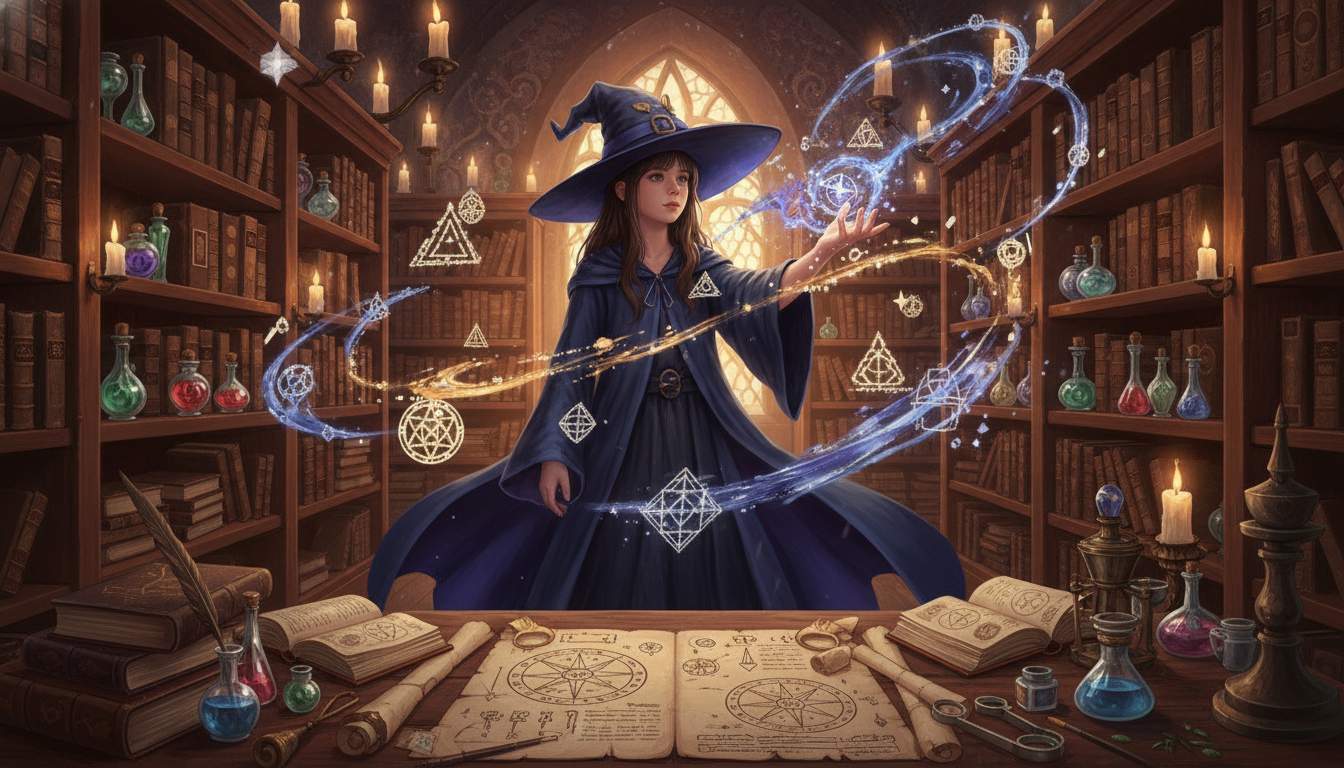
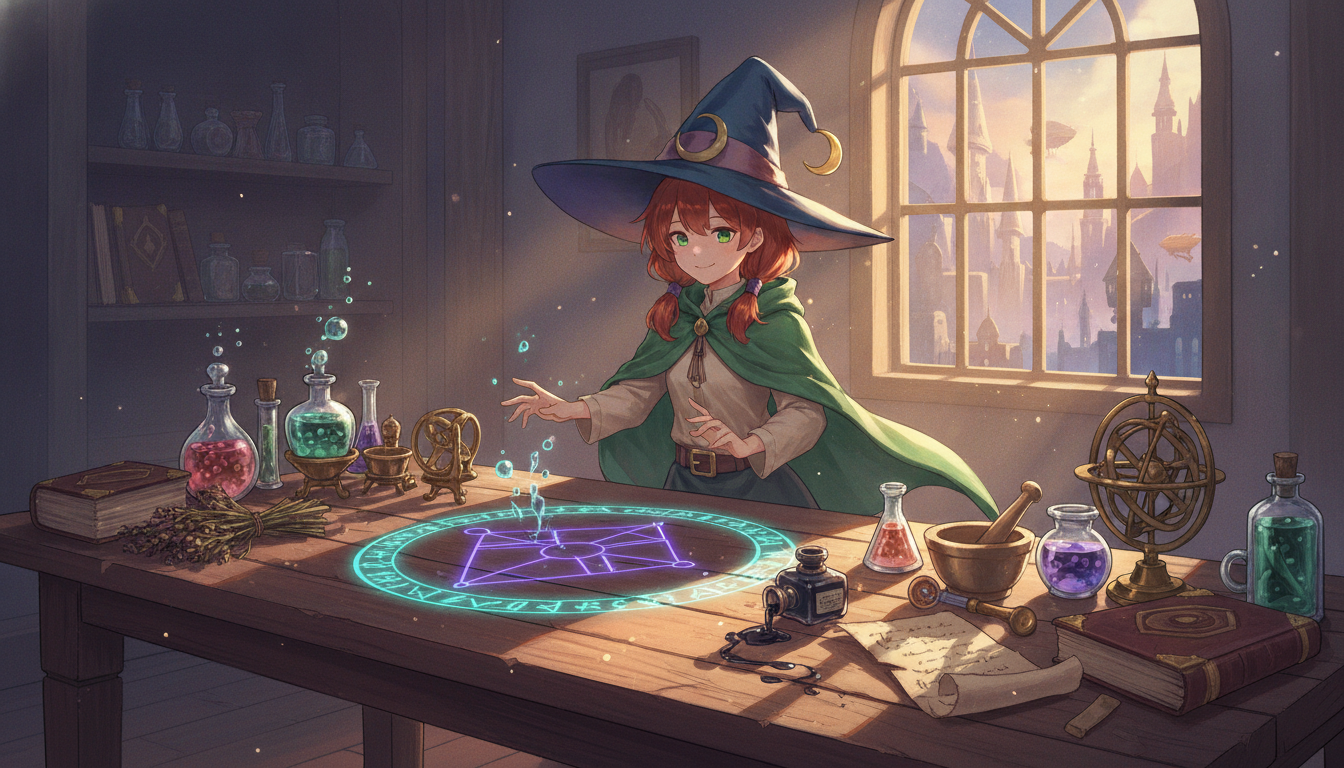
If there’s one element of Witch Hat Atelier that absolutely cannot be disputed, it’s the animation. The show looks gorgeous. Backgrounds feel like illuminated paintings, character designs retain the delicate, almost storybook quality of Shirahama’s originals, and magical effects — particularly the glowing sigil sequences — are handled with an elegance that avoids the trap of flashy-but-meaningless spectacle.
The art style discussion alone is worth a separate deep dive, similar to how iconic anime art styles can look so wildly different from one another depending on the studio’s philosophy and the source material’s DNA. In this case, Witch Hat Atelier occupies a uniquely painterly aesthetic space — closer to a European fantasy illustration than the typical shonen or shojo visual grammar most viewers are used to.
Key visual highlights include:
- The Pointed Cap Witches’ ceremonial costumes, rendered with extraordinary textile detail
- Sigil-drawing sequences that feel meditative and tense at the same time
- Forest and marketplace environments that feel genuinely lived-in and ancient
- Facial expressions that convey subtle emotional nuance without overplaying dramatic beats
Story and Themes: More Than Just Pretty Pictures
Witch Hat Atelier earns its praise not just through aesthetics but through genuine storytelling depth. At its core, the series is about access, privilege, and the gatekeeping of knowledge. The world’s magical society maintains strict rules about who can practice magic and what knowledge can be shared — and Coco’s discovery that magic isn’t innate but learned threatens the entire social structure underpinning that world.
This thematic layer gives the show intellectual weight that elevates it well above a simple “girl learns magic” premise. It asks uncomfortable questions: Who benefits from keeping knowledge restricted? What happens to people born outside systems of power? The series doesn’t hammer these themes with a heavy hand — it weaves them into character motivations, world-building details, and quiet moments of dialogue that reward attentive viewers.
Coco herself is a wonderfully written protagonist. She’s curious, emotionally intelligent, and genuinely flawed in ways that feel human rather than contrived. Her relationship with fellow apprentices Agott, Richeh, and Tetia develops organically, each character bringing a distinct personality and backstory that avoids the trap of flat supporting-cast syndrome.
The Soundtrack and Voice Cast: Sound That Supports the Atmosphere
A show this visually distinctive needed a soundtrack that matched its tone, and Witch Hat Atelier delivered. The music carries a chamber-fantasy quality — orchestral without being overwrought, delicate without being forgettable. It underlines emotional moments without telegraphing them, which is exactly the right call for a series built on subtlety.
The Japanese voice cast brings warmth and specificity to characters that could easily have been played generically. Coco’s voice in particular threads a difficult needle — she needs to sound genuinely childlike and wonder-struck without becoming annoying during tense or dramatic scenes. It’s a performance that holds up over the course of the series and grows alongside the character.
Where It Stumbles: Honest Criticism
No review worth its salt dodges the criticisms, so here they are. Witch Hat Atelier is, at times, slow. Deliberately, meaningfully slow — but slow nonetheless. Viewers conditioned by more action-forward fantasy anime might find the early episodes frustrating in their pacing. The show prioritizes atmosphere and emotional groundwork over plot momentum, which is a valid artistic choice but not one that works for every viewer.
Additionally, some of the manga’s most intricate background details — particularly the dense, almost obsessive sigil designs in certain panels — inevitably lost some of their complexity in the translation to animation. This is nearly unavoidable given production realities, but devoted manga readers will notice and, for some, it may sting.
A few quick honest notes:
- The pacing in episodes 3-5 tests patience even for sympathetic viewers
- Some secondary antagonists remain underdeveloped through the first cour
- World-building exposition, while handled better than most shows, occasionally slows narrative momentum to a crawl
- The ending leaves significant story threads open, which is satisfying if you’re a manga reader but potentially frustrating for anime-only audiences
Witch Hat Atelier vs. The Adaptation Conversation
Adapting beloved manga is always a minefield. The anime community has seen enough disasters to approach any announced adaptation with at least some guarded skepticism. Witch Hat Atelier joins a short but meaningful list of adaptations that genuinely honored their source material while also functioning as excellent standalone television.
Did it surpass the manga? That’s a complicated question with no clean answer — the manga remains the definitive experience for the sheer density of its detail. But the anime made Witch Hat Atelier accessible to an entirely new global audience and brought the world to life in ways that even the most beautifully drawn panels can’t replicate: with music, motion, and voice.
Final Verdict: Pure Magic With a Few Rough Edges
So — pure magic or overhyped? Predominantly pure magic. Witch Hat Atelier is one of the most visually and thematically accomplished fantasy anime of its era, a show that trusts its audience to sit with beauty and complexity without rushing toward action or resolution. It’s not perfect — the pacing demands patience, and anime-only viewers may feel the sting of an open-ended conclusion — but its strengths are rare and meaningful.
This is the kind of anime that reminds you why the medium matters as an artistic form. It’s not just entertainment; it’s craft. Whether you’re a long-time manga reader finally seeing Coco’s world in motion or a complete newcomer drawn in by a gorgeous clip on social media, Witch Hat Atelier offers something genuinely worth your time and attention. In a world where fantasy anime is everywhere, this one earns its pointed hat.
