

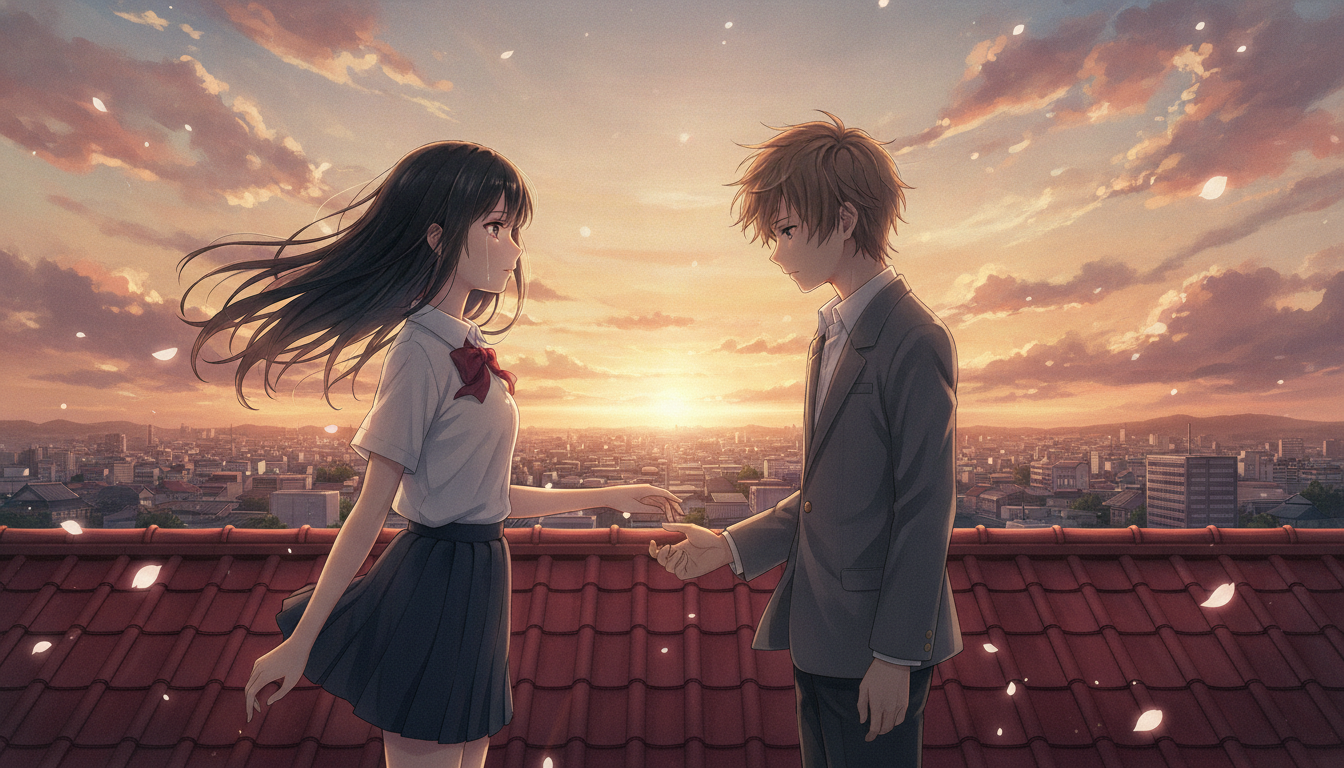
There is a specific kind of heartbreak that only romance anime can deliver — the kind that sneaks up on you during an otherwise ordinary Tuesday evening, leaves you staring at your ceiling at 2 a.m., and has you questioning every life choice that led you to press “play.” Romance anime occupies a uniquely brutal emotional space in the anime world. It can be tender, joyful, and achingly beautiful all at once, and then, without warning, it reaches into your chest and squeezes. Hard. Whether you are a longtime fan or someone who just finished their first shojo series and needs to know what to watch next, this genre has a talent for making you feel things you were not prepared for.
The secret weapon of romance anime is its pacing. Unlike Western romantic comedies that tend to resolve everything in 90 minutes, anime romance can stretch across seasons, letting relationships breathe, stumble, and ache in real time. You invest weeks — sometimes months — in characters, and that investment transforms every confession, every misunderstanding, and every tragic goodbye into something deeply personal. By the time the credits roll on a heartbreaking finale, these fictional people feel like old friends. That is not an accident. It is masterful storytelling.
So consider yourself warned. The series below are not just “sad” — they are emotionally devastating in ways that linger long after you have finished watching. Grab your tissues, maybe a snack, and absolutely do not start any of these on a night when you have work in the morning.
Clannad After Story: The Gold Standard of Anime Heartbreak
If you ask any veteran anime fan to name the most emotionally destructive romance anime ever made, there is a very good chance they will say Clannad: After Story without hesitating. Originally adapted from the visual novel by Key and produced by Kyoto Animation, the After Story arc aired in 2008 and picks up where the first season left off, following Tomoya Okazaki and Nagisa Furukawa as they build a life together after high school.
What makes After Story so uniquely devastating is that it refuses to stay comfortable. Just as you settle into its warmth — the small domestic moments, the genuine love between two flawed people — it pulls the rug out from under you with the kind of emotional gut-punch that fans still talk about nearly two decades later. The series deals with themes of loss, grief, parenthood, and the desperate human need to find meaning after tragedy. It won the Anime Grand Prix for Best Anime in 2009, a testament to just how deeply it resonated with audiences worldwide.
Your Lie in April: Beauty Wrapped Around a Knife
Your Lie in April (Shigatsu wa Kimi no Uso) aired in 2014–2015, produced by A-1 Pictures, and it is one of those rare anime that is genuinely gorgeous to look at and genuinely painful to experience. The story follows Kousei Arima, a piano prodigy who loses the ability to hear his own playing after his mother’s death, and Kaori Miyazono, a free-spirited violinist who crashes into his gray world like a burst of color.
The anime is famous for its stunning classical music sequences — pieces by Chopin, Saint-Saëns, and Beethoven are woven into the emotional fabric of the story in ways that feel earned rather than decorative. But the series was never going to let you off the hook. Its emotional core is built around a truth that it hides in plain sight from the very beginning, and when that truth lands, it lands with full force. Your Lie in April is the kind of series that makes you want to immediately call the people you love and tell them so.
Anohana: The Flower We Saw That Day — Grief That Never Fully Heals
AnoHana (Ano Hi Mita Hana no Namae wo Bokutachi wa Mada Shiranai, or “We Still Don’t Know the Name of the Flower We Saw That Day”) is an 11-episode series from 2011, produced by A-1 Pictures. It follows a group of childhood friends who fell apart after the accidental death of their friend Meiko “Menma” Honma. Years later, Menma’s ghost appears to Jinta, the group’s reclusive former leader, asking him to fulfill a wish she cannot remember.
What AnoHana does brilliantly is show how grief fractures not just individuals but communities. Each character has processed — or failed to process — Menma’s death in a completely different way, and watching those unresolved wounds reopen is quietly brutal. The final episode features one of the most cathartic collective crying scenes in anime history, and it earns every single tear. Do not watch this one with anyone you are trying to impress.
Toradora!: When a Slow Burn Actually Burns You
Not every heartbreaking romance is built on tragedy. Sometimes the damage is done by sheer emotional investment. Toradora!, which aired in 2008–2009 and was produced by J.C. Staff, follows Ryuji Takasu and Taiga Aisaka — two high schoolers with crushes on each other’s best friends who team up to help one another out. The result is one of the most beloved tsundere (a character who is cold on the outside but warm inside) storylines in anime history.
Toradora! earns its emotional devastation slowly and honestly. It takes its time establishing friendship, trust, and genuine emotional complexity before delivering its most powerful moments. By the time the series reaches its emotional climax during the school festival arc, viewers are so deeply attached to these characters that even small moments feel enormous. It remains a benchmark series for anyone exploring the romance genre.
Five Centimeters Per Second: Distance as a Metaphor for Everything
5 Centimeters Per Second is a 2007 animated film by Makoto Shinkai — the same director who later created Your Name and Weathering With You — and it might be the most quietly devastating romance in the medium. The film is structured in three interconnected segments, following Takaki Tono across different stages of his life as the distance between him and his childhood love, Akari, grows wider and wider.
The film’s title refers to the speed at which cherry blossom petals fall — a delicate, poetic detail that sets the tone for everything that follows. Shinkai has always been skilled at using visual beauty to amplify emotional ache, and 5 Centimeters Per Second remains one of his most uncompromising works. There is no dramatic climax, no grand gesture. Just time, and distance, and the quiet realization that some connections — no matter how real — simply do not survive the weight of life. That realism is what makes it hurt so much.
What These Series Have in Common: A Few Key Facts
It is worth pausing to look at what makes these particular series so emotionally effective. Here are a few things they share:
- Grounded, believable characters — no one is a perfect hero or villain; everyone is complicated and human
- Slow, deliberate pacing that forces the audience to invest deeply before delivering emotional payoffs
- Thematic depth beyond romance — grief, identity, time, and communication are all recurring threads
- Exceptional soundtracks — Your Lie in April uses classical music, while Clannad features iconic compositions by composer Junya Nakano and Magome Togoshi
- Cultural resonance — several of these series are consistently cited in Japanese and international polls as all-time favorites in the genre
- All of them feature moments that fans still clip, gif, and discuss in online communities years after their original release
If you are curious about how animation style contributes to emotional impact, Anime Art Styles Decoded: What Makes Each One Unique is a great companion read to understand how visual language shapes the way we feel these stories.
Where to Start If You Are New to Romance Anime
If this genre is new territory for you, Toradora! and Your Lie in April are generally considered the most accessible entry points. Both are widely available on major streaming platforms and strike a strong balance between joy and heartbreak without being impenetrable for newcomers. Clannad After Story is best watched after completing the first season, so budget your time accordingly. 5 Centimeters Per Second is a single film commitment — perfect for a rainy afternoon when you are already feeling contemplative.
And if you need a reminder that anime storytelling extends far beyond any single genre, check out Witch Hat Atelier Anime Review: Pure Magic or Overhyped? for a completely different — but equally emotional — anime experience.
Romance anime at its best is not about fantasy. It is about truth — the messy, aching, beautiful truth of what it means to love someone in a world that keeps moving. The series above do not promise happy endings, but they do promise something rarer and more valuable: the feeling that someone, somewhere, understood exactly what you were going through and decided to make art about it. Start watching. Just keep the tissues close.
