
The Enemies-to-Lovers Formula Just Got a Serious Upgrade
There is a specific kind of romantic comedy that hooks you before you even realize what happened. You sit down expecting something light and breezy, and forty minutes later you are emotionally invested in two people who can barely stand to be in the same room together. You and I Are Polar Opposites — known in Japanese as Kimi to Boku wa Kokyoku no Hazu — is exactly that kind of series. It arrived with modest expectations and quietly became one of the most charming slice-of-life romance manga adaptations to land in recent memory, threading the needle between genuinely funny character clashes and surprisingly tender emotional beats.
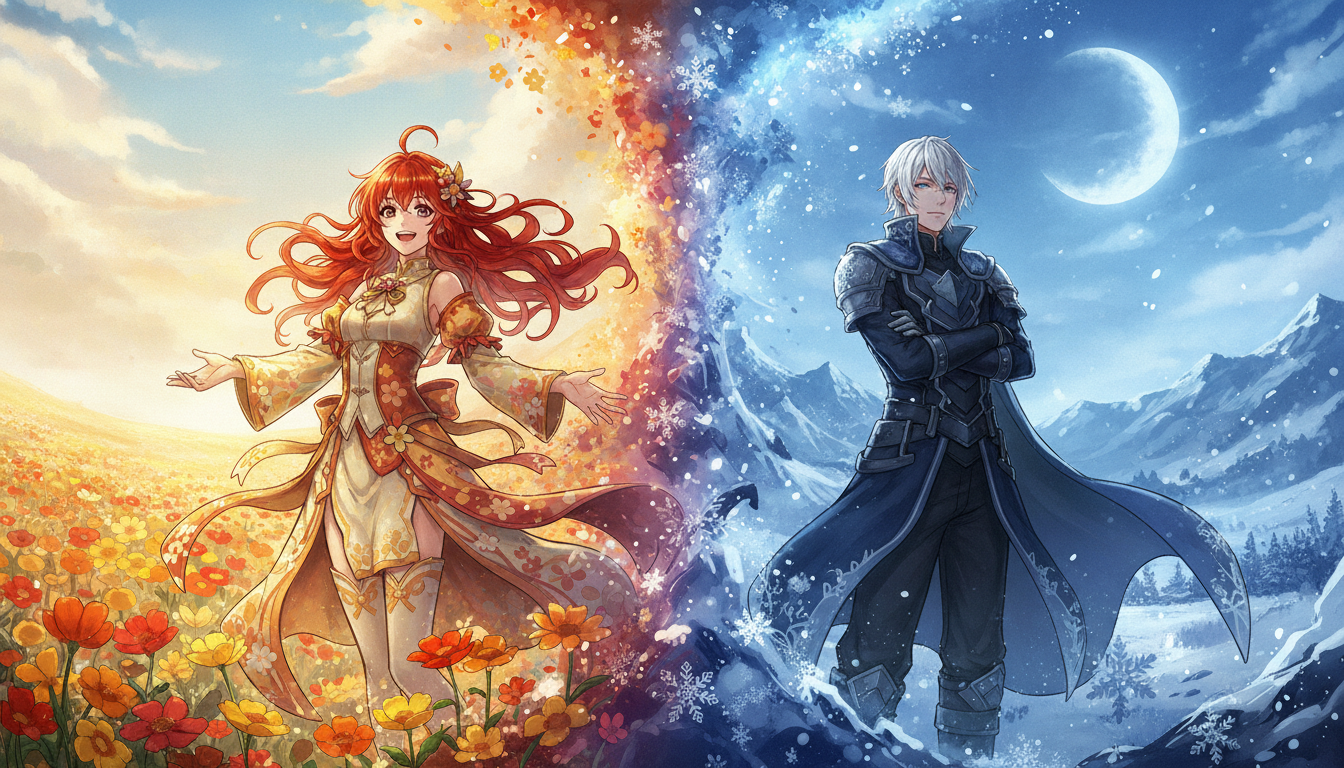
What makes this premise work is deceptively simple: take two people who are almost cosmically incompatible, place them in close proximity, and watch the friction slowly become warmth. The manga, written and illustrated by Akami Gido, serialized in Kadokawa‘s Monthly Shonen Ace magazine, tells the story of Sakura Yuugure and Hiiragi Taiga — a quiet, reserved girl and a loud, impulsive boy who end up as seat neighbors in high school. That is the whole setup. No magical powers, no elaborate conspiracy, no secret identities. Just two very different people who cannot figure out why the other one is so irritating — and then, very slowly, cannot figure out why they keep looking forward to the next conversation.
If you have been sleeping on this one, consider this your wake-up call. Here is why You and I Are Polar Opposites deserves a permanent spot on your reading list.
What the Story Is Actually About and Why It Works
At its core, You and I Are Polar Opposites is a character study masquerading as a romantic comedy. Sakura Yuugure is introverted, meticulous, and content with her own small world. Hiiragi Taiga is extroverted, impulsive, and incapable of reading a room — or at least that is what Sakura initially believes. The early chapters lean hard into comedic misunderstandings and personality clashes, giving readers plenty of laughs as these two fail spectacularly to communicate.
But Gido is a patient storyteller. Slowly, chapter by chapter, both characters reveal more of themselves. Taiga’s loudness starts to look less like thoughtlessness and more like genuine enthusiasm for the world around him. Sakura’s quietness starts to look less like coldness and more like a careful kind of warmth that she offers to very few people. The romantic tension develops organically rather than feeling like a checklist of genre tropes being ticked off. That restraint is rare in the romance manga space, and it pays off enormously when the emotional moments finally land.
The Appeal of Akami Gido’s Artistic Storytelling Style
If the name Akami Gido sounds familiar, it should. Gido is also the creator behind Sweetness and Lightning (Amaama to Inazuma), the beloved manga about a widowed teacher raising his young daughter with help from one of his students, centered around the healing power of food and family. That series ran in Kodansha‘s good! Afternoon magazine and received an anime adaptation in 2016 from TMS Entertainment.
What both series share is Gido’s distinctive ability to find emotional weight in extremely ordinary moments. Nobody is fighting a demon lord. Nobody is racing to confess before the school festival ends. The drama comes from quieter places — a misread expression, an unexpected act of consideration, the slow realization that someone has become important to you without you planning for that to happen. In a manga landscape crowded with dramatic escalation, that gentleness is genuinely refreshing.
Gido’s art style reinforces this quality. The character designs are expressive without being exaggerated, and the paneling has a relaxed, airy quality that makes even busy school scenes feel unhurried. Reading it feels like watching an afternoon pass comfortably.
Why the Enemies-to-Lovers Dynamic Hits Different Here
The enemies-to-lovers trope is one of the oldest in romantic fiction, and anime and manga fans know it well — from Kaguya-sama: Love Is War‘s elaborate psychological warfare between two student council geniuses, to My Love Story!!‘s subversive warmth, to countless other entries in the genre. What distinguishes You and I Are Polar Opposites from the crowd is that the “enmity” between Sakura and Taiga is never mean-spirited.
There is no cruelty, no public humiliation, no deliberate sabotage. Instead, the conflict is purely temperamental — these two simply exist on different frequencies, and the comedy comes from the interference that creates. Because neither character is a villain in the other’s story, the shift from friction to affection feels earned rather than like a redemption arc. You are not waiting for someone to apologize. You are waiting for someone to finally say out loud what they clearly already feel.
This distinction matters for readers who sometimes find the enemies-to-lovers formula exhausting. If you have ever bounced off a series because the characters were just too mean to each other for too long, Polar Opposites is the correction you were looking for.
Key Facts Every New Reader Should Know
Before you dive in, here are some quick facts to get you oriented:
- Creator: Akami Gido, also known for Sweetness and Lightning
- Magazine: Serialized in Kadokawa‘s Monthly Shonen Ace
- Genre: Romantic comedy, slice-of-life, shonen
- Tone: Light, warm, and character-driven — no dramatic melodrama
- What makes it special: The slow-burn pacing and genuinely likable cast
- Previous work comparison: If you loved Sweetness and Lightning for its emotional sincerity, this hits the same notes in a high school romance context
- Accessibility: Easy to pick up with no prior knowledge of connected series or long lore histories — it is a clean standalone read
For fans who enjoy checking out what else is airing and publishing in any given season, take a look at our roundup of the Spring 2026 Anime You Absolutely Cannot Miss This Season for more recommendations alongside your manga reading.
The Supporting Cast and Why They Matter
One of the quieter strengths of You and I Are Polar Opposites is that the side characters are not just furniture. Sakura’s and Taiga’s respective friend groups have distinct personalities, and their reactions to the developing dynamic between the two leads add texture to the story rather than just serving as exposition delivery systems.
Friends who tease Taiga about his obvious interest in Sakura, or who gently push Sakura to consider why she keeps talking about her seatmate so much, are written with enough individuality that you genuinely care about them. This matters because it keeps the world of the story from feeling like it revolves entirely around the will-they-won’t-they tension. The high school setting breathes.
How This Series Fits Into the Broader Landscape of Modern Romance Manga
The mid-2020s have been a genuinely strong period for romantic manga and their adaptations. Series like Dungeon Meshi proved that genre-blending could reach mainstream audiences, A Sign of Affection (Yubisaki to Renren) showed that quiet, tender storytelling had a large and hungry readership, and the continued dominance of Spy x Family demonstrated that you can anchor action-comedy-romance around a found family dynamic and sustain it brilliantly.
You and I Are Polar Opposites belongs to the quieter end of this spectrum — closer to A Sign of Affection in its pacing and emotional register than to high-concept genre mixes. That is not a limitation. If anything, the current appetite for sincere, character-first storytelling means this is exactly the right moment for a series like this to find its audience.
For readers who are curious about how storytelling details can hide in plain sight, the analysis in Animated Movies Hid These Details and Nobody Caught Them is a fascinating companion piece to thinking about intentional craft in visual storytelling.
Why You Should Start Reading Right Now
There is a version of this article that sells you on You and I Are Polar Opposites with big promises about shocking plot twists or jaw-dropping animation. That article would be lying to you. The honest sell is this: it is a warm, well-crafted story about two people who are wrong for each other in all the small ways, and right for each other in all the ones that count. It does not overstay its welcome, it does not manufacture drama where none is needed, and it trusts its characters enough to let them develop at a human pace.
In a media landscape that constantly asks you to commit to hundreds of episodes or sprawling cinematic universes, something that simply wants to tell one good story about two very different people sitting next to each other in class feels like a genuine gift. Give it a chapter or two. You will not want to stop.
