

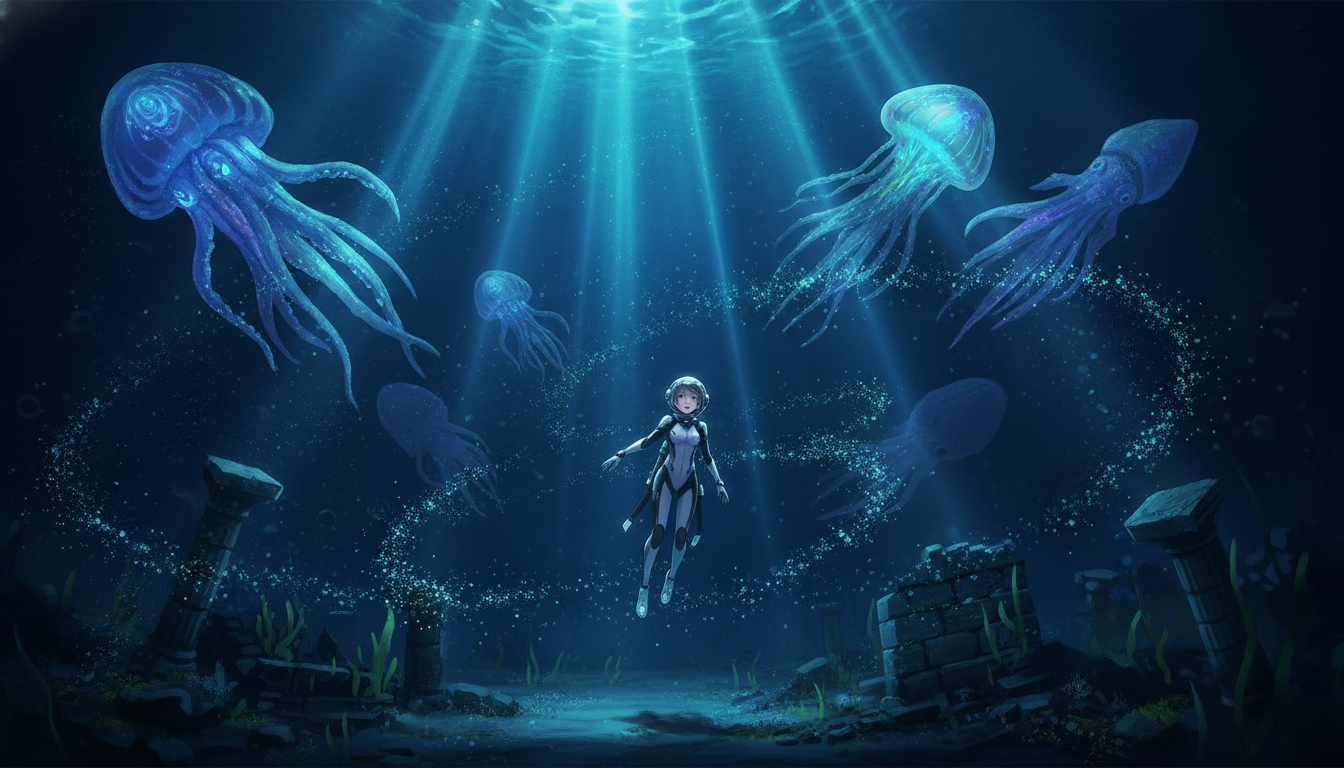
The ocean covers more than 70% of our planet’s surface, and yet humans have explored less than 20% of it. Let that sink in for a second. We’ve mapped the surface of Mars in greater detail than our own ocean floor. The deep sea is so alien, so hostile to human life, and so packed with genuine mysteries that it has inspired centuries of folklore, scientific breakthroughs, and some of the most imaginative fiction ever created — including entire anime universes built around what might be lurking beneath the waves. And the real thing? It’s somehow weirder than anything storytellers have dreamed up.
Whether you’re a seasoned ocean nerd, a fan of series like Nadia: The Secret of Blue Water or Blue Period, or just someone who once watched Finding Nemo and thought, “wait, what ELSE is down there?” — buckle up. The ocean doesn’t just hide strange creatures and lost ships. It hides geological formations that defy logic, acoustic phenomena that baffled scientists for decades, and ecosystems so extreme they rewrote our understanding of what life even needs to survive. This is the stuff that keeps marine biologists up at night and makes science feel more like science fiction than anything a studio could produce.
We’re going deep — pun absolutely intended. Here’s your fan-to-fan breakdown of the ocean’s most brain-melting secrets, with a few pop culture pit stops along the way.
The Deep Sea Is More Alien Than Any Sci-Fi Planet
When anime or video games want to build a world that feels truly “other,” they often borrow from the deep ocean aesthetic — bioluminescent organisms, crushing darkness, creatures that look like concept art gone gloriously wrong. And honestly? Real marine biology earns that reputation every single time.
The hadal zone — named after Hades, the Greek underworld — refers to oceanic depths below 6,000 meters, found mostly in ocean trenches. The Mariana Trench, the deepest point on Earth, plunges to approximately 11,000 meters at its deepest point, known as Challenger Deep. At that depth, the pressure is over 1,000 times greater than at sea level. And yet life thrives there. Snailfish (Pseudoliparis swirei) have been filmed at nearly 8,000 meters, casually swimming around like they didn’t get the memo that survival is supposed to be hard.
Then there’s the vampire squid (Vampyroteuthis infernalis), which is neither a true squid nor an octopus — it occupies its own taxonomic order. It lives in oxygen minimum zones where most animals can’t survive, surviving on “marine snow,” which is literally organic debris that drifts down from above. Nature built an emo goth cephalopod that eats the ocean’s dandruff. Peak design.
The Ocean Makes Sounds That Shouldn’t Exist
If the deep sea were a horror game, its sound design would win every award. The ocean is loud in ways that feel deeply wrong the moment you learn about them.
In 1997, NOAA hydrophone arrays picked up an ultra-low-frequency sound so powerful it was detected across the Pacific Ocean. They called it “The Bloop.” For years it was unidentified and beloved by internet conspiracy theorists who hoped it was something Lovecraftian. The eventual (somewhat anticlimactic) scientific conclusion was that it was the sound of a large icequake — an iceberg cracking and fracturing. But the mystery years were glorious.
Even weirder: the ocean has a natural acoustic channel called the SOFAR channel (Sound Fixing and Ranging channel) that acts like a waveguide, allowing sound to travel thousands of kilometers without losing much energy. Whales use it to communicate across entire ocean basins. Scientists have used it to track underwater explosions from halfway around the world. The ocean essentially has its own built-in telephone network, and whales figured it out millions of years before we did.
Underwater Geology Is Absolutely Unhinged
You know how anime sometimes features impossibly dramatic landscapes — vertical cliffs, hidden valleys, structures that look man-made but aren’t? The ocean floor is genuinely like that, and it operates at a scale that makes surface geography look modest.
The Mid-Ocean Ridge is a continuous mountain range that winds around the entire planet underwater. It stretches over 65,000 kilometers — making it the longest mountain range on Earth by an enormous margin. The Andes, the Himalayas, the Rockies? All adorable in comparison.
At certain points along these ridges, you’ll find hydrothermal vents — underwater geysers that spew water heated to over 400°C (though it doesn’t boil due to pressure). Around these vents exist entire ecosystems powered not by sunlight but by chemosynthesis — bacteria convert chemicals from the vents into energy, forming the base of a food chain that includes tube worms over two meters long, eyeless shrimp, and ghostly crabs. These ecosystems were only discovered in 1977, and they fundamentally changed what we thought life required to exist. Before that discovery, sunlight was considered non-negotiable. The deep sea said otherwise.
Bioluminescence: Nature’s Own Anime Opening Sequence
If you’ve ever watched an underwater scene in an anime and thought, “okay, that’s too pretty to be real,” here’s your vindication: it basically is real. Bioluminescence — the biological production of light — is extraordinarily common in the ocean. Some estimates suggest that 75% or more of deep-sea creatures produce their own light.
This light serves different purposes for different animals:
- Attracting prey — the anglerfish’s iconic glowing lure dangling above its horrifying face is perhaps the most famous example
- Communication — some species of squid use light patterns on their skin to signal to each other
- Camouflage — counterillumination, where animals light their undersides to match faint light from above, making them invisible to predators below
- Defense — some creatures squirt bioluminescent clouds (like an underwater smoke bomb, but glowing) to confuse attackers
The dinoflagellates responsible for glowing blue waves on certain beaches — a phenomenon that’s gone viral multiple times on social media — are single-celled organisms producing light through a chemical reaction. The ocean turns bioluminescence into art, and it’s been doing it for hundreds of millions of years.
Lost Worlds and Sunken Civilizations
The ocean also holds history — and not just the metaphorical kind. Rising sea levels over thousands of years have swallowed coastlines, rivers, and in some cases, entire inhabited regions.
The Dogger Bank, now a shallow area of the North Sea between the UK and the Netherlands, was once a landmass called Doggerland — an extensive plain inhabited by Mesolithic humans. It was gradually submerged as sea levels rose after the last Ice Age, roughly between 10,000 and 7,000 years ago. Fishermen still occasionally dredge up mammoth bones and ancient tools from the area.
More famously, divers off the coast of Japan explored the Yonaguni Monument — a series of unusual rock formations with what appear to be terraced platforms and sharp angles. Whether these are natural or human-made remains genuinely debated. It’s the kind of discovery that would feel right at home in an adventure anime, and for good reason — the real ocean doesn’t do subtle.
If you’re the type who loves hidden discoveries in unexpected places, you might enjoy checking out Hidden in Plain Sight: Video Game Easter Eggs You Missed, because that same thrill of “wait, that was there all along?!” hits just as hard in pixels as it does in seawater.
Why Ocean Mysteries Keep Inspiring Anime and Geek Culture
There’s a reason the deep ocean keeps showing up in fiction — from Jules Verne’s 20,000 Leagues Under the Sea (1870) to Nadia: The Secret of Blue Water (the 1990 Gainax anime directly inspired by Verne’s work) to modern series and games that use the abyss as a backdrop for dread, wonder, or both. The ocean is simultaneously the most accessible and most unknowable space on Earth. It’s right here. We can see it. We can swim in it. And yet its depths remain nearly as mysterious as the surface of another planet.
That tension — familiar yet alien, visible yet hidden — is exactly the kind of atmosphere that great storytelling thrives on. And if you enjoy narratives that play with the unknown and make your brain work a little too hard, these anime thrillers will mess with your mind like Death Note in all the best ways.
The Ocean Is Not Done Surprising Us
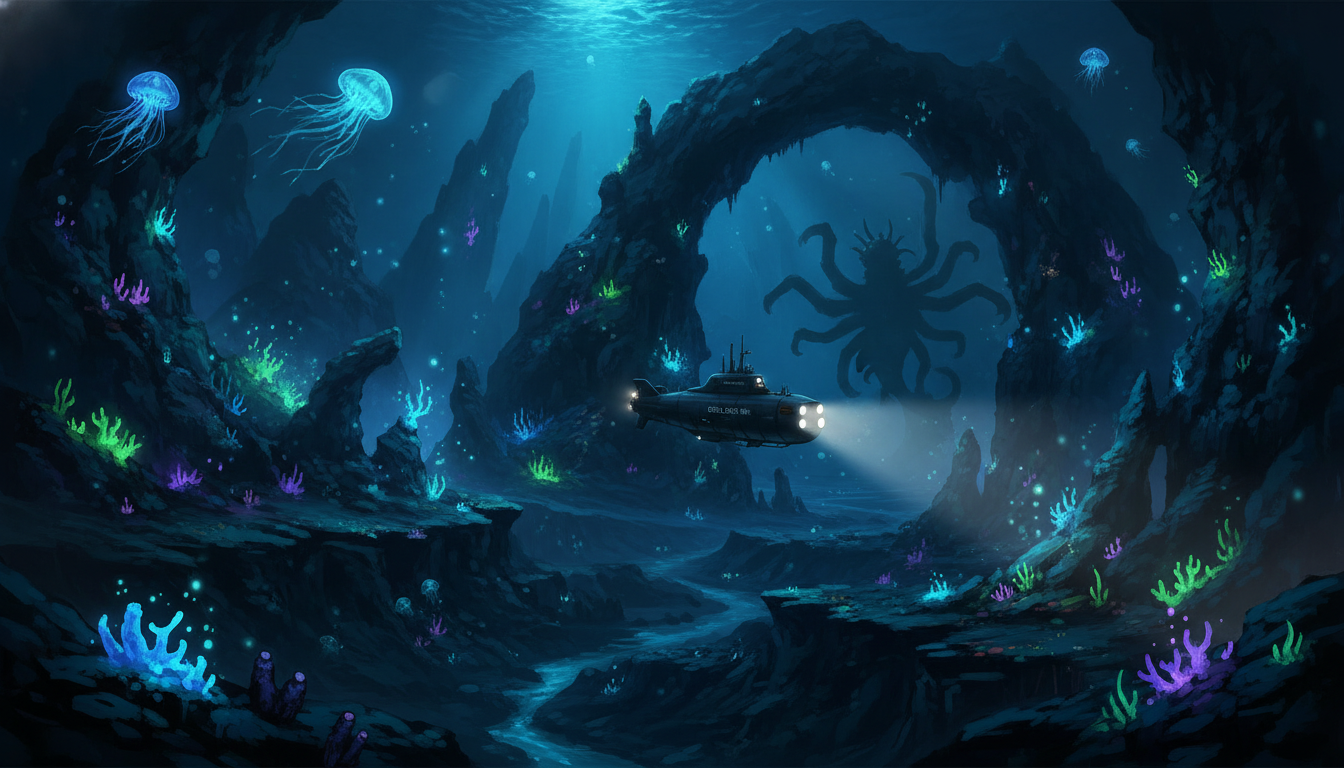
As of 2026, new species are still being discovered in the deep sea every year. Deep-sea mining proposals have reignited global conversations about protecting ecosystems we haven’t even fully catalogued yet. Technologies like autonomous underwater vehicles (AUVs) are mapping regions of the ocean floor that have never been seen by human eyes — and what they’re finding continues to challenge assumptions.
The ocean isn’t just a body of water. It’s the largest unexplored frontier on Earth, a geological record of billions of years of planetary history, and a living laboratory that keeps rewriting the rules of biology, physics, and evolution. It holds secrets that were hidden long before humans existed — and it will keep adding new ones long after we figure out the current batch.
So the next time you’re at the beach, staring out at the water and thinking it looks peaceful — just remember what’s underneath. The ocean is never just the ocean. It’s everything we haven’t found yet.
