

Imagine handing someone a gift wrapped in beautiful paper, only to be told the color you chose is basically a funeral invitation. Or picture yourself casually sticking your chopsticks upright in a bowl of rice at a dinner table and watching the entire room go silent. Japan is a country that has mastered the art of blending the ultra-modern with the deeply ancient, producing a culture so layered that even lifelong residents occasionally stumble into social landmines. To outsiders — especially anime fans who’ve absorbed Japanese culture through subtitles and fan wikis — some of these traditions look downright baffling. Why do people bow for ten seconds when a simple nod would do? Why does the number four send chills down people’s spines?
The truth is, none of these customs are random. Every ritual, superstition, and seasonal ceremony is a thread in a massive cultural tapestry that stretches back centuries, shaped by Shinto religion, Buddhist philosophy, feudal social structures, and the uniquely Japanese concept of wa — harmony. And here’s the fun part: anime, manga, and video games have been quietly teaching Western fans these traditions for decades without anyone realizing it. Every time Naruto bows respectfully to his sensei, every time a Demon Slayer character performs a formal greeting, or every time a Studio Ghibli film lingers on a New Year’s shrine visit, you’re watching real cultural DNA on screen.
So buckle up, because we’re diving deep into some of Japan’s most fascinating, misunderstood, and genuinely bizarre traditions — and explaining exactly why a nation of over 125 million people still follows them in 2026.
The Art of the Bow: Why Nodding Just Isn’t Enough
If you’ve watched more than three anime episodes in your life, you’ve seen it: characters bowing at angles that look almost mathematically precise. That’s because they basically are. In Japanese culture, bowing (ojigi) is a full communication system compressed into a physical gesture. The depth of a bow communicates your relationship to the other person, the level of respect required, and even the emotional weight of the moment.
A casual 15-degree nod works between friends or acquaintances. A 30-degree bow signals genuine respect, common in business settings. A 45-degree or deeper bow is reserved for sincere apologies or expressions of deep gratitude. Customer service workers in Japan are famously trained to bow at specific angles, and department store employees have been known to bow toward elevator doors closing on customers they can no longer see — pure habit from relentless training.
The reason this tradition persists isn’t stubbornness or formality for its own sake. It’s rooted in the concept of keigo — honorific language — and the broader cultural value of acknowledging another person’s full humanity and social position. In a society that has historically prioritized group harmony over individual expression, bowing is a form of social glue that keeps interactions smooth and respectful.
Omamori, Lucky Charms, and the Shinto Connection
Walk into virtually any Shinto shrine in Japan and you’ll find rows of colorful fabric pouches called omamori — protective charms. People buy them for health, love, safe travel, academic success, and even traffic safety. New ones are purchased regularly, and old ones are traditionally returned to the shrine to be ritually burned, because keeping an old charm is considered bad luck. It’s not hoarding; it’s a spiritual subscription service.
This practice is deeply tied to Shinto, Japan’s indigenous religion, which sees the world as populated by kami — spirits or gods present in nature, places, and objects. Shrines serve as homes for these kami, and omamori are essentially portable pieces of that spiritual protection. With roughly 80,000 Shinto shrines across Japan, this isn’t a niche practice — it’s embedded in daily life, even for people who don’t consider themselves particularly religious.
Anime has depicted this beautifully. In Noragami, the entire premise revolves around a minor god named Yato scraping together followers to avoid fading from existence — a very real reflection of how Shinto conceptualizes divine power as dependent on human belief and patronage.
The Number Four and Other Numerical Nightmares
Here’s a fun fact that changes how you look at Japanese elevator buttons forever: many buildings in Japan skip the floor labeled “4.” Why? Because the word for four (shi) sounds identical to the word for death (shi). Similarly, the number nine (ku) sounds like the word for suffering or agony. Together, 49 (shiku) can be read as “to suffer unto death” — which is why hospitals, hotels, and apartment buildings routinely omit these numbers from their room and floor labeling.
This phenomenon is called tetraphobia and is common across East Asian cultures, but Japan applies it with particular consistency. Gift-giving rules get affected too — giving four of anything is a serious faux pas, and sets of four are avoided in contexts where good fortune matters.
Seasonal Traditions That Still Run the Country’s Schedule
Japan runs on a seasonal ritual calendar that would make even the most organized planner feel inadequate. A few highlights:
- Hatsumode: The first shrine or temple visit of the New Year, typically in the first three days of January. Tens of millions of people participate, making it one of the largest annual gatherings on Earth.
- Hanami: Cherry blossom viewing parties held every spring, usually in late March or April depending on the year’s bloom forecast. Workplaces, friend groups, and families stake out spots under sakura trees for elaborate picnics.
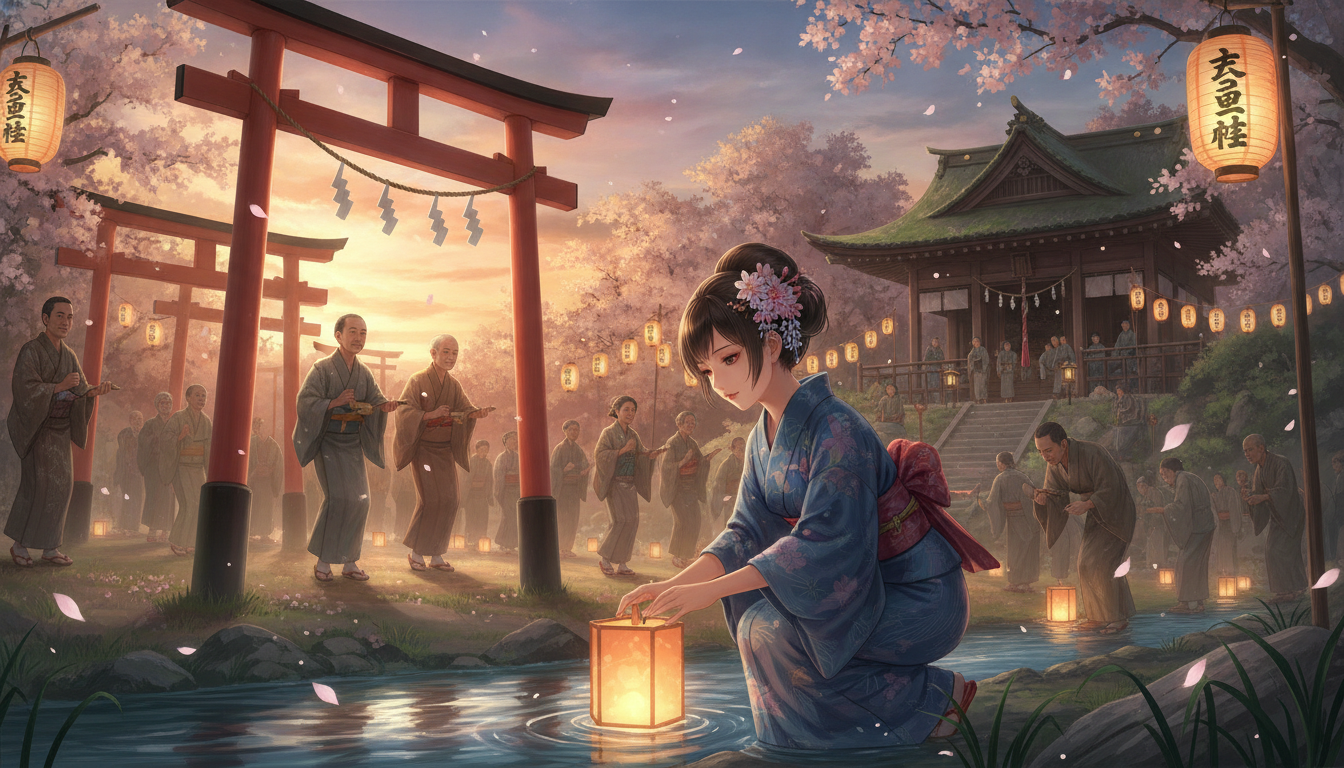
- Obon: A mid-August Buddhist observance honoring the spirits of ancestors, complete with traditional Bon Odori dances and the floating of lanterns on water.
- Setsubun: Held on February 3rd, this involves throwing roasted soybeans to drive out evil spirits and invite good luck — often while someone in the family wears an oni (demon) mask.
- Tanabata: The Star Festival, based on a myth about two star-crossed lovers (represented by the stars Vega and Altair) meeting once a year across the Milky Way. People write wishes on paper strips and hang them on bamboo branches.
These aren’t quirky tourist events — they structure the emotional and social rhythm of the year for millions of people, and many have been practiced in recognizable form for over a thousand years.
Gift-Giving Rules That Could Fill a Textbook
Japanese gift-giving (zouto) culture is so elaborate it deserves its own graduate course. There are specific gift-giving seasons (ochugen in summer, oseibo in winter), strict rules about presentation (the wrapping often matters as much as the gift itself), and a complex social obligation structure called giri that governs who owes a gift to whom and why.
White and black wrapping paper is typically avoided — those are funeral colors. Gifts are often not opened in front of the giver, to avoid any awkward display of disappointment or over-enthusiasm. And reciprocity is expected; receiving a gift without giving one back appropriately is a social debt that quietly accumulates.
If you’ve ever watched a slice-of-life anime like Fruits Basket and noticed how much emotional weight gets placed on a character receiving or giving something simple, you’re watching giri in action — the invisible web of social obligation that shapes relationships.
Weird, Wonderful, and Deeply Human
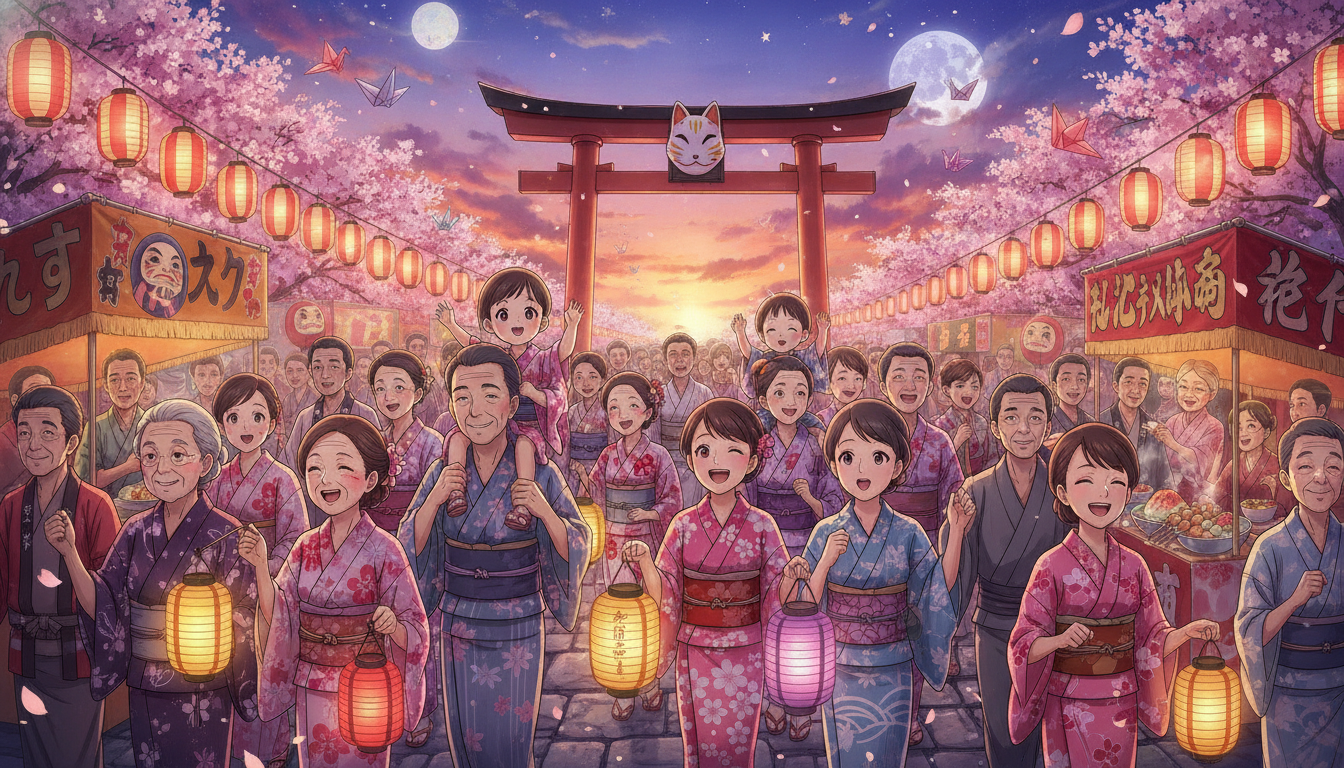
What makes Japanese traditions so fascinating to outsiders — and especially to anime fans who’ve absorbed them through years of storytelling — is that they’re not arbitrary weirdness. Every bowing angle, lucky charm, number superstition, and seasonal festival is a solution to a human problem: how do we live together in a densely populated, high-pressure society without constantly colliding? The answer Japan developed over centuries is a sophisticated system of visible respect, shared ritual, and communal meaning.
You can see why the anime studios that shaped every show you love return to these themes constantly — they’re rich storytelling material precisely because they carry so much real-world emotional weight. And if you want to keep exploring the stranger corners of the world that anime helps illuminate, stop sleeping on these underrated anime hidden gems that encode even more cultural depth into their stories.
Japan in 2026 is a country that launched reusable rockets, hosts cutting-edge robotics expos, and streams global entertainment — while also sending millions of people to throw soybeans at demons every February 3rd. That’s not contradiction. That’s culture. And honestly? It’s magnificent.
