

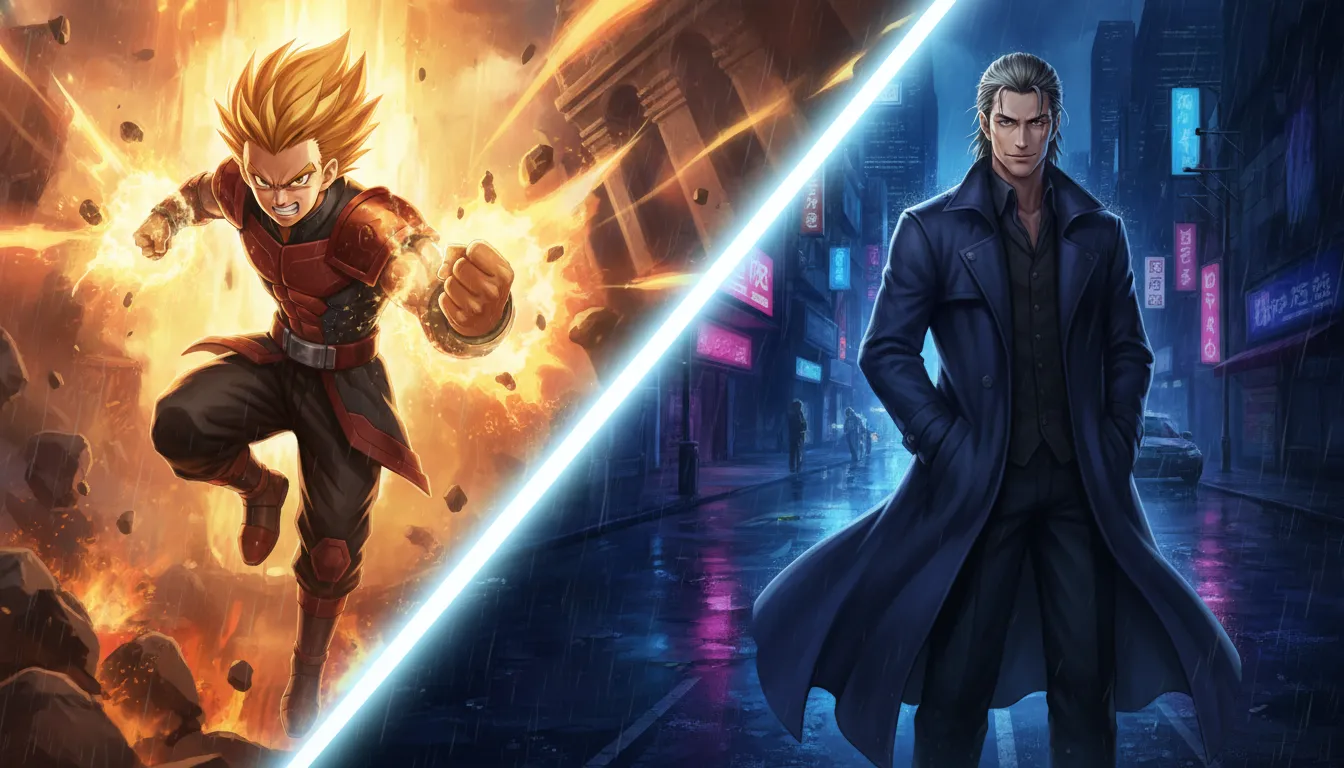
You’ve just finished Demon Slayer and absolutely loved it. A friend then slides over a copy of Berserk and says, “If you liked that, you’ll love this.” Two episodes in, your jaw is on the floor — but not in the same joyful way. Same swords, completely different energy. What just happened? You just crossed the line between shonen and seinen, two of the most important demographic labels in all of anime and manga. And yes, that difference matters more than most newcomers realize.
Here’s the thing: these labels aren’t just marketing jargon slapped on a box. In Japan, they reflect the actual magazine demographics that a series is published in, which shapes everything from tone and pacing to how dark the story is willing to go. Shonen literally means “young boy” in Japanese, while seinen means “young man” — but both have massive audiences across all genders and ages worldwide. In 2026, with anime more globally dominant than ever, understanding the difference between these two styles can genuinely save you from picking up a series that leaves you either bored or traumatized (in a bad way).
This isn’t about which one is “better.” It’s about which one is built for you, right now, at this point in your life. Let’s break it all down.
What Shonen Actually Means (Beyond “For Kids”)
The word shonen gets thrown around loosely, but technically it refers to manga and anime originally targeted at boys roughly between the ages of 12 and 18 and published in dedicated shonen magazines. The most famous of these is Weekly Shonen Jump, home to some of the biggest franchises on Earth: Dragon Ball, Naruto, One Piece, My Hero Academia, and Jujutsu Kaisen, among dozens of others.
What unifies shonen, more than age rating, is a set of core narrative values: friendship, perseverance, and the drive to become stronger. These are stories about people — usually young ones — who start small and grow into legends through sheer willpower and the bonds they form along the way. The emotional beats are often loud and earnest. Characters cry openly, scream the names of their special attacks, and give passionate speeches about never giving up.
That’s not a criticism. Done well, it’s genuinely moving. Few things in storytelling hit as hard as watching Naruto Uzumaki go from an ostracized orphan to the hero of his village across hundreds of episodes of growth. The emotional payoff is built on time, repetition, and investment.
What Seinen Actually Means (Beyond “Edgy Adult Anime”)
Seinen targets young adult men, generally 18 and up, through magazines like Young Magazine, Big Comic Spirits, and Monthly Comic @ Bunch. But again, the audience worldwide skews much broader. Seinen is defined less by a single emotional template and more by a willingness to explore complexity, moral ambiguity, and consequences without softening the edges.
Think of Berserk — Kentaro Miura’s dark fantasy epic featuring protagonist Guts, a soldier forged in violence who wages a relentless war against demonic forces in a brutal medieval world. Or Vinland Saga, which begins as a revenge story and evolves into a deep meditation on pacifism, trauma, and what it means to live a life free of violence. Or Monster, Naoki Urasawa’s psychological thriller about a doctor who saves a child’s life only to discover that child grows into a serial killer.
These series ask harder questions, sit with uncomfortable answers, and trust the audience to handle unresolved endings, moral gray zones, and deeply flawed protagonists. The pacing is often slower and more deliberate. That’s the trade: less hype, more weight.
Key Differences at a Glance
| Feature | Shonen | Seinen |
|---|---|---|
| Target Demographic | Teens (roughly 12–18) | Young adults (18+) |
| Core Themes | Growth, friendship, perseverance | Complexity, consequence, ambiguity |
| Pacing | Fast, hype-driven | Slower, more deliberate |
| Violence/Tone | Present but often stylized | Can be graphic and unflinching |
| Famous Examples | Naruto, One Piece, Demon Slayer | Berserk, Vinland Saga, Mushishi |
| Emotional Style | Loud, earnest, declarative | Subtle, introspective, layered |
When Shonen Is Absolutely the Right Call
Don’t let anyone tell you shonen is somehow lesser because it’s built for younger audiences. The best shonen series are towering achievements of long-form storytelling. One Piece, still ongoing in 2026 after more than 25 years, has built one of the most detailed fictional worlds ever created. Jujutsu Kaisen delivers fight choreography that rivals anything in animation history.
Shonen is the right choice when you want:
- High-energy battles with clear stakes and satisfying resolutions
- Character journeys you can cheer for out loud
- A sense of escalating power where every arc raises the ceiling
- Emotional accessibility — the story tells you how to feel and makes you feel it
- Stories that reward long-term commitment with epic payoffs
If you’ve ever wondered whether any of those characters could actually rival the most powerful figures in anime, Can Any Anime Character Actually Beat Goku? Yes. is a great rabbit hole to fall into after this.
When Seinen Is Exactly What You Need
There comes a point for many anime fans where they want something that doesn’t reassure them — something that challenges them. Seinen is built for that moment.
Seinen is the right choice when you want:
- Moral complexity where the protagonist isn’t always right
- Realistic consequences — characters don’t just bounce back from trauma
- Slower world-building that rewards patient viewers
- Stories that explore philosophy, politics, or psychology with genuine depth
- Endings that don’t tie everything in a bow — sometimes that’s more honest
Fair warning: seinen can break your heart in ways that linger. If you want to know just how deep anime grief can go, check out these anime deaths that hit so hard fans never recovered. Many of the heaviest entries on that list come from seinen titles.
The Crossover Zone: Series That Blur the Line
Here’s where it gets fun. Some series feel like they shouldn’t fit neatly into either category — and they don’t, entirely.
Attack on Titan ran in Bessatsu Shonen Magazine (shonen), but its tone, themes, and willingness to kill beloved characters give it a distinctly seinen feel. Fullmetal Alchemist: Brotherhood is shonen but explores war, genocide, and sacrifice at a depth that surprises newcomers. Meanwhile, Mushishi is seinen but so gentle and meditative it would confuse anyone expecting graphic content.
The label tells you where to start looking. The content tells you if it’s a match.
So Which One Is Actually for You?
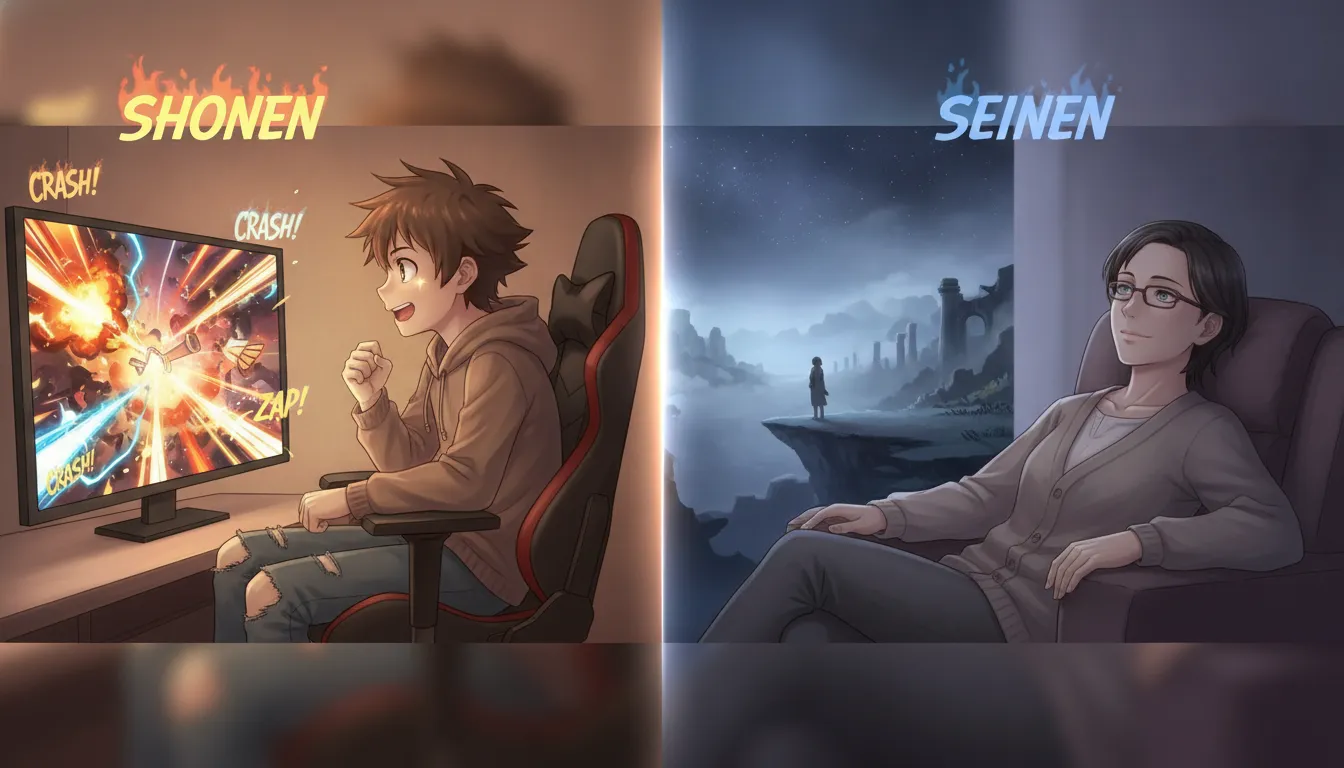
Ultimately, the shonen vs. seinen question isn’t about maturity or sophistication — it’s about what kind of emotional experience you’re looking for right now. Some weeks you want Tanjiro Kamado (the earnest hero of Demon Slayer) crying and fighting for his family. Other times you want Guts from Berserk dragging himself through a world that has given him every reason to quit.
The best anime fans move freely between both. Start with what sounds exciting, follow the story wherever it goes, and don’t let a demographic label talk you out of something great. The catalog in 2026 is deeper and more accessible than it has ever been — there’s never been a better time to explore both sides of the shelf.
