

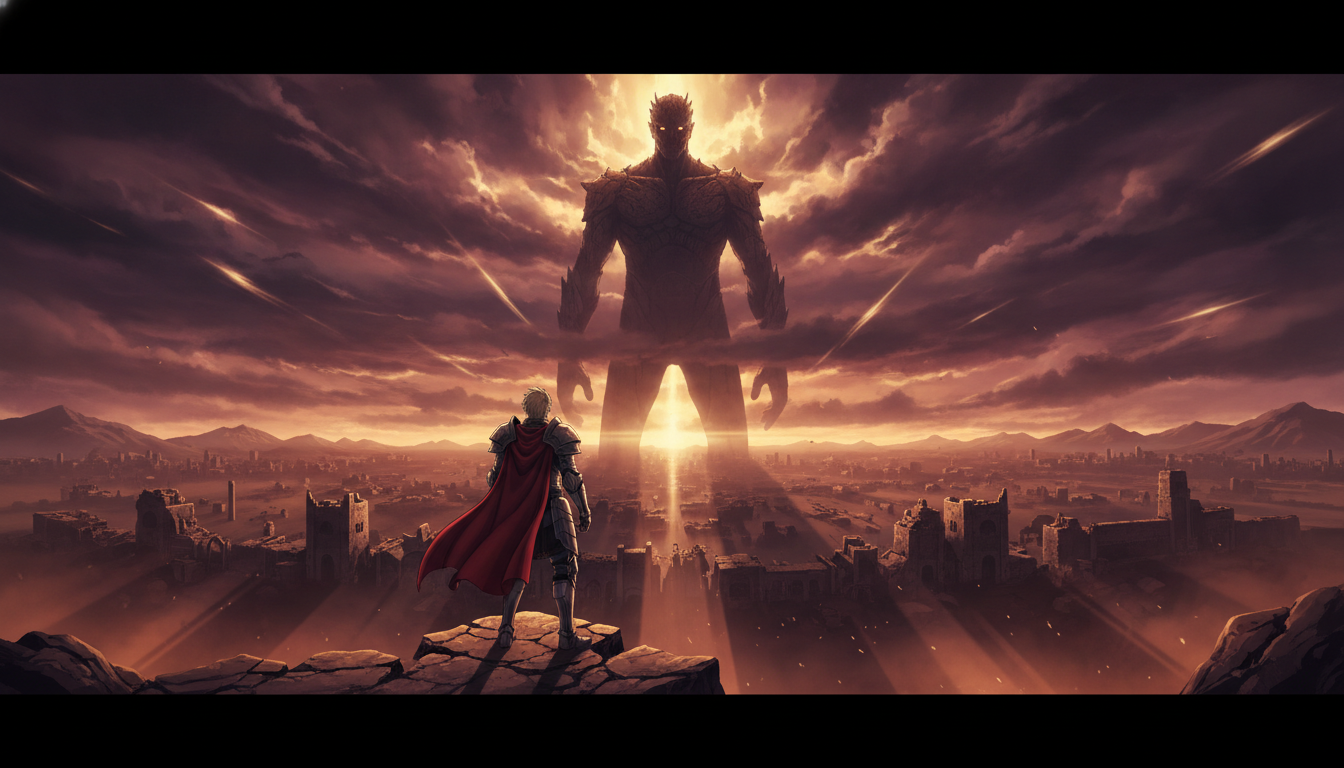
Few anime endings have fractured a fandom quite like Attack on Titan‘s. When the manga concluded in 2021 and the anime’s final chapter aired as part of The Final Season Part 3 in November 2023, millions of fans sat in stunned silence — some in awe, some in tears, and more than a few in outright fury. Hajime Isayama spent over a decade building one of the most complex, morally ambiguous stories in anime history, and when he finally pulled back the curtain on Eren Yeager’s true plan, the internet collectively lost its mind. Love it or hate it, the ending of Attack on Titan is impossible to ignore.
What makes this finale so divisive isn’t incompetence — it’s ambition. Isayama wasn’t trying to deliver a clean, feel-good resolution. He was asking his audience to sit with something deeply uncomfortable: the idea that the protagonist we cheered for, cried with, and believed in had become a mass murderer on an almost incomprehensible scale. The Rumbling — Eren’s decision to unleash millions of Wall Titans to flatten most of humanity outside Paradis Island — is not a plot twist you just shake off. It’s a gut punch wrapped in philosophy, and understanding it changes how you see every single episode that came before it.
Whether you’re a longtime fan finally making sense of the finale or a newcomer who just binge-watched the whole series and is desperately Googling explanations, this breakdown is for you. Let’s unpack what actually happened, why Eren did it, and why the ending truly does change everything.
What Is the Rumbling and Why Did Eren Start It?
To understand the ending, you need to understand the Rumbling. Beneath the massive walls that protected Paradis Island, millions of Colossal Titans lay dormant — a weapon of terrifying deterrence passed down through the royal family. Eren, after acquiring the War Hammer Titan and combining it with the Founding Titan’s power (which he accessed through royal-blooded Zeke), unlocked the ability to actually use this weapon.
His stated goal: eliminate all life outside Paradis to protect his people from a world that hated them for existing. On the surface, it reads as genocide. And it is. But Isayama layered this choice with painful logic — the world of Attack on Titan had spent centuries persecuting Eldians (the people capable of becoming Titans), and the nations outside Paradis were actively preparing to wipe Paradis off the map. Eren saw no diplomatic solution. He saw only annihilation or pre-emptive annihilation.
Eren’s True Motivation — Was He Ever Really the Hero?
This is where Attack on Titan becomes genuinely brilliant and genuinely troubling in equal measure. In the final arc, we learn through Armin’s conversation with Eren in Paths — the spiritual realm connecting all Titans — that Eren didn’t actually want to do this. He wept. He told Armin he didn’t want to die. He knew he was choosing to become the villain of the world’s story so that his friends could be the heroes who stop him.
Eren had seen the future through his Titan powers. He knew exactly how things would unfold: the Rumbling, his friends betraying him, his own death at Mikasa’s hands. And he walked into it anyway — partly to protect Paradis, partly because the future felt inescapable, and partly because of something far darker: his own rage and grief at a world that had never given his people a chance.
The result is a protagonist who defies easy categorization:
- Freedom fighter to some Paradis citizens
- War criminal to the rest of the world
- A broken boy who grew up surrounded by death and never truly healed
- A tragic figure who saw the future and chose suffering over hope
This is not a hero’s journey. It’s something far messier, and that’s exactly the point.
Mikasa’s Choice and the Series’ Most Heartbreaking Moment
If Eren’s plan is the intellectual gut punch, Mikasa Ackerman delivering the killing blow is the emotional one. Mikasa, who has dedicated her entire life to protecting Eren, is ultimately the person who ends him — severing his head from the Founding Titan’s body while whispering her goodbye.
It’s devastating on multiple levels. Their relationship, complicated and deeply codependent throughout the series, never becomes the romance some fans hoped for. Instead, it ends in sacrifice. Mikasa kills the person she loves most to save what remains of humanity. The final scene — set years later, showing Mikasa visiting Eren’s grave beneath the tree he loved as a child — is quiet, mournful, and deliberately unresolved.
Isayama reportedly considered multiple endings. The one he chose prioritizes grief over triumph. There is no real victory here, just survival.
The Aftermath: Did the Rumbling Actually Accomplish Anything?
This is the question the fandom still argues about in 2026. Eren’s Rumbling killed an estimated 80% of humanity outside Paradis. His friends managed to stop him before total extinction, but the damage was catastrophic. In the epilogue:
- Paradis survives initially, but a post-credits sequence suggests war eventually comes anyway
- Armin and other survivors work as diplomats trying to build peace
- Mikasa lives out her days in a village among the Hizuru people
- A time skip shows Paradis facing conflict from the outside world once again — implying Eren’s sacrifice delayed destruction rather than prevented it
That final implication is the cruelest twist of all. Eren killed 80% of the world and it still wasn’t enough to permanently protect his people. Or maybe Isayama is saying it was never about guaranteed outcomes — it was about a boy so consumed by trauma and love that he could only express it through destruction.
Why the Ending Polarized the Fandom So Completely
The reaction to the Attack on Titan finale split fandom opinion sharply, and it’s worth understanding why both sides have legitimate points.
Critics of the ending argue:
- Eren’s characterization felt inconsistent with earlier seasons
- The time skip and pacing in the final arc left important moments underdeveloped
- The epilogue’s implication that war returns anyway undermines any thematic payoff
Defenders of the ending argue:
- The tragedy is the point — Isayama was never writing a story with a clean moral
- Eren’s shift is foreshadowed throughout the series for those paying close attention
- The ambiguity is a feature, not a bug, forcing viewers to reach their own conclusions
What’s undeniable is that the Attack on Titan anime, produced by MAPPA for its final seasons (with Wit Studio handling Seasons 1–3), delivered the finale with stunning visual craft. The Rumbling sequences are among the most harrowing animation ever put to screen.
If you love anime that pushes emotional and thematic boundaries, you might also enjoy exploring these anime openings that hit different — and why they’re considered GOAT, because Attack on Titan‘s “Guren no Yumiya” and “Shingeki no Kyojin” are prime examples of music that tells a story before a single frame of plot arrives.
The Philosophical Core: Freedom, Fate, and the Cycle of Violence
Strip away the Titans and the politics and what Attack on Titan is really about is devastatingly simple: can cycles of hatred ever be broken?
Isayama’s answer, offered through the bleakest possible lens, seems to be: not easily, and not without enormous cost — and maybe not at all if people are acting from fear and trauma rather than understanding. Eren is the product of a world built on generational violence. His solution is more violence. His friends try to break the cycle through diplomacy, but the epilogue suggests the world keeps turning the same way regardless.
It’s heavy. It’s also why Attack on Titan stands apart from most shonen anime. This wasn’t a story about getting stronger and protecting your friends. It was a story about what happens when good intentions collide with impossible circumstances — and lose.
Why Rewatching the Series Hits Completely Differently Now
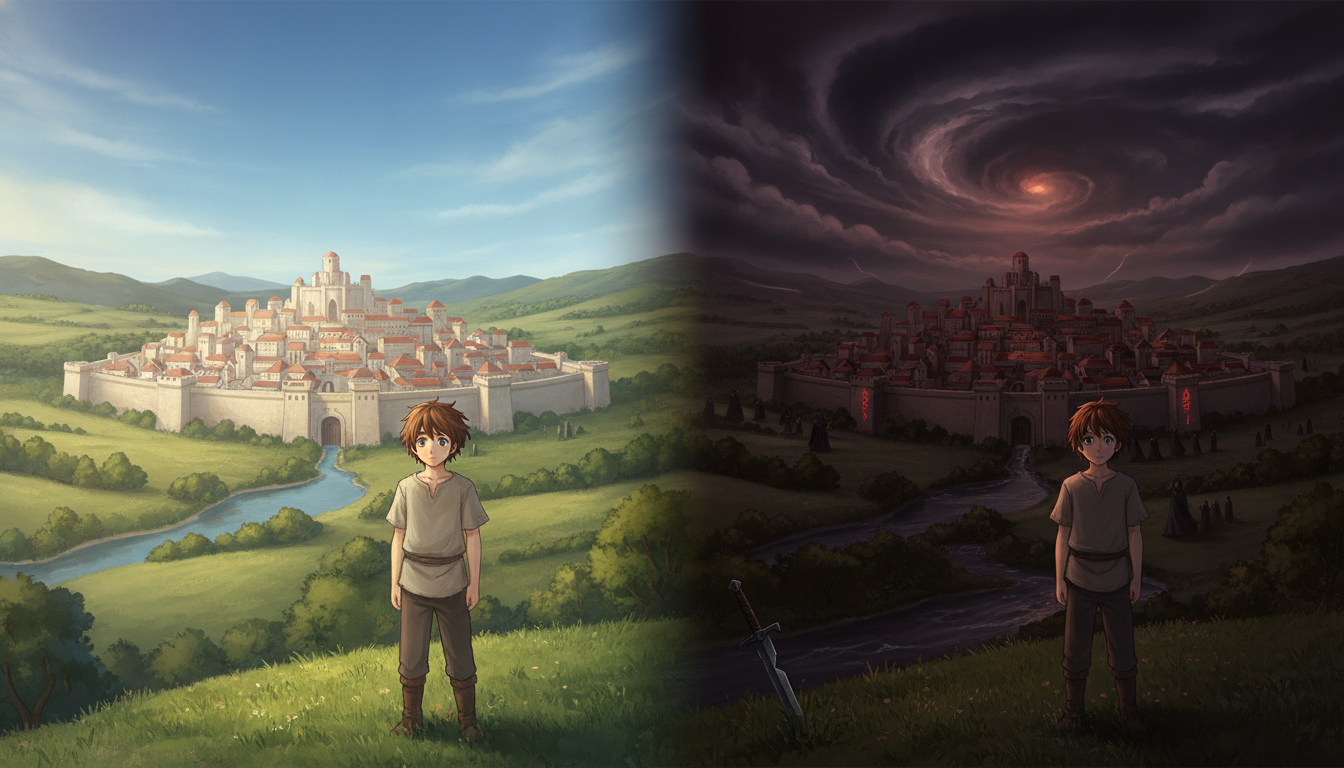
One of the most remarkable things about the Attack on Titan ending is what it does retroactively to the whole series. Season 1’s wide-eyed Eren screaming about killing all the Titans? He becomes one. The hope and camaraderie of the Survey Corps? It ends with former friends pointing blades at each other. Every moment of warmth becomes tinged with dramatic irony.
This is the “changes everything” part of the title — and it’s not hyperbole. Anime movies and series that stick with you often do so because they reframe everything you’ve seen. Attack on Titan does this across 87 episodes.
The ending of Attack on Titan isn’t perfect. It’s messy, painful, and deliberately refuses to comfort you. But it is intentional — and in a medium that often plays it safe, that kind of creative courage deserves to be recognized. Eren Yeager doesn’t get a redemption arc. The world doesn’t heal cleanly. And somehow, that honesty is exactly what makes the story impossible to forget.
