

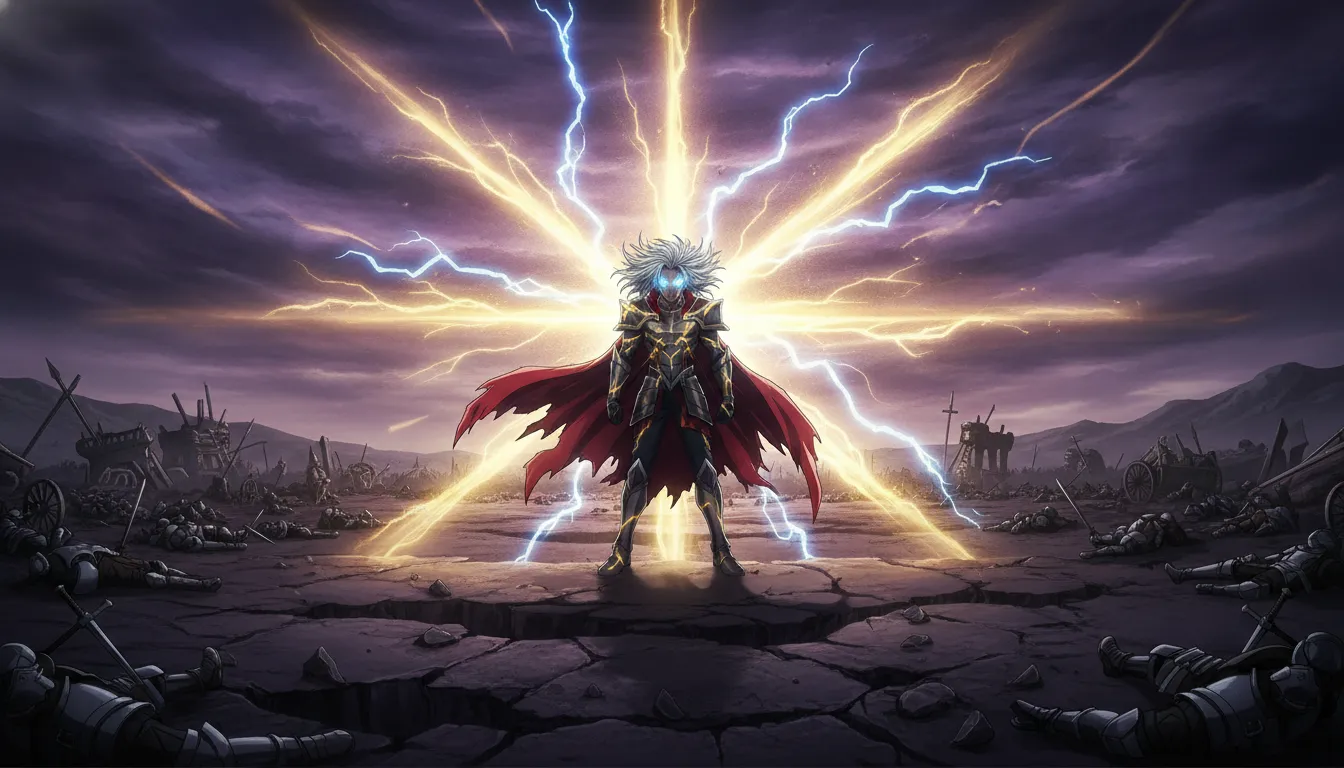
There’s something almost primal about watching a character who simply cannot lose. You know the outcome before the fight even starts, the tension is technically zero, and yet — you’re on the edge of your seat, snack forgotten, screen brightness too high at 2 a.m. It makes no logical sense. Conventional storytelling wisdom says conflict requires genuine stakes, that the hero must risk something for us to care. And yet, the overpowered anime protagonist — the “OP MC” as fans lovingly call them — has become one of the most beloved and binge-worthy archetypes in modern anime. Season after season, these characters dominate streaming charts, break merchandise records, and spark endless debates in comment sections worldwide.
So what’s actually going on here? Why does watching Saitama one-punch his way through monsters feel more satisfying than a tightly contested battle? Why does Ainz Ooal Gown’s cold, calculated dominance in Overlord feel compelling even when his victory is guaranteed from the moment he raises a skeletal hand? The answer lies somewhere between psychology, masterful writing, and the very specific pleasure of watching someone be unreasonably, gloriously good at what they do. It’s wish fulfillment, yes — but it’s also so much more than that.
The Psychology Behind Watching Invincible Heroes
Human beings are wired to enjoy competence. There’s a reason cooking videos of skilled chefs, satisfying factory assembly lines, and sports highlight reels rack up billions of views. Cognitive scientists refer to this as the “flow state” response — we experience a secondhand version of ease and mastery when we observe someone performing at an elite level. Anime OP MCs are essentially a supercharged version of this phenomenon, compressed into dramatic, beautifully animated form.
When we watch a character like Rimuru Tempest from That Time I Got Reincarnated as a Slime, we’re not just watching fights. We’re watching someone navigate an entirely new world, absorb challenges, build alliances, and grow an empire — all with an almost unfair level of ability. The wish fulfillment angle is obvious, but there’s also a layer of vicarious mastery at play. We project ourselves onto these characters not because we want to be invincible, but because we want to feel capable — to face a world that often feels chaotic and overwhelming and simply handle it.
What Separates a Great OP MC from a Boring One
Not all overpowered protagonists are created equal. The worst versions of the archetype are flat power fantasies where nothing matters and no one interesting exists around the hero. The great ones? They’re built on contrast, irony, and emotional depth.
Take Saitama from One Punch Man, the manga series created by ONE that began as a webcomic in 2009 and received its iconic anime adaptation from Madhouse in 2015. Saitama is overpowered to the point of existential crisis — he’s too strong, and the series uses that as the actual emotional core of the story. He can’t feel excitement anymore. He’s bored. His overwhelming power is played as a form of loneliness and loss, which makes him one of the most genuinely empathetic protagonists in anime history despite (or because of) his absurd strength.
Contrast that with Ainz Ooal Gown from Overlord, the light novel series written by Kugane Maruyama that received its anime adaptation starting in 2015. Ainz is a former office worker who becomes the most powerful undead sorcerer in a video game world that turned real. What makes him compelling isn’t just his power — it’s the comedic gap between his terrifying, god-like exterior and his deeply relatable, anxious, trying-his-best interior. His subordinates think he’s a genius mastermind. He’s mostly improvising. That tension is endlessly entertaining.
The Isekai Effect: A Perfect Vehicle for OP Protagonists
The isekai genre — stories where a character is transported to another world, usually a fantasy realm — has become the natural home of the overpowered MC. It’s easy to see why. An isekai setting gives writers a blank canvas. The protagonist arrives with no history in this new world, which means their power can be established quickly, their growth can be dramatic, and the world’s reaction to them becomes part of the spectacle.
Series like Sword Art Online, Re:Zero, No Game No Life, The Rising of the Shield Hero, and Mushoku Tensei: Jobless Reincarnation have all captured massive audiences by playing with OP power dynamics in different ways. Some, like No Game No Life (adapted by Madhouse in 2014), lean fully into the fantasy — sibling duo Sora and Shiro are unbeatable strategists who treat every conflict as a game they’ve already won. Others, like Re:Zero (White Fox, 2016), subvert it entirely — Subaru appears to have a powerful ability but suffers enormously for it, making his “power” feel more like a curse.
The isekai explosion has been so significant that it now has its own subgenres, parodies, and meta-commentary series. If you’re curious about just how strange and boundary-pushing storytelling can get, The Universe Is Weirder Than Any Anime You’ve Watched gives some mind-bending perspective on reality that makes even isekai worlds seem tame.
The Art of Making Power Visually Irresistible
A huge part of why OP MCs are impossible to stop watching comes down to animation craft. When a character is powerful beyond measure, the animators are given permission to go completely wild. The budget, the keyframes, the effects — they all get poured into sequences that are designed to make your jaw drop.
Studio MAPPA’s work on Jujutsu Kaisen is a masterclass in this. Gojo Satoru, who is canonically established as the strongest sorcerer in the series, gets animation sequences that feel less like fight scenes and more like visual art installations. The Infinity ability — his technique that renders him essentially untouchable — is animated with an almost casual elegance that communicates power more effectively than any amount of shouting or power-up sequences.
Similarly, the adaptation of Mob Psycho 100 (originally animated by Bones in 2016) gives its protagonist Shigeo “Mob” Kageyama, an incredibly powerful esper, moments of release that are animated with deliberate, almost jarring intensity — specifically because most of the series is spent watching him suppress that power. When the dam breaks, the animation earns the spectacle.
Fan Favorites and Iconic OP MCs Worth Knowing
For newcomers trying to navigate the landscape, here’s a quick rundown of some of the most celebrated overpowered protagonists in anime:
- Saitama (One Punch Man) — defeats any enemy with a single punch; the existential hero
- Rimuru Tempest (That Time I Got Reincarnated as a Slime) — absorbs abilities from anything he eats; king of chill domination
- Ainz Ooal Gown (Overlord) — undead sorcerer ruler of an entire guild fortress; secretly anxious underneath the skeletal calm
- Gojo Satoru (Jujutsu Kaisen) — strongest jujutsu sorcerer alive; style and power in equal measure
- Anos Voldigoad (The Misfit of Demon King Academy) — reincarnated Demon King who treats every threat as a minor inconvenience
- Naofumi Iwatani (The Rising of the Shield Hero) — starts weak and wronged, earns his power through grinding resilience
- Mob (Mob Psycho 100) — one of the most emotionally nuanced OP characters in the medium
For a deeper ranking and breakdown of the absolute apex of anime power, Beyond Gods: The Strongest Anime Characters of All Time is an essential read.
Why the Genre Keeps Evolving and Growing Stronger
It would be easy to dismiss OP MC anime as a tired trend, but the genre has shown remarkable resilience precisely because the best creators keep finding new angles. By 2026, the market for isekai and power-fantasy anime shows no signs of slowing — if anything, the competition has pushed studios to invest more heavily in production quality and narrative sophistication to stand out.
What we’re seeing now is a maturation of the genre. Newer series are increasingly interested in the cost of power, the loneliness of being unrivaled, and the philosophical weight of having no equal. The question has shifted from “how powerful is this character?” to “what does this character do with that power, and how does it shape them?” That’s a genuinely interesting literary question dressed up in spectacular animation — and that combination is nearly impossible to resist.
The Verdict: Power Fantasy Done Right Is Just Great Storytelling
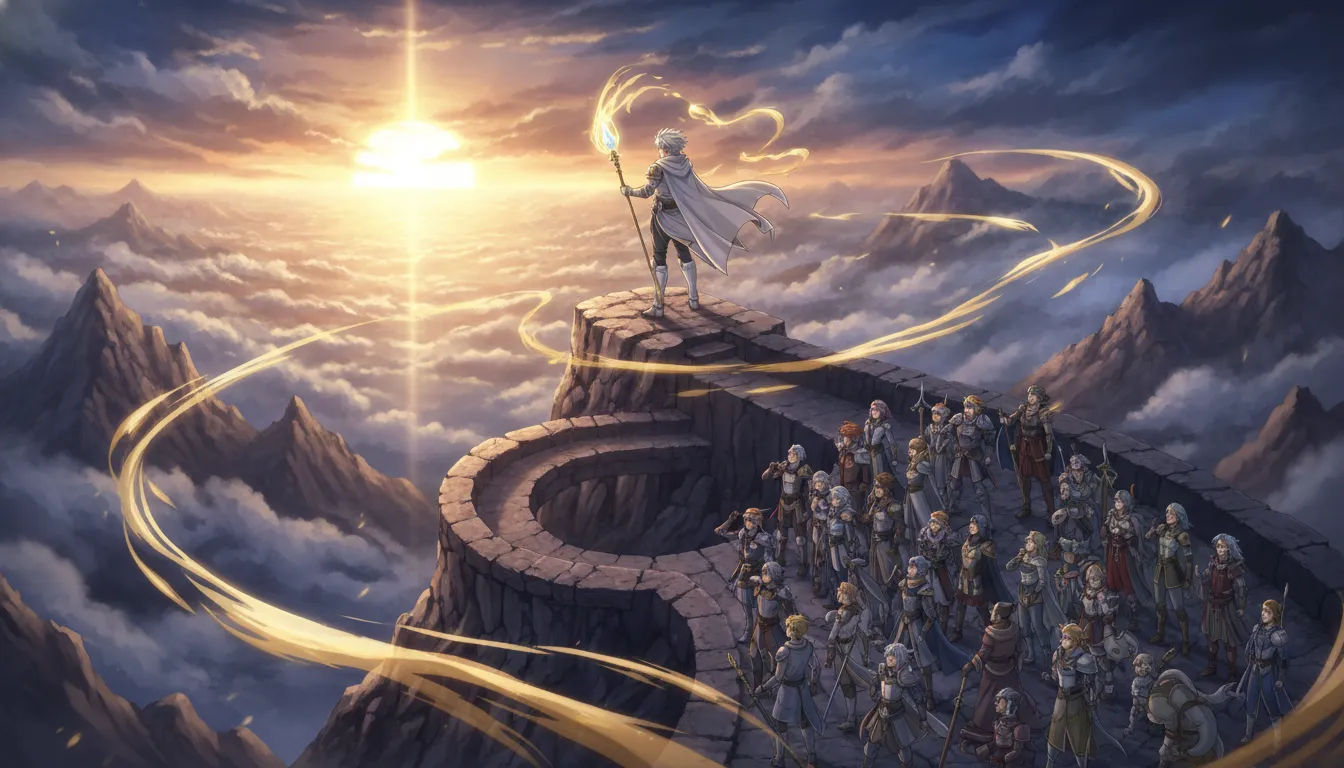
At its core, the appeal of the overpowered anime protagonist isn’t about escapism alone — it’s about the enduring human desire to see someone matter, to watch agency and capability change a world. When a great writer pairs that fantasy with real emotional stakes, genuine humor, or thematic depth, the result transcends genre. Saitama isn’t just a punchline with godlike fists. Rimuru isn’t just a slime who wins everything. They’re characters who make us feel something — and that’s the oldest trick in storytelling.
So the next time someone raises an eyebrow at your fifth consecutive episode of an OP MC obliterating everything in their path, you can explain confidently: you’re not just watching power fantasies. You’re watching some of the most creatively rich character studies in contemporary animation. You’re just also watching them punch really, really hard.
