
When Magic Becomes More Than a Power System
There’s a certain kind of anime that doesn’t just entertain you — it changes how you see the medium. Witch Hat Atelier is exactly that kind of series. Based on Kamome Shirahama’s manga serialized in Monthly Morning since 2016, this story follows Coco, a young girl who dreams of becoming a witch in a world where magic is a closely guarded secret passed down through bloodlines. When she accidentally uses a forbidden spell and turns her mother to stone, she’s taken in by the eccentric mage Qifrey and his apprentices, setting her on a desperate journey to undo her mistake — and to understand the true nature of magic itself.
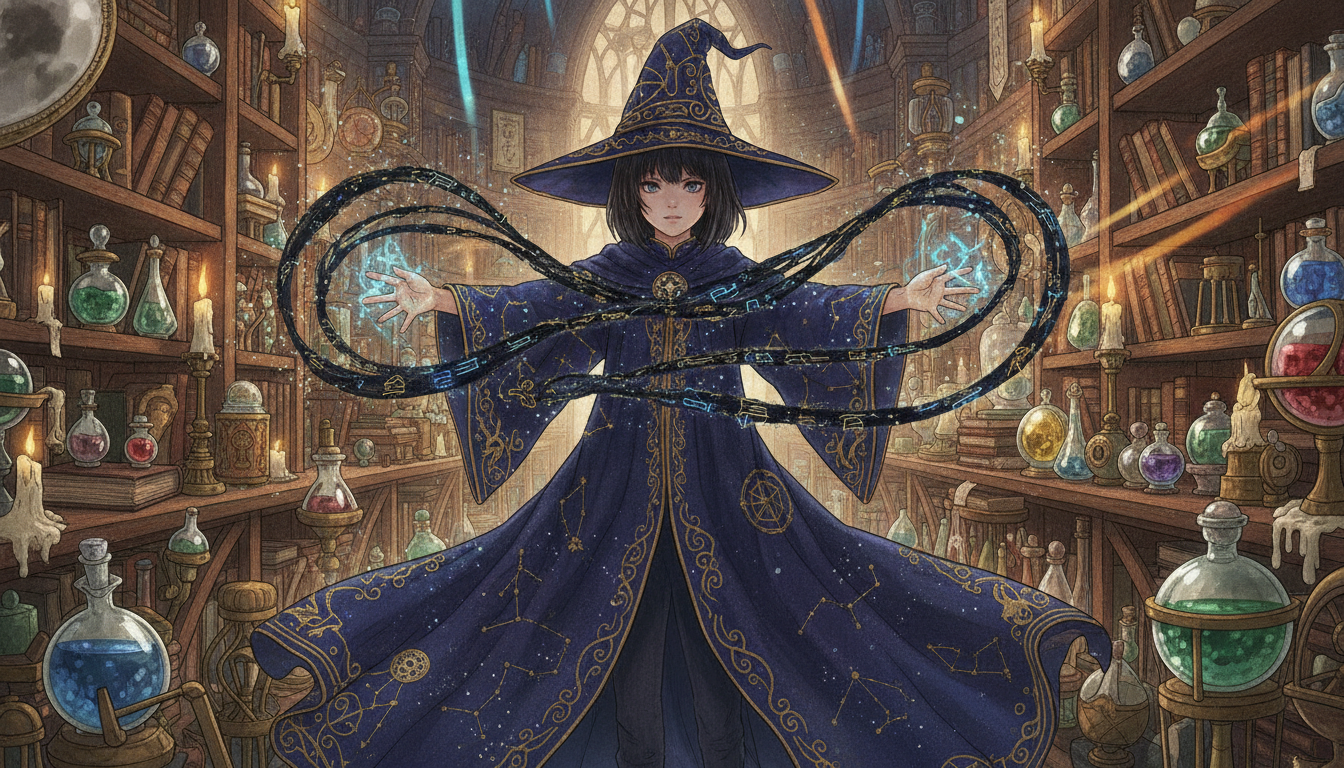
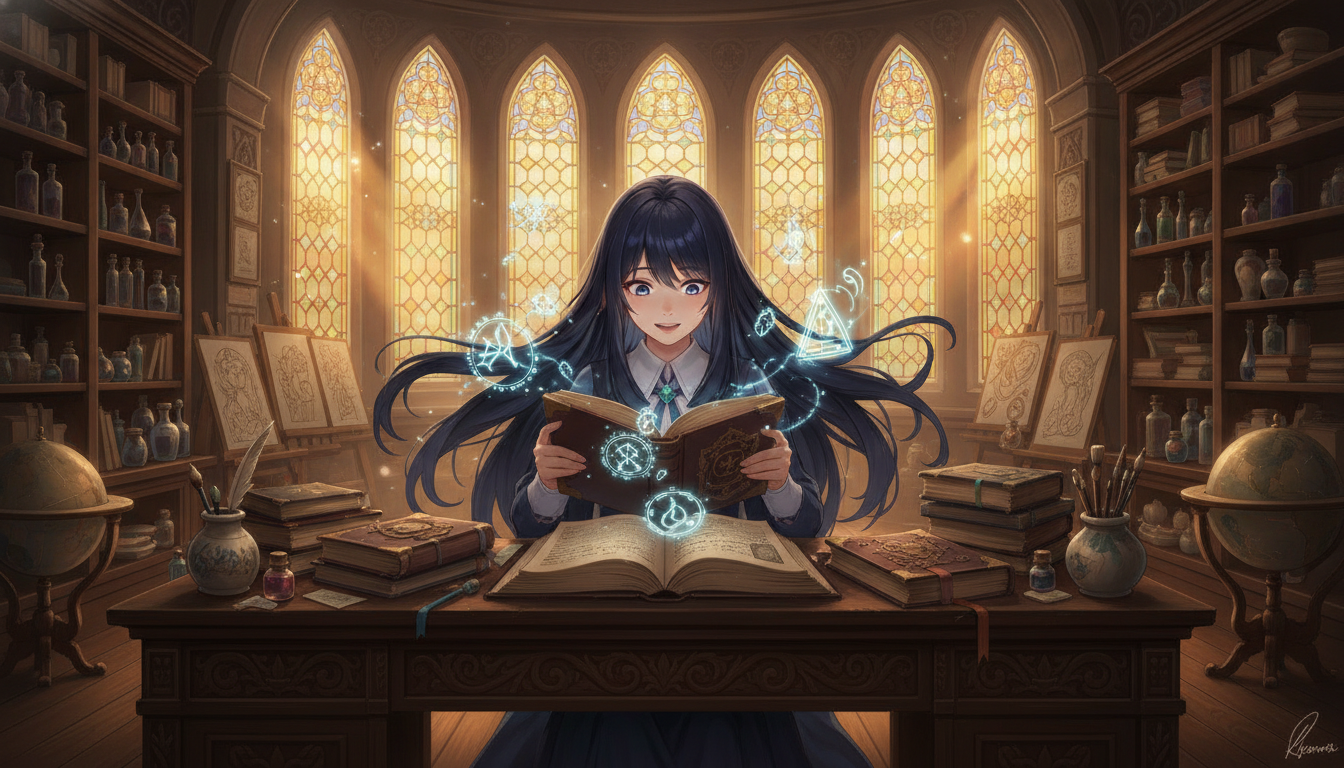
What makes Witch Hat Atelier remarkable is that it treats magic not as a battle mechanic or a shortcut to spectacle, but as a craft. In this world, witches draw intricate glyphs called “sigils” to cast spells. Every line matters. Every proportion counts. It’s essentially a story about the discipline of artistry disguised as a fantasy adventure, and that thematic core resonates in a way that most shonen power systems simply don’t. It’s the kind of concept that sounds simple until you realize how meticulously it’s been constructed.
The anime adaptation, produced by Production I.G and animated by Ajia-Do Animation Works, arrived in 2024 to immediate critical acclaim. By 2026, Witch Hat Atelier has settled firmly into the conversation about what prestige fantasy anime looks like in the modern era — and the argument it makes is impossible to ignore.
The Visual Philosophy Behind the Magic
Why Hand-Drawn Detail Still Matters in 2026
One of the first things you notice about the Witch Hat Atelier anime is how thoughtfully it translates Shirahama’s art. The manga is already legendary among artists and readers for its extraordinary linework — Shirahama draws every page with a level of detail that rivals European illustration. The costumes alone, with their layered fabrics, embroidered hems, and structured silhouettes, look like they belong in a fashion museum.
The anime preserves this spirit through deliberate animation choices. Rather than trying to replicate every pen stroke (an impossible task at scale), the production leans into fluid motion during spell-casting sequences while keeping quieter scenes feeling almost like moving illustrations. The color palette is deliberately warm and textured, avoiding the flat digital look that plagues lower-budget productions. This is animation that respects its source material without being enslaved by it.
For viewers who care about animation as an art form — and in 2026, that audience is larger than ever — this kind of intentionality signals something important. Witch Hat Atelier isn’t trying to be a spectacle machine. It’s trying to be beautiful on purpose.
Coco and the Magic of a Genuinely Good Protagonist
A Heroine Defined by Curiosity, Not Combat
Coco is not your typical anime protagonist. She doesn’t have a hidden power waiting to explode. She doesn’t have a rivalry that fuels her development. What she has is curiosity — a relentless, almost dangerous need to understand how things work. In the world of the series, that curiosity is literally what gets her into trouble, and it’s also what makes her uniquely suited to uncover magic’s deepest secrets.
This is a refreshing change in an era crowded with isekai heroes who are overpowered by design (think the countless Reincarnated as a Slime-adjacent stories). Coco earns every bit of her progress. She practices. She fails. She asks questions that nobody else thinks to ask. Watching her grow from a terrified girl who accidentally destroyed her mother’s body to a thoughtful apprentice who challenges the assumptions of her world is genuinely satisfying character writing.
Her relationships with her fellow apprentices — Agott, Richeh, and Tetia — add texture and warmth. Each girl has her own approach to magic, her own insecurities, and her own reasons for being in Qifrey’s atelier. The ensemble dynamic never feels like filler; it feels like a real community forming in real time.
The Lore Is the Story
A World Built on Secrets Worth Keeping
Witch Hat Atelier does something rare: its worldbuilding is genuinely mysterious in a satisfying way. The central mystery — why is magic forbidden to those not born into witching families? What are the “Brimmed Caps,” the shadowy faction that enforces these rules? — isn’t just a plot device. It’s a meditation on who gets to hold knowledge and why.
This gives the series an intellectual edge that elevates it beyond a simple coming-of-age story. When Coco starts questioning why certain spells are forbidden, she’s not just being rebellious — she’s exposing how power structures justify their own preservation. For a fantasy manga aimed at a general audience, that’s sophisticated territory.
Here are a few things that make the lore particularly compelling:
- Magic as writing: Spells are literal inscriptions. The act of creating magic is the act of communication, which makes literacy and education central themes.
- The forbidden magic problem: Some spells are banned not because they’re evil in nature, but because they were deemed too dangerous by those in power — a distinction the series refuses to let you forget.
- Qifrey’s secret: The mentor figure is hiding something significant, and the slow unraveling of his past is one of the series’ most effective long-form narrative threads.
- The Brimmed Caps: Unlike most fantasy antagonists, they’re not cartoonishly evil. They believe they’re protecting the world, which makes them unsettling in a more realistic way.
If you enjoy stories where the mythology rewards close attention — the way that, say, the Fate series rewards viewers who dig into its source material — Witch Hat Atelier will absolutely scratch that itch.
How It Compares to the Current Golden Age of Fantasy Anime
Sitting Alongside Frieren, Delicious in Dungeon, and More
By 2026, we’re living in what feels like a genuine golden age for thoughtful fantasy anime. Frieren: Beyond Journey’s End redefined the post-adventure story. Delicious in Dungeon turned dungeon-crawling into a love letter to food and ecology. Witch Hat Atelier belongs in that company — not because it’s similar in tone, but because it shares the same ambition: to use a fantasy setting to explore something true about human experience.
What separates Witch Hat Atelier from more action-oriented peers is its pace. This is a slow anime. Not slow in a bad way — slow in the way that a beautifully crafted meal is slow. It wants you to sit with its characters. It wants you to notice the background details. It trusts you to find meaning in quiet scenes. That patience is increasingly rare and increasingly valuable. If you’re looking for more series with this kind of intentional, artistic craft, check out our guide to the best new anime in 2026 on Crunchyroll for more picks that reward patient viewing.
The Manga vs. Anime Debate
Should You Read or Watch First?
This is a genuine question worth addressing because both versions offer something distinct.
- The manga is a masterclass in black-and-white illustration. Shirahama’s linework is so detailed that reading it slowly — really slowly — is an experience in itself. If you appreciate comics as a visual art form, the manga is unmissable.
- The anime adds color, music, and motion to a world that genuinely benefits from all three. The spell-casting sequences in particular gain a kinetic elegance that the static page can only suggest.
The honest answer? Do both. Start with the anime to get your bearings, then dive into the manga to appreciate the depth of the source material. Neither experience replaces the other.
Why Witch Hat Atelier Matters Beyond the Genre
A Story That Respects Its Audience
In an industry that sometimes treats its audience as consumers of content rather than participants in art, Witch Hat Atelier is a counterargument rendered in ink and color. It asks you to think. It asks you to feel. It builds a world that has rules, consequences, and a genuine moral philosophy — and then it populates that world with characters who are worth caring about.
Magic in this series isn’t wish fulfillment. It’s work. And the story’s insistence on that truth is what makes it resonate long after the credits roll. In a genre often defined by power fantasies, Witch Hat Atelier dares to suggest that the most magical thing of all might just be the patient, careful act of creating something beautiful.
Witch Hat Atelier isn’t just a good magic anime. It’s proof that the genre can aspire to something more — that animation and manga, when handled with genuine craft and intention, can function as legitimate art. Whether you’re a longtime fan of the medium or someone just looking for a fantasy story that treats you like an adult, this is exactly the series you’ve been waiting for.
