

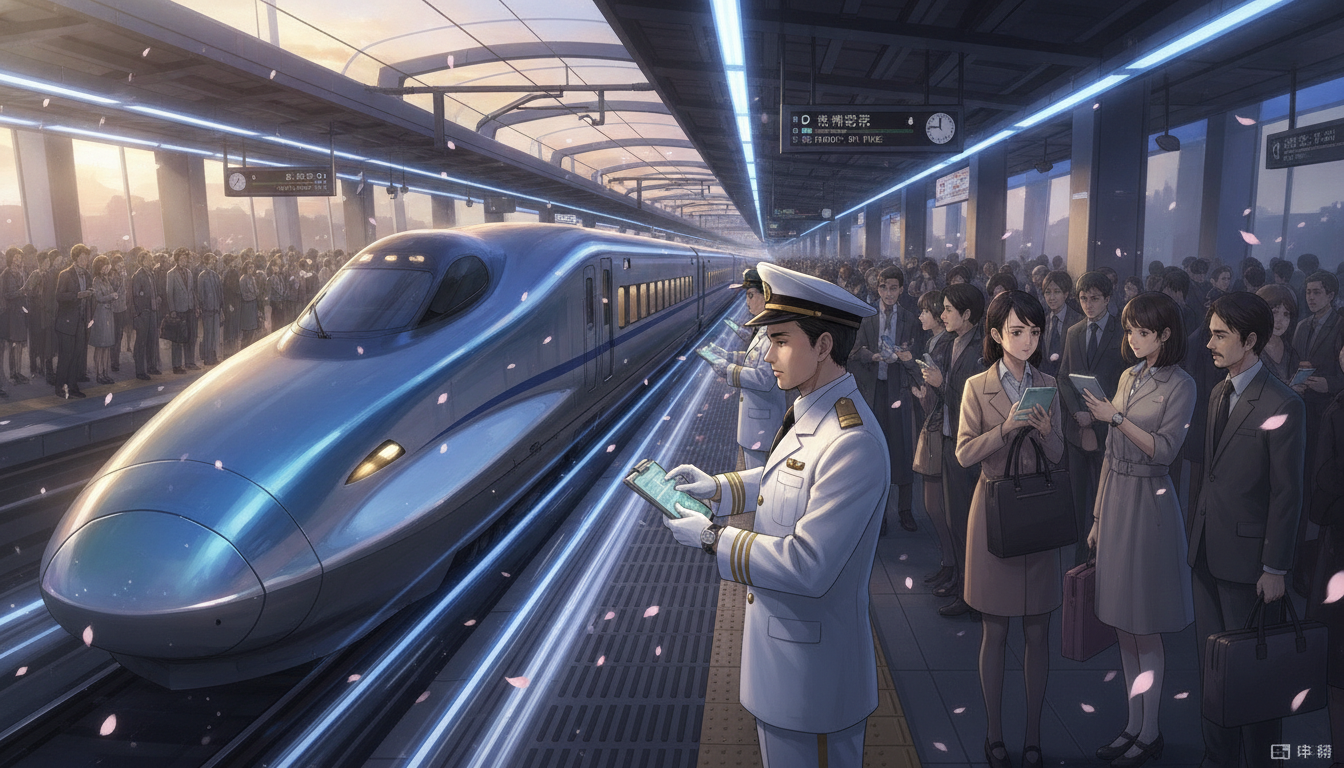
Imagine a world where missing your train by thirty seconds is genuinely considered a catastrophe — not just an inconvenience, but a systemic failure worthy of a formal public apology. That world exists, and it’s called Japan. While the rest of us shrug at delays measured in fifteen-minute increments and check our phones waiting for a bus that may or may not show up, Japan’s rail network operates with a kind of clockwork obsession that feels less like logistics and more like a martial art. It’s the sort of precision that anime fans will immediately recognize: the same cultural DNA that produces painstakingly detailed animation frames, obsessive craft, and zero tolerance for “good enough.”
This isn’t an accident. Japan’s legendary train punctuality is the product of decades of deliberate engineering, behavioral psychology, workforce culture, and a national philosophy that treats time — specifically, other people’s time — as something sacred. The Shinkansen bullet train, which began service in 1964, averages delays of under one minute across its entire network. In 2018, a Japanese rail company issued a formal apology because one of its trains departed twenty seconds early. Not late. Early. If that level of obsession doesn’t make you feel simultaneously impressed and personally attacked by your own commute, nothing will.
The Philosophy Behind the Punctuality: More Than Just Engineering
Before diving into the technical machinery, it’s worth understanding the why. Japanese culture has a concept called kaizen — a word that translates roughly to “continuous improvement” — and it infects everything from car manufacturing to convenience store operations. The idea is that no system is ever finished; there is always one more inefficiency to eliminate, one more half-second to reclaim.
In the context of rail travel, kaizen means that every delay, no matter how small, triggers a formal review. Workers don’t just fix the problem and move on — they document it, analyze it, share findings across the network, and implement structural changes. This obsessive feedback loop is baked into the culture of every major rail operator in Japan, from JR East to the private lines that crisscross Tokyo like the world’s most complex spaghetti diagram.
The cultural layer matters too. In Japan, being late is genuinely considered disrespectful. It signals that you value your own time more than the person waiting for you. Rail operators internalized this value and built it into their operational DNA. The result is a system that doesn’t just run on time — it treats punctuality as a moral commitment.
How the Shinkansen Became the Gold Standard of Rail Travel
The Shinkansen — Japan’s bullet train network — is the crown jewel of this obsessive system. Launched on October 1, 1964, just in time for the Tokyo Olympics, the Shinkansen redefined what rail travel could look like. Today, across all Shinkansen lines, the average delay is typically measured in seconds, not minutes.
How? A few critical factors:
- Dedicated tracks: The Shinkansen runs on lines that are completely separate from freight and local trains, eliminating the cascading delays that plague mixed-use networks.
- Automated safety systems: ATC (Automatic Train Control) systems constantly monitor train speed and distance, making real-time micro-adjustments that human drivers couldn’t execute alone.
- Seven-minute turnaround: The cleaning crews — known as the Shinkansen cleaning theater or formally as the TESSEI team — clean an entire 16-car train in approximately seven minutes between arrivals and departures. They bow to passengers, treat the work as a performance of excellence, and have become something of a cultural phenomenon in their own right.
- Weather redundancy: The network has extensive protocols for typhoons, earthquakes, and heavy snow, with sensors embedded along the track that trigger automatic slowdowns before a human has even noticed a problem.
The Human Side: Train Drivers, Station Masters, and the Art of the Apology
While the technology is impressive, the human element is equally fascinating. Japanese train drivers are trained to an almost surgical level of precision. They practice a technique called shisa kanko — pointing and calling — where workers physically point at instruments and verbally announce readings out loud. This dramatically reduces human error by forcing active engagement with the task rather than passive observation.
Station masters carry a weight of personal responsibility that would be unthinkable in most Western rail systems. When a significant delay occurs, it’s not uncommon for senior staff to appear on platforms to personally apologize to passengers. The rail company may issue formal statements. In some cases, delays caused by factors completely outside the railway’s control — extreme weather, accidents on the tracks — still result in organizational apologies, because the culture demands accountability even when fault is ambiguous.
This connects to something deeper in the Japanese professional psyche: the concept of shokunin, or artisan spirit. A shokunin is someone who has dedicated themselves so completely to their craft that the idea of delivering inferior work is almost physically painful. Train operations in Japan are treated with the same reverence as pottery, swordsmanship, or — for those of us who know our geek culture — the legendary frame-by-frame animation work of studios like Kyoto Animation.
Did You Know? Mind-Blowing Facts About Japanese Rail
- Japan’s train network carries over 12 billion passengers per year across all operators combined.
- The Tokaido Shinkansen, running between Tokyo and Osaka, is one of the busiest high-speed rail lines in the world.
- “Delay certificates” are issued to passengers when trains run significantly late — these are accepted by employers and schools as official excuses, which tells you everything about baseline expectations.
- Tokyo’s rail network during rush hour achieves passenger loads that require staff called oshiya (pushers) to help compress passengers into carriages — yet the trains still run on time.
- In over 60 years of Shinkansen operation, there has been zero passenger fatalities due to train accidents — a record that remains essentially unmatched globally.
- Some private rail companies operate on schedules with accuracy windows measured in 15-second increments.
Anime’s Obsession With Trains: Life Imitating Art Imitating Life
Here’s where things get delightfully meta for geek culture fans. Japan’s train culture has seeped into its anime and manga in ways both subtle and spectacular. Trains are everywhere in anime — as settings, as symbols of transition and journey, as carefully animated backgrounds that reflect the same obsessive attention to craft that runs the actual rail network.
Series like Spirited Away (2001, Studio Ghibli, directed by Hayao Miyazaki) feature trains as almost spiritual vehicles, carrying protagonists through liminal spaces. The genre of isekai — stories where characters are transported to another world, often translated from “another world” — frequently uses trains as literal or metaphorical departure points. Even the slice-of-life genre, which quietly dominates a huge portion of anime output, treats the daily train commute as a sacred rhythm of ordinary Japanese life.
This isn’t coincidental. The same cultural values that produce Shinkansen precision — craft, dedication, continuous improvement — are the values that made anime a global obsession. When you watch an animator spend hours perfecting the motion of hair in wind or the reflection of light on a train window, you’re watching kaizen in action.
What the Rest of the World Can Actually Learn From This
The Japanese rail model is often cited as an inspiration, but rarely fully replicated — because the full picture requires not just technology, but a cultural overhaul. Countries that have attempted to import Japanese rail practices have had mixed results when the supporting philosophy doesn’t transfer with it.
That said, specific elements have proven exportable:
- Pointing-and-calling techniques have been adopted by transit authorities in New York, among others, with measurable reductions in human error.
- Kaizen-style continuous improvement loops are now used in manufacturing, healthcare, and logistics worldwide.
- Infrastructure separation — dedicating high-speed lines exclusively to passenger rail — is increasingly seen as non-negotiable for any serious high-speed rail project.
The deeper lesson, though, is harder to package. It’s the understanding that punctuality isn’t just a scheduling achievement — it’s an expression of respect. Your human brain has features no engineer could design, but even our extraordinary minds need systems built around values, not just procedures, to function at their highest level.
The Obsession Is the Point
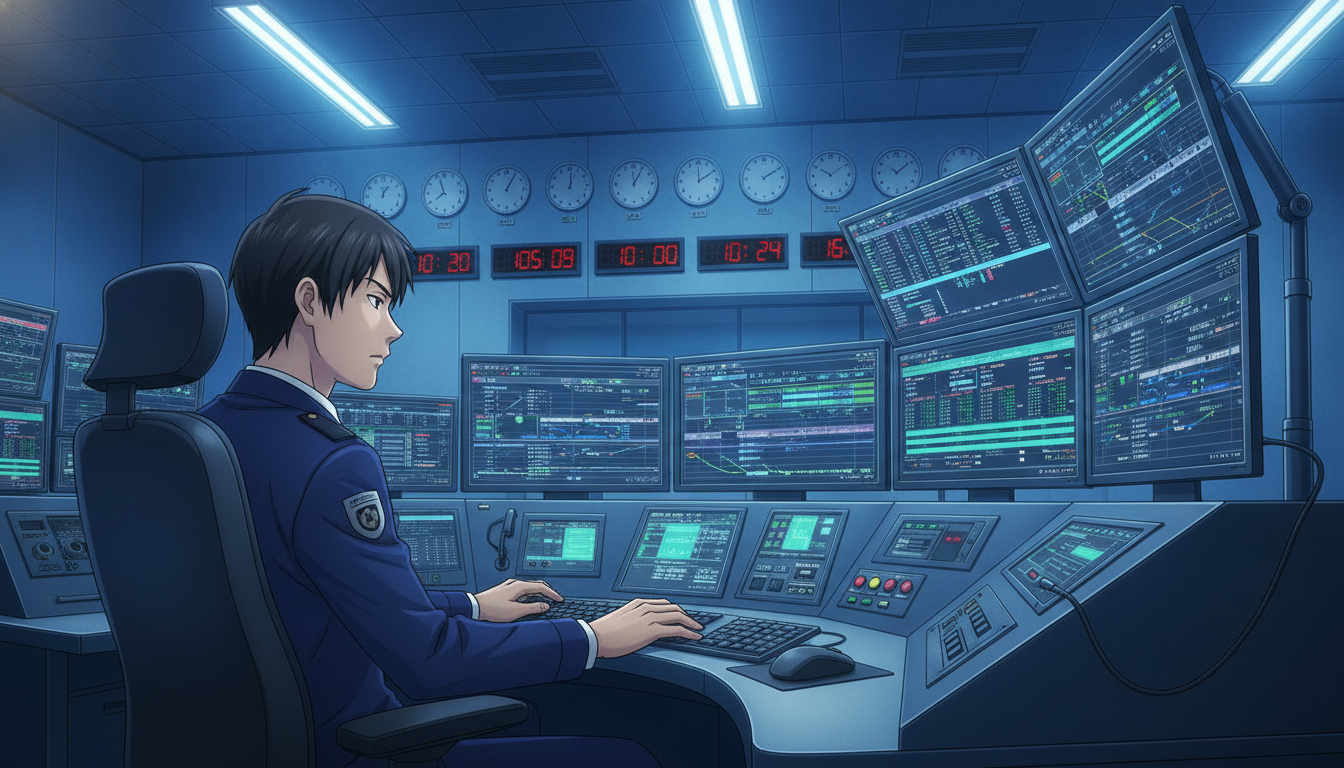
Japan’s train system isn’t a miracle — it’s the logical outcome of a society that decided, collectively, that this thing mattered, and then acted accordingly for decades. The obsession isn’t incidental to the achievement. The obsession is the achievement. Every pointed finger, every seven-minute cleaning sprint, every formal apology for a twenty-second early departure is a restatement of a value: your time matters, this work matters, and we will not stop improving.
For geeks who spend hours debating animation quality, game mechanics, or fictional power systems, there’s something deeply recognizable in that spirit. The Japanese train system is, in its own way, a masterpiece — built not in a studio, but on a platform, one perfectly timed departure at a time.

1 Comment
Pingback: Why Are Anime Collectibles Selling for Millions Now? - ICL Geek Curiosities