
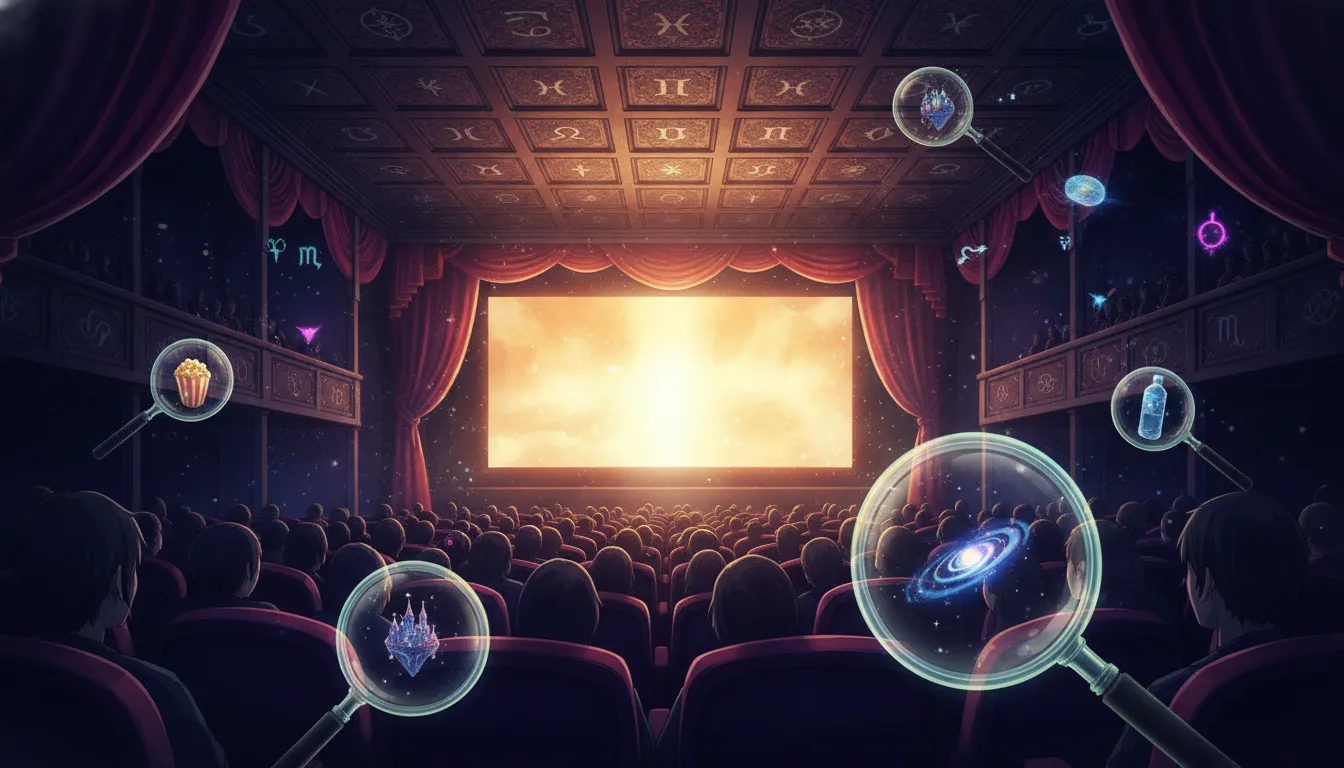
Have you ever paused a movie at just the right frame and spotted something that made your jaw drop? Maybe it was a poster on a wall that referenced another film, a book title that foreshadowed the entire plot, or a blink-and-you’ll-miss-it cameo hiding in plain sight. Directors, animators, and production designers have been playing this game with audiences for decades — planting hidden treasures for the sharpest eyes in the room. And the deeper you look, the more you realize that some of your favorite films are basically double-layered experiences: one for casual viewers, and one for obsessive fans willing to pause, zoom, and theorize.
Easter eggs in movies aren’t just cute tricks. They’re love letters. They’re inside jokes between filmmakers and their most dedicated audiences. Some studios have built entire mythologies out of these hidden connections — think of Pixar’s universe of overlapping references, or the way Marvel threads its world-building into the background of nearly every scene. But even outside those franchises, filmmakers across every genre have been hiding secrets in plain sight. Whether you’re a first-time moviegoer or someone who has watched The Dark Knight seventeen times, there’s a very real chance you’ve been walking past secret doors without ever trying the handle.
So let’s fix that. Buckle up — we’re going hunting.
The Pixar Universe’s Hidden Connections
If you’ve ever suspected that all Pixar movies secretly exist in the same world, you’re not wrong — and the studio has been quietly confirming it for years through background details. The theory, popularized by a 2013 YouTube video from Jon Negroni, suggests a shared timeline running through films like Toy Story, Monsters, Inc., WALL-E, and Brave. What makes it compelling isn’t just fan speculation — it’s the actual props and references embedded in each film.
One of the most beloved examples involves Pizza Planet, the fictional restaurant from Toy Story. That same delivery truck shows up in nearly every Pixar film that followed, from A Bug’s Life to Cars. Then there’s the Luxo ball — the yellow ball with the red star from Pixar’s original 1986 short Luxo Jr. — which pops up in Toy Story, Up, and several others. These aren’t accidents. They’re deliberate winks to viewers who pay attention, and they give rewatches an entirely different dimension.
Stanley Kubrick’s Room 237 and Hidden Symbolism
Few directors have inspired more Easter egg hunting than Stanley Kubrick. His 1980 horror masterpiece The Shining has generated decades of analysis, much of it centered on hidden imagery and background details. The documentary Room 237 (2012) compiles some of the most fascinating (and occasionally wild) theories fans have built around the film.
Among the more verifiable details: the Overlook Hotel’s carpet pattern, a red hexagonal design, appears to have influenced layout discussions with production designers in ways that deliberately create spatial impossibilities. Windows appear in rooms that shouldn’t have exterior walls. These architectural contradictions are widely considered intentional. Whether they carry deep symbolic meaning or simply reflect Kubrick’s obsession with controlled disorientation, they reward the kind of viewer who keeps asking, “Wait — how is that window there?”
Marvel’s Post-Credits Culture and Hidden World-Building
The Marvel Cinematic Universe essentially redefined what audiences expect from movies by making the post-credits scene a cultural institution. But the Easter eggs go far beyond those famous stingers. Marvel films are packed with background references that connect the broader universe.
Some highlights include:
- In Iron Man (2008), Nick Fury mentions “the Avenger Initiative” — a seed planted when the MCU had only one movie to its name.
- The number 3000 appears in connection with Tony Stark’s relationship with his daughter Morgan in Avengers: Endgame (2019), tying back to her line “I love you 3000” and fan interpretations of his arc.
- In Thor: The Dark World (2013), a whiteboard in a scene references a real physics equation connected to the Einstein-Rosen bridge concept used in the film’s plot.
- Ant-Man (2015) features a brief reference to a certain Sorcerer Supreme that quietly seeded the MCU’s magical dimension before Doctor Strange was introduced.
Just like everyday objects are hiding secrets you never suspected, Marvel’s cinematic world rewards the curious — every prop, poster, and background conversation was placed there by someone who knew exactly what they were doing.
Disney’s Classic Animation and the Hidden Villains
Long before the MCU was dropping interconnected references, Disney animators were hiding things in their frames. The most famous example is the alleged hidden image in the poster for The Little Mermaid (1989), where the towers of King Triton’s castle were claimed to resemble a certain adult shape. Disney addressed the controversy and the image was revised in later versions — making the original VHS releases a collector’s item for a very specific reason.
More playful and family-friendly: Disney animators frequently hid the letters “A113” in their films. That combination refers to a classroom at the California Institute of the Arts where many Disney and Pixar alumni studied animation. It appears on a license plate in Toy Story, a camera model in Finding Nemo, and in numerous other productions.
Christopher Nolan’s Clues Are Planted Early
Christopher Nolan has a reputation for building stories that reward rewatches, and Inception (2010) is perhaps the ultimate example. The spinning top in the film’s final shot became one of cinema’s most discussed ambiguous endings — but eagle-eyed viewers noticed that throughout the film, the top wobbles slightly when Cobb is in reality and spins perfectly in dreams. That distinction, once noticed, reframes the entire viewing experience.
Similarly, Memento (2000) contains clues embedded in the film’s non-linear structure that, when viewed in chronological order, reveal the truth of the story before the narrative does. Nolan trusts his audience enough to hide the answer in the question.
Anime Films and Their Hidden Western References
This is a rabbit hole that anime fans know well. Studio Ghibli films — the beloved Japanese animation studio co-founded by Hayao Miyazaki — often contain subtle nods to Western literature and film. Howl’s Moving Castle (2004) draws from Diana Wynne Jones’s 1986 novel, but the film’s visual design also borrows architectural aesthetics from European fairytales and early 20th-century illustration. If you’re curious about animation that layers meaning into every frame, these underrated anime deserve your full attention beyond just the Ghibli catalog.
Why Easter Eggs Make Us Better Watchers
The real magic of Easter eggs isn’t the discovery — it’s what they teach us about how films are made. Every hidden detail is evidence that filmmaking is a collaborative, layered, and deeply intentional art form. Someone on a production team spent time on a background poster that 95% of viewers will never read. That’s devotion.
Easter eggs also build community. The moment you spot one, the first thing you want to do is tell someone. They turn solo viewing experiences into shared conversations, and they give fandom a reason to keep revisiting stories long after the credits roll.
So the next time you watch a movie you think you know by heart — pause. Zoom in. Read the background signs. Check the shelves. The filmmakers left something there just for you, and they’ve been waiting patiently for you to find it.
