


Ever feel like you’re doing everything right, only to discover there’s a smarter, easier way you never knew existed? That moment of realization — half embarrassing, half mind-blowing — is something every geek knows well. It’s the same feeling you get when you finally understand a plot twist that was hiding in plain sight the whole time, like realizing that Eren Yeager’s true motives in Attack on Titan were telegraphed from the very first chapter. The clues were always there. You just weren’t looking at them the right way.
That’s exactly what’s happening with a surprising number of everyday objects you interact with constantly. Your phone charger, your stapler, your takeout container — you think you know how to use them, but there’s a solid chance you’ve been doing it all wrong this entire time. These aren’t obscure life hacks that require a toolbox and a YouTube tutorial. These are simple, elegant design features built directly into the things you already own. The engineers put them there on purpose. Nobody told you about them. Until now.
Think of this as your personal tutorial arc — except instead of learning to control chakra or unlock a Bankai, you’re learning to use aluminum foil correctly. Which, honestly, might be more immediately useful. Let’s break down nine everyday items you’ve been using wrong and fix that once and for all.
The Humble Stapler Has a Secret Second Mode
Pull out your stapler and flip it over. See that rotating metal plate on the bottom — the anvil? Most staplers have two settings. The default position drives staples inward, binding papers together permanently. But rotate the anvil 180 degrees and the staple legs fold outward instead of inward. This creates a temporary bind that’s far easier to remove without a staple remover.
This feature was designed for situations where you need to temporarily group documents — think drafts, proofing rounds, or anything you’ll need to separate again. Office supply manufacturers have included this function for decades. It’s printed in almost no manual. Most people never discover it.
Aluminum Foil and Plastic Wrap Boxes Are Already Locking You In
Here’s one that will make you quietly furious at yourself. Those cardboard boxes that hold your aluminum foil and plastic wrap? Look at the short ends of the box. There are small perforated tabs that say something like “Press Here to Lock Roll.” Most people never push them in.
When you press those tabs inward, they hold the roll in place inside the box so it doesn’t fly out every time you pull the wrap. It’s a built-in roll stabilizer. It works perfectly. You’ve been wrestling with that roll for years when the solution was printed on the box the entire time.
Takeout Containers Are Actually Plates
Folded paper takeout containers — the classic kind shaped like a little box — are designed to unfold completely flat into a plate. The interlocking folds that hold the box together can be pulled apart to create a sturdy, flat surface perfect for eating directly off of. No more awkwardly digging chopsticks into a deep container or transferring everything to a separate dish.
Here’s a fun list of everyday design features people routinely ignore:
- Pot lids with a flat top — designed to be flipped over and used as a spoon rest
- The hole in pasta spoon handles — sized to measure approximately one serving of spaghetti
- The loop on the back of dress shirts — originally used to hang the shirt on a hook without a hanger
- Tic Tac lid dispensers — the lid is shaped to dispense exactly one Tic Tac at a time when the box is tilted
- Measuring tape clips — the serrated edge is for marking measurements without a pencil
- Plunger cup shape — the flat-cup plunger is for sinks; the flange plunger with an extended lip is for toilets. Most people own the wrong one.
Bobby Pins Go Wavy Side Down
This one has been circulating since at least the early days of social media, but it still hasn’t reached everyone: bobby pins are designed to be worn with the wavy, ridged side facing down toward the scalp, not up. The ridges grip your hair and hold the pin in place far more effectively. When you wear them ridged-side up, they slide out constantly. Flip them. Grip improves dramatically. You’re welcome.
Toothpaste Tubes Should Be Rolled, Not Squeezed From the Middle
The correct technique — as any product engineer will confirm — is to squeeze from the sealed bottom end and roll the tube upward as it empties. Squeezing from the middle traps product near the sealed end that you’ll never be able to reach efficiently. Rolling from the bottom ensures near-complete product use and keeps the tube looking tidy. Toothpaste brands design the tube with a flat, easily-rollable sealed end specifically for this reason.
Your Phone Charger Cable Has a Preferred Direction
USB-C mostly solved this problem, but if you’re still using any older micro-USB cables or have accessories that use them, orientation matters. Beyond that, even with USB-C connectors, your cable itself has a “grain” — the wires inside are twisted and routed in a way that makes coiling in one direction more natural than the other. Forcing a cable to coil against its natural direction causes internal wire stress and shortens lifespan significantly. When you unplug and coil a cable, let it find its natural loop rather than forcing tight bends. Your cables will last noticeably longer.
Elevator “Close Door” Buttons and What They Actually Do
This is technically more of a myth-busting moment than a usage correction. In most modern elevators in the United States, the “close door” button is not functional for regular passengers. Per the Americans with Disabilities Act and building code standards adopted through much of the late 20th century, elevator doors must remain open long enough for a person using mobility aids to enter safely. The close-door button typically only functions when held simultaneously with a floor button, and even then, only in certain elevator models. You’ve been furiously jabbing a button that does nothing. The door was always going to close when it was ready.
The Correct Way to Use a Ketchup Cup
Those small pleated paper ketchup cups at fast food restaurants? They’re not meant to be used as-is. The pleats exist so you can fan the cup outward, expanding its diameter significantly. A standard pleated ketchup cup holds roughly the right amount of ketchup only when fully expanded — which nearly triples its surface area and makes dipping much easier. Pull the edges outward gently and the cup blooms open like a flower. It also means you need fewer refill trips, which in a busy restaurant is a genuine quality-of-life upgrade.
Your Soda Can Tab Has a Built-In Straw Holder
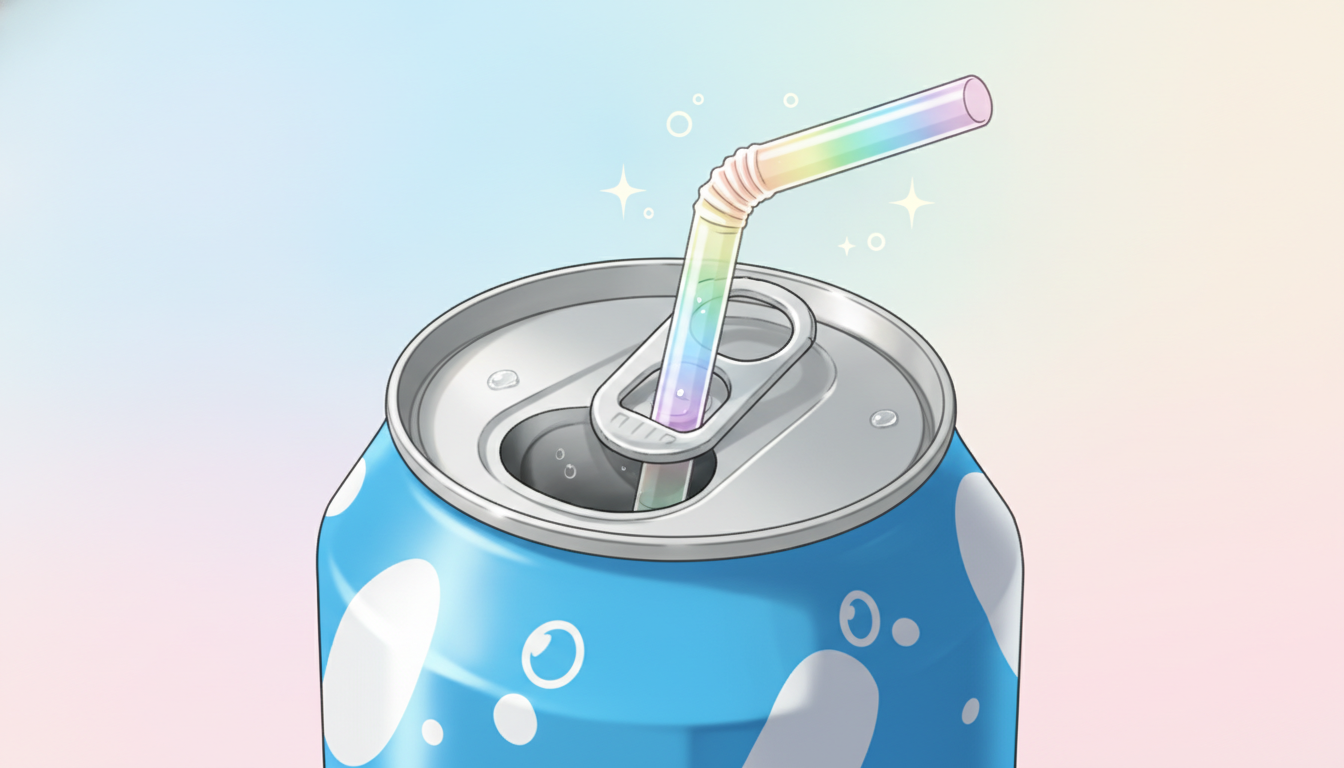
Flip the tab on a soda can after opening it so the hole faces the center of the opening. The hole in the tab lines up perfectly with the mouth of the can and holds a straw upright without it floating or tilting. This was an intentional design consideration — the tab serves double duty as an opener and a straw lock. It works with essentially every standard aluminum beverage can. If you’ve spent years watching your straw slide around in your drink, this one’s for you.
It’s genuinely humbling to realize how much thoughtful design surrounds us every day that we simply never notice. Engineers and product designers spend enormous effort solving small problems elegantly — and then those solutions get buried in plain sight on the objects themselves. In a way, it’s not unlike discovering hidden worldbuilding details in your favorite anime series, where everything that matters was always right there if you knew where to look. If you enjoy that kind of “wait, I should have seen that coming” revelation, you might appreciate these anime backstories that are too painful to watch twice — because sometimes the clues to a gut punch are just as well-hidden as the wavy side of a bobby pin.
The world is full of features you’ve been ignoring. Now go flip your bobby pins, press those box tabs in, and unfold that takeout container. You’ve earned it.
